
Municipality of Kloštar Podravski
Accommodation in Municipality of Kloštar Podravski
Gentle slopes of Bilogora, vineyards and forests characterize the Municipality of Kloštar Podravski. When choosing accommodation, you can consider whether you want to connect your stay primarily with nature, historical traces, cycling or regional traditions.
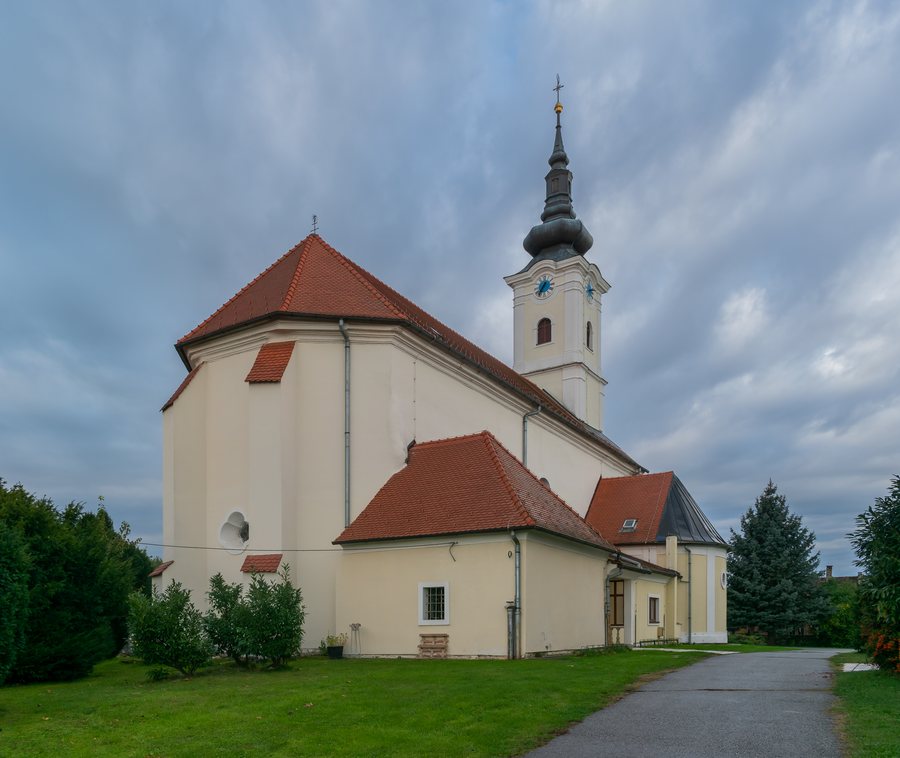 File:St Benedict & Our Lady of Sorrows church in Klostar Podravski (14).jpg
Photo: Tournasol7 via Wikimedia Commons, CC BY 4.0
File:St Benedict & Our Lady of Sorrows church in Klostar Podravski (14).jpg
Photo: Tournasol7 via Wikimedia Commons, CC BY 4.0
Key facts about the Municipality of Kloštar Podravski
The municipality lies on the slopes of Bilogora, which are interspersed with vineyards and forests. The Natura 2000 area “Bilogora i Kalničko gorje” (HR1000008) also includes the municipality and is important for bird conservation. A historic cycling route runs for 62.4 kilometers through Ferdinandovac, Kalinovac, Kloštar Podravski and Podravske Sesvete; there are 11 bilingual information boards along the route. The settlement of Kloštar Podravski is part of the municipality.
What characterizes the landscape and nature?
The slopes of Bilogora, its vineyards and forests give the municipality a rural character. The Natura 2000 area “Bilogora i Kalničko gorje” is also important for bird conservation. Those who want to consider both nature and cultural heritage when planning a trip will find a range of points of interest here: the Bilogora landscape, historic sites and a cycling route that connects several municipalities.
The historic cycling route “Istraži povijest područja Dravski Peski” is 62.4 kilometers long and passes through four municipalities. Its 11 bilingual information boards give the route a historical dimension. It can therefore be included as a separate theme in travel planning; its length is a specific factor to consider when planning your day.
What historical traces can be found here?
A Franciscan monastery existed in Kloštar Podravski from 1292 to 1552 and gave the settlement its name. In the Middle Ages, Kloštar Podravski was an important settlement and fortification in the region. The place was formerly also known as Gorbonog; it appears under this name in the parish records of 1334 and 1501.
Further traces of history can be found in various places across the municipality. The “Kaštel Gorbonuk” archaeological site in Kloštar Podravski dates from the 15th century. The “Lokalitet franjevački samostan i srednjevjekovna župa” site is also located in the center of Kloštar Podravski. The Church of Saint Adrian was in the settlement area now called Oderjan. Prugovac is mentioned in 1334 with its parish church of Saint Nicholas. These names and connections can help those interested in cultural history to understand local history across different periods and parts of the municipality.
Which cultural and spiritual connections are important?
The Church of Saint Benedict is listed as part of the municipality’s cultural heritage. On the Camino Podravina, there is a stamp station in the Church of Saint Benedict and Our Lady of Sorrows in Kloštar Podravski.
Churches and chapels are also part of the cultural heritage in other parts of the municipality: the Chapel of Our Lady of Lourdes is listed in Budančevica, and the Church of Saint Francis Xavier in Kozarevac. Those interested in religious buildings and local history can keep these names in mind when exploring the municipality. The three places can be considered individual cultural points of interest.
What do regional cuisine and events offer?
In the center of Kloštar Podravski, Restaurant Royal serves traditional home-style cuisine and wines from its own production. The 31st wine exhibition in Kloštar Podravski received 328 wine samples.
The event “Iz bakine ladice” focused on preserving traditional recipes and customs. It included practical demonstrations of how to prepare traditional cakes. In Prugovac, “Vuzmeni Pondeljek” features performances of traditional songs and dances.
Motorsport is also part of the municipality’s documented event history: in 2011, Kozarevac hosted the European Motocross Championship on the Karasov brijeg track. Motocross events on this track each attracted more than 1,000 visitors. For further comparisons within the directory, you can also find Municipality of Molve, Municipality of Hlebine, Municipality of Križevci, Municipality of Legrad, Municipality of Sokolovac, Municipality of Drnje and Municipality of Sveti Ivan Žabno.
FAQ
How long is the historic cycling route through Kloštar Podravski?
The “Istraži povijest područja Dravski Peski” cycling route is 62.4 kilometers long. It runs through Ferdinandovac, Kalinovac, Kloštar Podravski and Podravske Sesvete and has 11 bilingual information boards.
Where is the stamp station on the Camino Podravina?
The stamp station in Kloštar Podravski is located in the Church of Saint Benedict and Our Lady of Sorrows.
Which historical sites are associated with the municipality?
Historical points of interest include the former Franciscan monastery, the “Kaštel Gorbonuk” site, the site in the center of Kloštar Podravski, as well as church sites in Oderjan, Prugovac, Budančevica and Kozarevac.
For the broader travel overview: Koprivnica-Križevci County.

.jpg)