
Discover the Municipality of Zagorska Sela
Accommodation in Municipality of Zagorska Sela
Churches, archaeological traces, and trails through green hills give the Municipality of Zagorska Sela a distinct cultural and landscape profile. For planning your trip, it is worth exploring its different places and themes: from Špičak in Bojačno to the churches in Zagorska Sela and Sutlanska Poljana.
Key facts about the Municipality of Zagorska Sela
- The Church of St. Catherine of Alexandria in Zagorska Sela was built in 1691 on the foundations of an older church.
- A settlement dating from the Late Bronze Age has been documented at Špičak in Bojačno; the find area is listed as an immovable individual cultural asset.
- Trails through green hills and natural landscapes lead to Špičak, where there is a viewpoint.
- A Way of the Cross leads from the rectory, built in the 18th century, to the Church of St. Anne in Sutlanska Poljana.
What traces of culture can you discover?
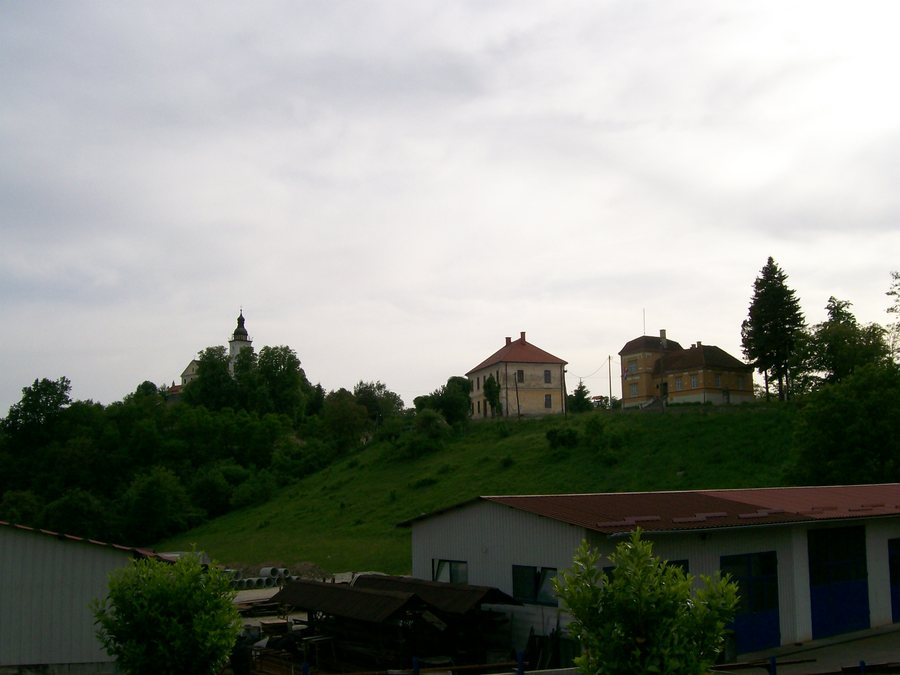
The Church of St. Catherine of Alexandria connects two periods: it was built in 1691, but stands on the foundations of an older church. It is situated on a hill above the main road leading from Klanjec toward Miljana and Veliki Tabor. This makes it part of both the local history and a prominent position along this road. Miljana Castle adds another historical perspective: it was first mentioned as the property of the Rattkay family in 1597. This date refers to its first mention as the family’s property, not to the year the castle was built.
Špičak in Bojačno also offers a glimpse into the past. The existence of a settlement dating from the Late Bronze Age has been documented there. The find area is listed as an immovable individual cultural asset. For a trip focused on cultural history, there are several points of interest: a church with older foundations, a castle with an early record of ownership, and an archaeological site with evidence of a prehistoric settlement.
How can you explore Špičak on foot or by bicycle?
Špičak can be reached on foot or by bicycle via trails through green hills and natural landscapes. There is a viewpoint at the destination. You can therefore shape your visit around your interest in archaeological history or the views of the landscape. The trails and viewpoint offer a concrete reason to experience the surroundings not only through their historic sites, but also as a landscape. If you are planning a trip mainly around culture, you can treat Špičak as a destination in its own right alongside the churches and castle; if you prefer outdoor activities, you will find the trails and viewpoint mentioned here.
Which religious sites and traditions are part of the area?
The Way of the Cross from the rectory, built in the 18th century, to the Church of St. Anne in Sutlanska Poljana is another religious point of interest. It differs from the Church of St. Catherine, which stands above the main road in Zagorska Sela: here, the Way of the Cross connects the rectory and the church, while there, the hilltop setting and the building’s history shape the visitor experience.
A central Martinje celebration for Krapina-Zagorje County was announced for November 9 at the Church of St. Martin in Bojačno. The program described includes the tradition of baptizing must into wine, as well as culture and music. This gives local tradition its own place alongside the churches and historical themes.
What role does the Sutla Valley play?
In 2004, the “Sutla – Valley of Health Springs” tourism zone was opened jointly with the neighboring Slovenian municipality of Podčetrtek. This historical cooperation adds a cross-border dimension to the local cultural and landscape themes. Together with Špičak, the churches, and the castle, it paints a broad picture: the attractions mentioned appeal to different interests, without needing to be combined into a single itinerary.
The local views of Zagorska Sela and Miljana complete the overview. To compare other destinations, you can also explore the Municipality of Krapina, the Municipality of Kumrovec, the Municipality of Oroslavje, the Municipality of Jesenje, the Municipality of Veliko Trgovišće and the Municipality of Pregrada.
FAQ
What is known about Špičak in Bojačno?
A settlement dating from the Late Bronze Age has been documented at Špičak. The find area is listed as an immovable individual cultural asset and can be reached on foot or by bicycle via trails through green hills and natural landscapes.
When was the Church of St. Catherine of Alexandria built?
It was built in 1691 on the foundations of an older church and stands on a hill above the main road from Klanjec toward Miljana and Veliki Tabor.
What was announced for Martinje?
A central Martinje celebration for Krapina-Zagorje County was announced for November 9 at the Church of St. Martin in Bojačno. The program includes the tradition of baptizing must into wine, as well as culture and music.
For the broader travel overview: Krapina-Zagorje.

