
Općina Vuka: Local History and Cultural Heritage
Accommodation in Općina Vuka
The local history of Općina Vuka stretches from the former settlement of Josipovac to its renaming after the river. The Church of Sv. Josipa, biographical connections to two people born in Vuka, and a planned cycling and walking path project offer concrete points of interest to help you get your bearings.
Key Facts About Općina Vuka
- Vuka was founded between 1751 and 1773 as the settlement of Josipovac on the Vuka River and renamed after the river in 1773.
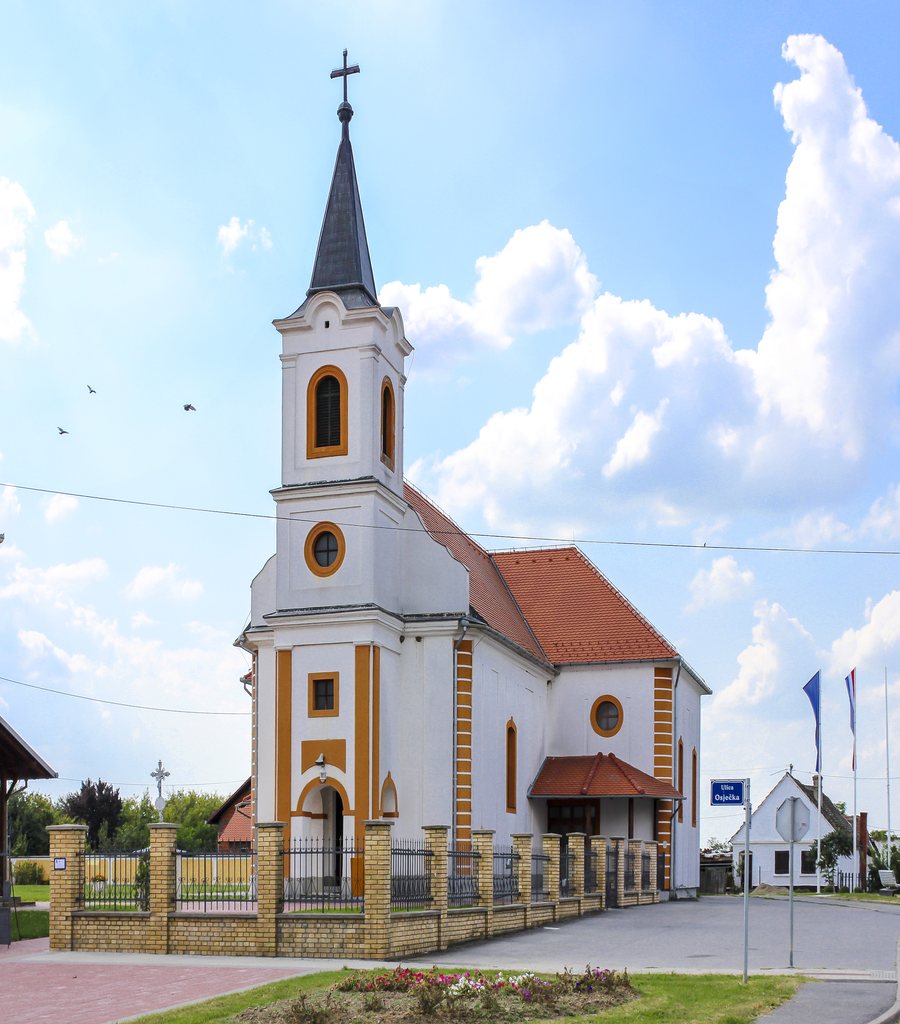
- The Church of Sv. Josipa is an old Baroque church and has been associated with the veneration of Saint Joseph since the 18th century.
- Katarina Matanović Kulenović, Croatia’s first female pilot, and the priest, historian, and ethnologist Milko Cepelić were born in Vuka.
- Archaeological sites include a late medieval cemetery on Osječka ulica and the prehistoric site of Oskoruš in the cadastral area of Vuka.
- A project proposes six sections for a 5.4-kilometer combined cycling and walking route through the settlement.
How Did Vuka Get Its Name?
The settlement of Vuka was founded between 1751 and 1773 as Josipovac on the Vuka River. In 1773, it was named Vuka after the river. The early history of the settlement can thus be traced through a clear sequence: Josipovac was followed by today’s name, which explicitly refers to the waterway. For travelers who want to understand a place through its development, this story behind the name is a concise introduction.
What Defines Its Ecclesiastical Heritage?
The Church of Sv. Josipa is located in the settlement of Vuka. It is described as an old Baroque church and has been associated with the veneration of Saint Joseph since the 18th century. The parish church has been expanded and restored, and a Lourdes grotto stands beside it. These connections complement one another but represent different aspects: its Baroque character, devotion to Saint Joseph, and another religious landmark beside the church.
Biographical memories are also part of the local history. Katarina Matanović Kulenović was born in Vuka and became Croatia’s first female pilot. Milko Cepelić was also born there and became a priest, historian, and ethnologist. In his manuscript “Povijest sela Vuke,” he described the history of Vuka, Slavonian customs, and traditional folk dress. A memorial plaque is located at his birthplace. It was restored in 1995 and remains visible.
What Archaeological Traces Are Known?
The cemetery on Osječka ulica in Vuka is a late medieval archaeological site. Oskoruš, in the cadastral area of Vuka, represents a different period and is classified as a prehistoric site. The two names therefore refer to different places and periods.
What Is Important for Path Planning?
A project proposes six sections that would form a 5.4-kilometer combined cycling and walking route through the entire settlement. The project also includes a bus stop on state road D7, which runs through Vuka. The route is described as a planned project. If you are considering it for a specific trip, check its current implementation status first rather than assuming that the connection has been completed.
What Else Does Osijek-Baranja County Offer?
Nature and wildlife experiences are also central to the wider destination of Osijek-Baranja County. More than 2,300 species live in Kopački rit Nature Park, including about 140 breeding bird species. Tourist boat tours, guided canoe trips, and cycling tours through the park are offered there. Zoološki vrt obitelji Bizik in Markovac Našički is home to more than 90 animal species and serves as an educational center for biodiversity, nature conservation, and animal welfare.
The annual Dani slavonske šume event in Našice offers a seasonal cultural and culinary experience. Held every autumn in Perivoj Pejačević, it includes a market featuring products from rural Slavonia and tastings of traditional Slavonian dishes. These examples are found elsewhere in Osijek-Baranja County and are not offerings in Vuka. They help you distinguish Vuka’s local history from other themes across the wider destination.
How Do You Choose Accommodation for Your Trip?
When looking for a hotel for a trip to Općina Vuka, you can start by deciding what matters most to you: are you primarily interested in local history and ecclesiastical heritage, or would you also like to consider nature, wildlife, and events across the wider destination? Compare specific hotel offers by location and amenities against your own travel plans. This will help you focus your search on the experiences that truly matter for your stay.
Explore More Destinations: Općina Draž, Općina Drenje, Općina Našice, Općina Donji Miholjac, Općina Šodolovci, Općina Osijek and Općina Kneževi Vinogradi.
FAQ
What was Vuka called previously?
The settlement was founded as Josipovac. In 1773, it was renamed after the Vuka River.
What characterizes the Church of Sv. Josipa?
It is an old Baroque church associated with the veneration of Saint Joseph since the 18th century. A Lourdes grotto stands beside it.
What cycling and walking route is planned?
Six sections totaling 5.4 kilometers are planned through the settlement. The plan does not confirm that the entire route has already been completed.
For the wider travel overview: Osijek-Baranja County.

