
Municipality of Baška Voda
Accommodation in Municipality of Baška Voda
The Municipality of Baška Voda combines long pebble beaches with hiking trails that lead from the sea into the mountains. When planning a trip, you can tailor the balance of coastal experiences, nature and Dalmatian history to your interests.
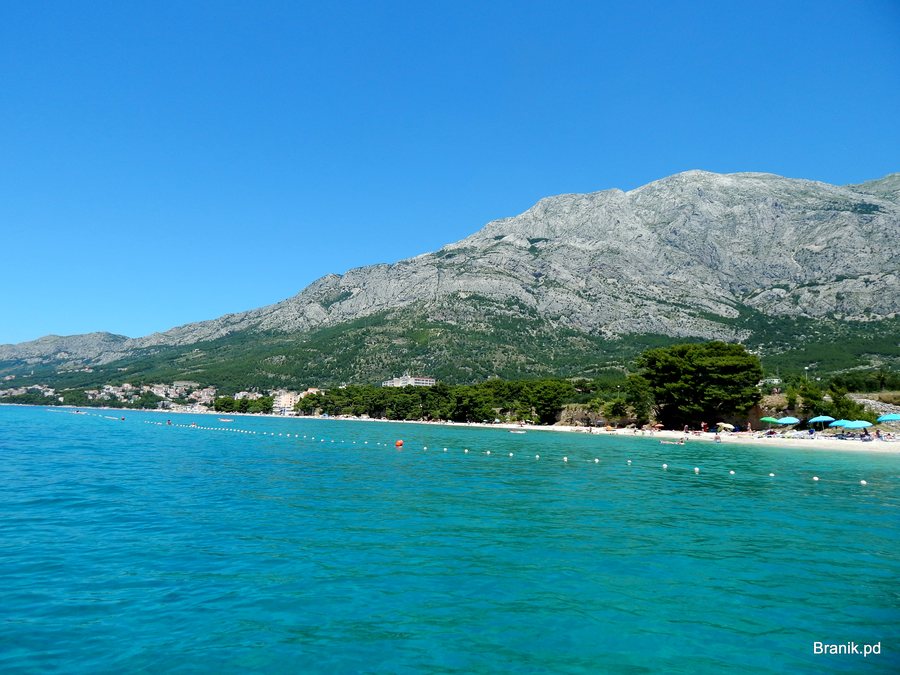 File:Općina Baška Voda, Croatia - panoramio (2).jpg
Photo: Branik P via Wikimedia Commons, CC BY-SA 3.0
File:Općina Baška Voda, Croatia - panoramio (2).jpg
Photo: Branik P via Wikimedia Commons, CC BY-SA 3.0
Quick facts about the Municipality of Baška Voda
Biokovo Nature Park rises above the municipality. Its coastal areas are characterized by long pebble beaches, and there are also kilometers of hiking trails by the sea and into the mountains. The municipality includes the places of Krvavica, Promajna, Bast and Baška Voda.
What landscapes and trails define the municipality?
The trails offer different ways to experience the landscape: they run both along the sea and toward the mountains, and most are also suitable for bicycles. Those who enjoy walking will find a variety of landscapes within the municipality; for cycling, note the qualification “most.”
One challenging option is the route marked by Biokovo Nature Park, from Baška Voda via Bast, Korito and Osićine to Sv. Ilija. This difficult route is listed as taking six hours.
Another themed trail is the Poučni ekološki put. It starts at the birthplace of Dr. fra Jure Radić in Baška Voda and has 14 stations. It runs along the Makarska coast and the Biokovo mountains. Alongside the challenging route to Sv. Ilija, this provides a trail with themed stations.
What do the coast and nature offer visitors?
Long pebble beaches define the municipality’s coastal areas. Since 2006, Plaža Nikolina in Baška Voda has held the Blue Flag, an international environmental and quality award. Organized diving is also available in the municipality.
Individual natural sites also have their own appeal. On Trg dr. fra Jure Radića stands a white poplar (Populus alba) called Gorica, which is considered a local natural monument. Above Krvavica lies the tall rock Ključ kuk, regarded as a kind of natural monument and as a symbol of the place.
What culture and history can visitors discover?
Buildings and public spaces in Baška Voda recall different eras. Crkvica sv. Lovre dates from 1750; Crkva sv. Nikole was built in 1889. In Bratuš, Kačićevi dvori is a rural complex of traditional Dalmatian folk architecture. The original parts of the residential and agricultural complex date from the 18th century. It includes a large stone olive millstone from the time the estate was built, a reminder of the tradition of olive oil production in Bratuš.
Another trace of history can be found at Gradina: there, the remains of a fortification are visible; it formed the most important part of a settlement. According to the Tabula Peutingeriana, the settlement was in the area of ancient Aronia. In Baška Voda, the “Izvorište Baška Voda” fountain also points to the history of the place. It was built in 2007 next to one of the freshwater springs after which Baška Voda is named. Until 1925, a lake stood at this site.
Other distinctive features of the townscape include the stone-carved figures Glave žena on the facade of the Jurišić family house, built in 1921. The feast of St. Nicholas is celebrated in Baška Voda on December 6 with a mass and a procession along the waterfront promenade and through the town. The statue of St. Nicholas the Traveler was erected in 1998; its creator is Mladen Mikulin.
FAQ
How long is the route from Baška Voda to Sv. Ilija?
The difficult route goes via Bast, Korito and Osićine to Sv. Ilija; it is listed as taking six hours.
What trails are there besides the route to Sv. Ilija?
The Poučni ekološki put starts at the birthplace of Dr. fra Jure Radić and has 14 stations. There are also kilometers of hiking trails by the sea and into the mountains, most of which are suitable for bicycles.
Which historical sites and buildings are especially characteristic?
Examples include Kačićevi dvori in Bratuš, with original parts dating from the 18th century, the two churches in Baška Voda and the remains of the fortification at Gradina.
For the broader travel overview: Split-Dalmatia.
More destinations
More places within the same destination:

.jpg)