
Discover Drávasztára
Accommodation in Drávasztára
Drávasztára combines a neo-Gothic church with the Dráva and a meander used as a fishing lake.
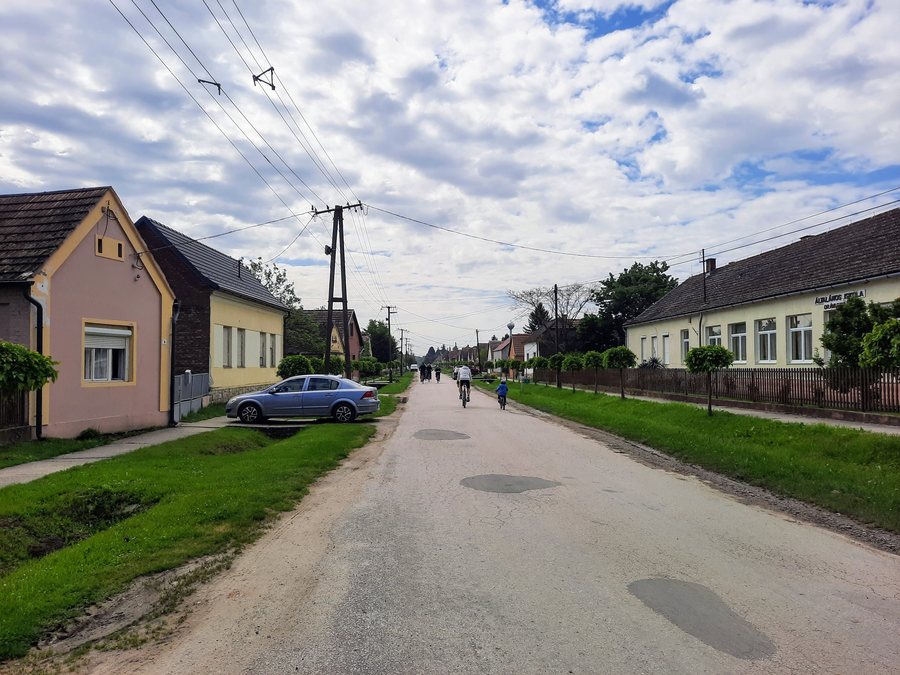
Key facts about Drávasztára
The Nepomuki Szent János-templom is a monumental neo-Gothic landmark in Drávasztára. It was built in 1948. This gives the town a clear cultural point of interest, distinct from experiences on the river.
On the banks of the Dráva near Drávasztára, there is a landing and fire site, as well as a water touring station, a nature-oriented campsite for water touring. From the landing, you can enjoy a view of one of the Dráva’s large river bends. Here, the river landscape and views of the river’s distinctive course come together.
Bresztik-tó lies on the southern edge of Drávasztára, between the village and the Dráva. The oxbow is 1.5 kilometres long and averages 70 metres wide; it is used as a fishing lake. If you would like to combine your visit with fishing, check the local conditions before making plans.
Which experiences offer different points of focus?
The church and the Dráva appeal to different interests: one is home to a monumental neo-Gothic landmark, while the other offers the river, a landing site and views of a large river bend. Bresztik-tó adds an oxbow with a connection to fishing to this selection. These distinctions can help you decide how Drávasztára fits with the themes that matter to your trip.
The Drávasztára rest area is one of the stops on the Dráva water tour. In 2024, its facilities included drinking water, electricity and a sanitary area with washbasins and toilets. Check whether these facilities are available before making plans.
What other themes does the wider destination of Baranya offer?
The wider destination of Baranya adds distinct cultural and nature-related themes. In Pécs, the Early Christian Necropolis of Sopianae includes decorated tombs from the 4th century. They were built as underground burial chambers with above-ground memorial chapels and decorated with Christian murals. Also in Pécs, the Zsolnay Cultural Quarter features exhibitions on the history of the family and the factory, as well as “Golden Age of Zsolnay” and the “Pink Exhibition.”
The Zsolnay Cultural Quarter also offers children outdoor playgrounds, an interactive lab, a planetarium, the Bóbita Puppet Theatre, a ceramic painting workshop and classes at the Hercules Workshop. The freely accessible outdoor area can be entered and used free of charge during opening hours; check the opening hours for a specific visit.
Near Szaporca, the Ős-Dráva Visitor Centre offers an interactive exhibition, a demonstration farming area with hands-on land management, and three themed educational trails. These provide information about traditional agriculture, the Ős-Dráva Programme and the wildlife along the Dráva. The farming area features, among other animals, Hungarian Grey cattle, Mangalica pigs, Hucul horses, and old breeds of sheep and poultry.
Cultural sites and regional activities offer further contrasts: Siklós Castle is one of Hungary’s most significant Renaissance buildings. Following the modernisation of its museum wing, the Gothic area, previously inaccessible to visitors, was opened to the public. The “Art in Nature” programme at Nagyharsány Sculpture Park includes a guided tour. In Villány’s wine cellar row, you can sample wines and food from cellar to cellar throughout the year.
How should you factor Drávasztára into your hotel search?
When searching for a hotel, first decide which aspect of Drávasztára interests you for your trip: the neo-Gothic church, the Dráva and its river bend, or the fishing at Bresztik Lake. If you want to consider the town in a wider context, Baranya offers other cultural and nature-related themes, including Pécs, the visitor centre near Szaporca, and attractions in Siklós, Nagyharsány and Villány.
Discover more destinations: Sellye, Felsőszentmárton.
FAQ
What is the Nepomuki Szent János-templom?
It is a monumental neo-Gothic landmark in Drávasztára, built in 1948.
How large is Bresztik-tó?
The oxbow is 1.5 kilometres long and averages 70 metres wide. It is used as a fishing lake; check the local conditions before planning a fishing visit.
What facilities are listed for the Drávasztára rest area?
In 2024, the rest area’s facilities included drinking water, electricity and a sanitary area with washbasins and toilets. Check current availability before making plans.
For the wider travel overview: Sellye.

