
Mezőhegyes: Discover Stud Farm History
Accommodation in Mezőhegyes
Mezőhegyes is considered the birthplace of three historic Hungarian horse breeds. The stud farm brings this history to life through guided group visits, focusing on horse breeding, the stud farm grounds, and historic buildings. For planning purposes, note that the available tours are seasonal and intended for groups; arrange the date and group size when booking.
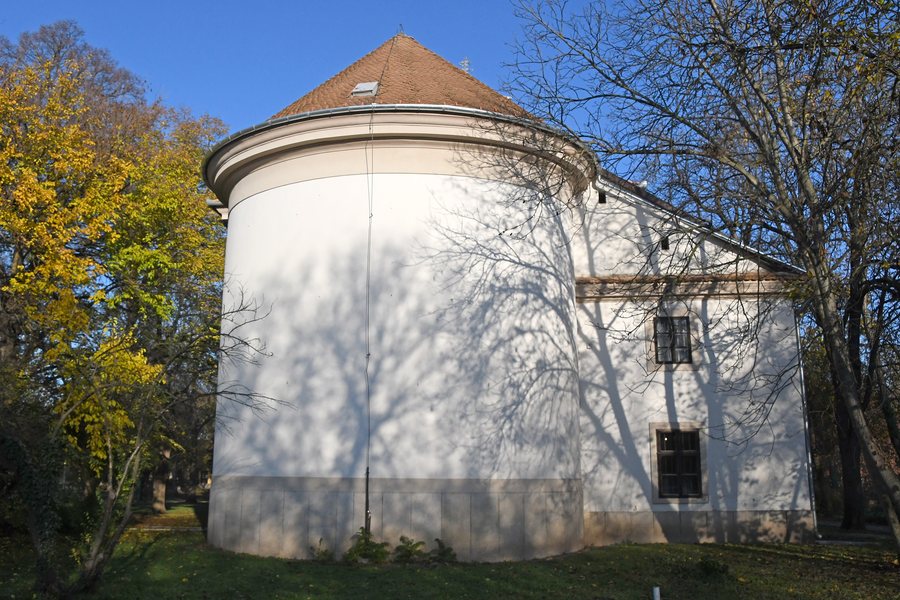 File:Mezőhegyes, római katolikus templom 2022 03.jpg
Photo: Pasztilla aka Attila Terbócs via Wikimedia Commons, CC BY-SA 4.0
Mezőhegyes at a glance
- Mezőhegyes is considered the birthplace of the Nonius, Gidrán, and Furioso horse breeds.
- The stud farm regularly welcomes groups from spring to late autumn. Bookable tour packages are intended for groups of at least ten people.
- A protected plane tree of Indian origin, planted in 1819, stands in the stud farm courtyard.
- Historic buildings in Mezőhegyes include Centrál, Kantár, and bolondtornyok.
What does a guided visit to the stud farm include?
During a guided visit, groups can explore the central stud farm grounds, including the riding hall and the Commandant’s House. A bookable program also takes visitors to Stud Farm No. 20, where they can learn about the traditional keeping of Nonius and Gidrán broodmares and visit renovated buildings with a history of more than 230 years.
The visits therefore combine an introduction to horse keeping with architectural history. The stud farm regularly welcomes groups from spring to late autumn. Tour packages are intended for groups of at least ten people; arrange the date and group size when booking. If you are planning a visit, take these requirements into account when organizing your trip.
What horse and architectural history defines the town?
The town’s history encompasses three breeds: Nonius, Gidrán, and Furioso are considered historic Hungarian horse breeds associated with Mezőhegyes as their birthplace. The guided program specifically introduces visitors to the keeping of Nonius and Gidrán broodmares. This distinguishes the town’s broader breeding history from the two breeds explicitly featured in the program.
Listed historic buildings can also be found beyond the stud farm grounds: Centrál, Kantár, and bolondtornyok are all in Mezőhegyes. The protected plane tree in the stud farm courtyard adds its own historical note. It was planted in 1819 and is of Indian origin. Horse breeding, historic buildings, and this old tree offer different ways to explore the town.
What nature destinations are there in the wider Békés area?
Other places in the wider Békés area complement Mezőhegyes’s history, which centers on the stud farm. At Körösvölgyi Animal Park, a walking trail of about two kilometers passes through a 26-hectare grove. Along the way are bird aviaries, animal houses, wetlands, and spacious enclosures. This offers a different kind of nature experience from the Jégmadár Water Nature Trail: the latter starts at the park’s jetty and follows a one-kilometer section of the Szarvas–Békésszentandrás old riverbed.
Eight floating buoy stations introduce visitors to the old riverbed and its wildlife on the Jégmadár Water Nature Trail; the route is primarily intended for canoeists and rowers without an expert guide. Important for planning: the trail is accessible only by canoe or boat. Those interested in birdwatching and other nature programs will find a different selection at the Sterbetz István Bustard Conservation Visitor Centre. Guided tours, birdwatching, nature photography, themed programs, and astronomy presentations can be requested there. Visitors can experience great bustards up close there—the only place in Hungary where this is possible.
How can you factor these experiences into your accommodation search?
At the stud farm, the season, minimum group size, and an agreed date are specific planning requirements. In Békés, meanwhile, options include a walking trail, a trail accessible only by watercraft, and programs available on request. Use these differences to guide your own trip planning, and check the conditions of a specific hotel offer when booking.
Discover more destinations: Füzesgyarmat.
FAQ
What can groups see at the stud farm?
The guided visit includes the central stud farm grounds, with the riding hall and Commandant’s House, as well as a bookable program at Stud Farm No. 20, where visitors can learn about the keeping of Nonius and Gidrán broodmares and tour renovated buildings.
When are the guided programs available, and how many people are they for?
The stud farm regularly welcomes groups from spring to late autumn. Tour packages with a guide are intended for groups of at least ten people; arrange the date and group size when booking.
Which horse breeds are associated with Mezőhegyes?
Mezőhegyes is considered the birthplace of the three historic Hungarian horse breeds Nonius, Gidrán, and Furioso.
What nature experiences are available in the wider Békés area?
Körösvölgyi Animal Park has a walking trail of about two kilometers. The Jégmadár Water Nature Trail is accessible only by canoe or boat; various nature programs can be requested at the Sterbetz István Bustard Conservation Visitor Centre.
Go to the wider travel overview: Békés.

