
Szár
Accommodation in Szár
Szár combines historic sites, views over the village and cultural experiences. This gives you various points of interest to consider when planning your trip: the Calvary on the edge of the village, the Church of Keresztelő Szent János and a minority dance group that performs at balls and cultural events.
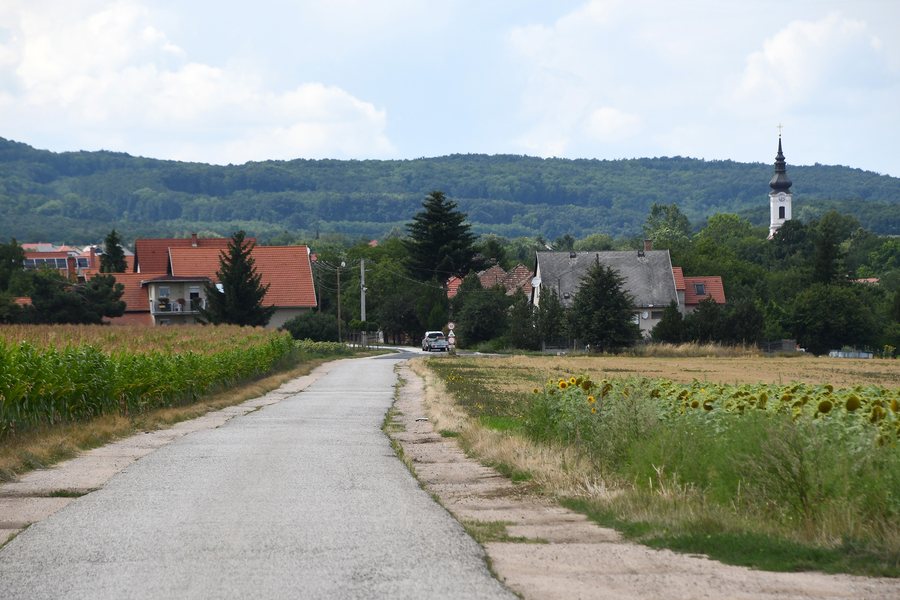 File:Szár látképe 2021 01.jpg
Photo: Pasztilla aka Attila Terbócs via Wikimedia Commons, CC BY-SA 4.0
File:Szár látképe 2021 01.jpg
Photo: Pasztilla aka Attila Terbócs via Wikimedia Commons, CC BY-SA 4.0
Key facts about Szár
- The Calvary was built around 1860 with donations from Imre Vénusz, a priest born in Szár, and the village’s residents.
- The Church of Keresztelő Szent János is more than 250 years old.
- Visitors can view the blood relic of the church’s patron saint, John the Baptist; it is considered unique in Hungary.
- From the crosses on Calvary Hill at the edge of the village, you can see across the village and its surroundings.
What cultural experiences does Szár offer?
The Church of Keresztelő Szent János combines great age with a special religious connection: its patron saint is John the Baptist, whose blood relic can be viewed there. It is considered unique in Hungary. Those interested in sacred sites therefore have a specific reason to include the church in their travel plans. At more than 250 years old, the church also offers a historical connection, without requiring a lengthy cultural-historical explanation.
Another way to experience cultural life is through Szár’s minority dance group. It offers adults and children opportunities to participate and regularly performs at balls and cultural events. Alongside visits to historic sites, this makes community dance and event experiences another area of interest. If seeing a performance is important to your trip, check in advance whether one is scheduled during your visit.
What can you see on Calvary Hill?
The Calvary combines a story of its origins with a viewpoint on the edge of the village. It was built around 1860 with donations from the priest Imre Vénusz, who was born in Szár, and the village’s residents. From the crosses on the hill, there are sweeping views of the village and its surroundings. The crosses thus represent both the village’s recorded history and a view of Szár from outside.
The church and the Calvary appeal to different interests: the church is notable for its age and relic, while the hill offers views of the village and its surroundings, as well as the story of how the site came to be. If you are looking for a hotel in Szár, this distinction can help you identify the aspects you would especially like to explore during your trip.
What other landscape experiences are there in the wider destination?
The landscape can also play a role in choosing a destination. In the wider destination of Székesfehérvár, the reed beds along Lake Velence are home to thousands of waterbirds. This natural feature complements Szár’s cultural and local attractions with a regional focus: while the Calvary and church are specific historic sites, Lake Velence is a landscape area with numerous waterbirds.
Discover more destinations: Vértesboglár, Csabdi, Óbarok, Csákvár, Kajászó, Mány, Felcsút, Bicske.
FAQ
When was the Calvary in Szár built?
It was built around 1860 with donations from the priest Imre Vénusz and the village’s residents. Vénusz was born in Szár.
What can you see in the Church of Keresztelő Szent János?
Visitors can view the blood relic of the church’s patron saint, John the Baptist. It is considered unique in Hungary.
What experiences does Szár bring together?
Local highlights include the historic church, the Calvary with its sweeping views over the village and its surroundings, and the dance group, which performs at balls and cultural events.
See the wider travel overview: Bicske.

