
Lepsény: Churches and Memorial Sites
Accommodation in Lepsény
Lepsény’s history can be understood through its church architecture and dated memorial sites. Particularly revealing is the distinction between older architectural elements, later church buildings, and the commemoration of residents who fell in the First World War.
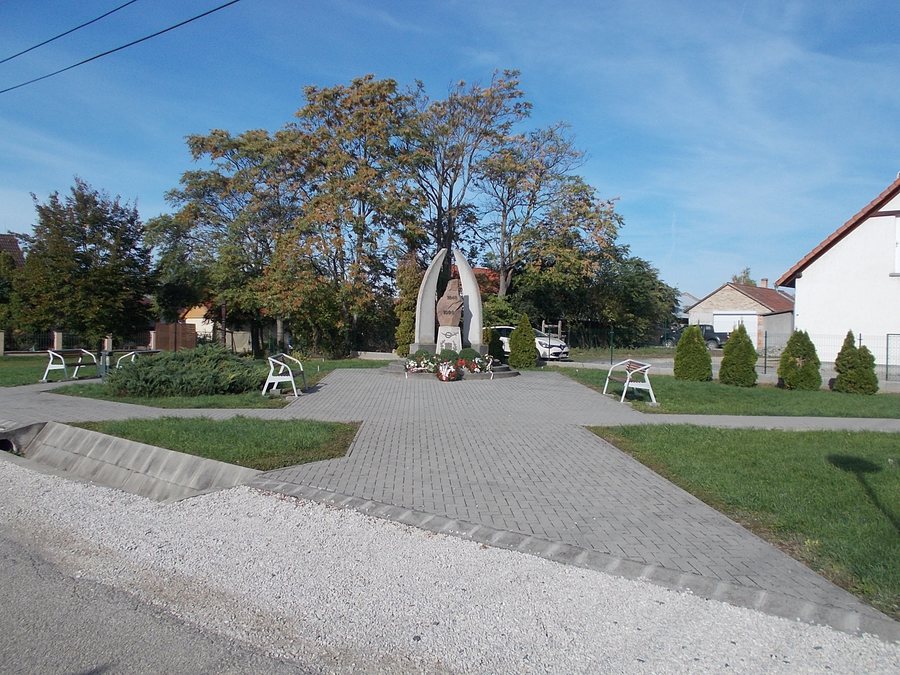 1848-49 Revolution Denkmal, Park, 2024 Lepsény.jpg
Photo: Globetrotter19 via Wikimedia Commons, CC BY-SA 4.0
Lepsény: key facts
- Lepsény lies in the Mezőföld, in the southwest of Fejér County on the border with Veszprém County.
- The Magyarok Nagyasszonya parish church was remodeled in 1902; its chancel dates from 1728. The Reformed church on Fő utca was built in 1897.
- A gravestone dating from 1828 stands in the churchyard. The memorial to soldiers from Lepsény who fell in the First World War was dedicated in 1937.
What do the churches’ building histories reveal?
The Magyarok Nagyasszonya parish church was remodeled in 1902 by Count Ferenc Nádasdy in a Gothic Revival style. The chancel, built in 1728, was incorporated into the work. The two dates therefore refer to different phases: 1728 to the chancel and 1902 to the remodeling of the church.
The Reformed church on Fő utca has a different building history. It was built in 1897 in the Historicist Rundbogenstil, incorporating a 16th-century Roman Catholic church. In addition to the dates, the style descriptions provide another way to compare the churches: the parish church is described as Gothic Revival, while the Reformed church is described as Historicist Rundbogenstil.
Which memorial sites add to the timeline?
A gravestone dating from 1828 stands in the parish churchyard. Its date falls before the two later church-building phases of 1897 and 1902, but after the chancel was built in 1728. This chronology makes clear that the dates relate to different aspects of construction and remembrance.
The memorial to soldiers from Lepsény who fell in the First World War was dedicated on June 6, 1937. The date refers to the dedication of the memorial. Together with the gravestone, it helps distinguish an older grave marker from a later memorial to the fallen.
What else does the wider destination of Székesfehérvár have to offer?
In the wider destination of Székesfehérvár, landscapes and nature offer a different focus from Lepsény’s church and memorial history. The Pákozdi Ingókövek can be reached from Pákozd via several hiking trails that are also suitable for cycling. The geological educational trail, established in 1994, also connects the rock formations.
At Lake Velence, the reed beds provide a habitat for thousands of waterbirds. The rock formations, educational trail, and bird habitat therefore belong to the explicitly wider destination of Székesfehérvár and offer a different thematic perspective from Lepsény’s architectural history.
Discover more destinations: Lajoskomárom, Enying and Dég.
FAQ
When was the Magyarok Nagyasszonya parish church remodeled?
The remodeling in the Gothic Revival style took place in 1902 and was carried out by Count Ferenc Nádasdy. The work incorporated the chancel dating from 1728.
When was the memorial to the fallen dedicated?
The memorial to soldiers from Lepsény who fell in the First World War was dedicated on June 6, 1937.
What natural features are mentioned for Székesfehérvár?
The wider destination of Székesfehérvár includes the Pákozdi Ingókövek, with hiking trails and a geological educational trail, as well as the reed beds at Lake Velence, which provide a habitat for thousands of waterbirds.
For the wider travel overview: Enyingi.

