
Discover Aszód
Accommodation in Aszód
Aszód brings together Baroque architectural history, places of remembrance and the school history of Sándor Petőfi. Its different periods can help you choose the cultural highlights of your trip to Aszód.
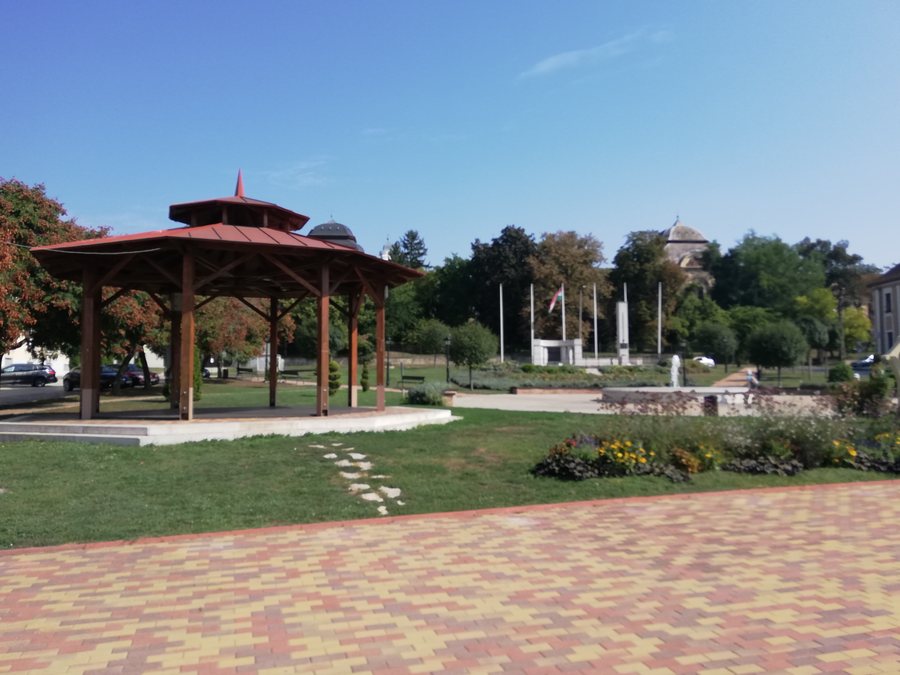 File:20240907 104907 Díszpark Aszód központjában.jpg
Photo: Solymári via Wikimedia Commons, CC BY 4.0
File:20240907 104907 Díszpark Aszód központjában.jpg
Photo: Solymári via Wikimedia Commons, CC BY 4.0
Aszód at a glance
Notable buildings include the old Podmaniczky Castle and its Neoclassical extension from the late 18th century. Churches from the 18th century add their own historical touches. The building that now houses the Petőfi Museum was once a school where Petőfi spent his school years from 1835 to 1838. A new permanent exhibition of the Petőfi Közérdekű Muzeális Gyűjtemény has been open to visitors since March 15, 2026.
Which historic sites define Aszód?
The old Podmaniczky Castle was built in the Baroque style in the first half of the 18th century. Its cour d’honneur faces the main square. The Podmaniczky-Széchenyi Castle was added as a Neoclassical extension in the late 18th century. The two buildings thus represent different architectural periods and are connected through their building history.
The Unikornisos kapu is also part of the town’s history: it has symbolic significance for life in Aszód. On Szabadság tér, the Hősi emlékmű commemorates residents who fell in the First World War. The monument was erected and inaugurated in 1941. Those interested in local history will therefore find, alongside the castles, a monument with a specifically stated dedication.
What do the churches reveal about the town’s architectural history?
The Lutheran church is Baroque and was probably built by Antonius Murarius between 1719 and 1727. Neither the attribution nor the date should be taken as certain: Murarius’s role in building this church remains probable, rather than conclusively documented. The Roman Catholic church is also Baroque, but has a single nave. It was built between 1748 and 1750 and dedicated to the Holy Trinity in 1750.
The two churches can therefore be distinguished by more than their religious affiliation. In the case of the Lutheran church, the attribution is phrased cautiously; for the Catholic church, the construction period and year of consecration are specified more precisely. Together with the castles, they provide an overview of different building purposes and historical periods in Aszód.
What is Sándor Petőfi’s connection to Aszód?
The building that now houses the Petőfi Museum was originally built as a single-storey structure and completed by 1771 for the former Lutheran secondary school, Schola Latina. Petőfi Sándor spent his school years in the building from 1835 to 1838. This connection makes the building’s former use as a school an important part of its history.
The Aszódi Petőfi Múzeum opened on May 11, 1958, in the former school building as the museum of the Aszód district. Several periods thus converge in one building: its former use as a school, Petőfi’s school years and its later history as a museum. If you are interested in literary and educational history, this connection offers a distinct perspective alongside the churches and castles.
Which exhibition is open to visitors?
The new permanent exhibition of the Petőfi Közérdekű Muzeális Gyűjtemény in Aszód has been open to visitors since March 15, 2026. It is a specific place to visit for anyone wishing to include an exhibition in their trip. The new exhibition is part of the Petőfi Közérdekű Muzeális Gyűjtemény; the Petőfi Museum is housed in the building where Petőfi attended school from 1835 to 1838.
If you would like to compare other destinations, discover Verseg, Kartal, Tura and Domony.
FAQ
When did the new permanent exhibition open to visitors?
The new permanent exhibition of the Petőfi Közérdekű Muzeális Gyűjtemény in Aszód has been open to visitors since March 15, 2026.
How are the two Podmaniczky castles connected?
The Podmaniczky-Széchenyi Castle was built in the late 18th century as a Neoclassical extension to the old Podmaniczky Castle. The old castle dates from the first half of the 18th century and is Baroque.
What is Sándor Petőfi’s connection to the present-day Petőfi Museum?
Petőfi spent his school years from 1835 to 1838 in the building that now houses the Petőfi Museum. The building had been completed for the Schola Latina by 1771; the museum opened there in 1958.
For the broader travel overview: Aszódi.

