
Százhalombatta: Churches, Museum and Burial Mound Field
Accommodation in Százhalombatta
Százhalombatta brings together churches from different periods and local history spanning from the Ice Age to the 19th century at the “Matrica” Museum. It is also home to an extensive protected burial mound field. This makes it a cultural and historical destination where architecture, museum and landscape each have a distinct place in your travel plans.
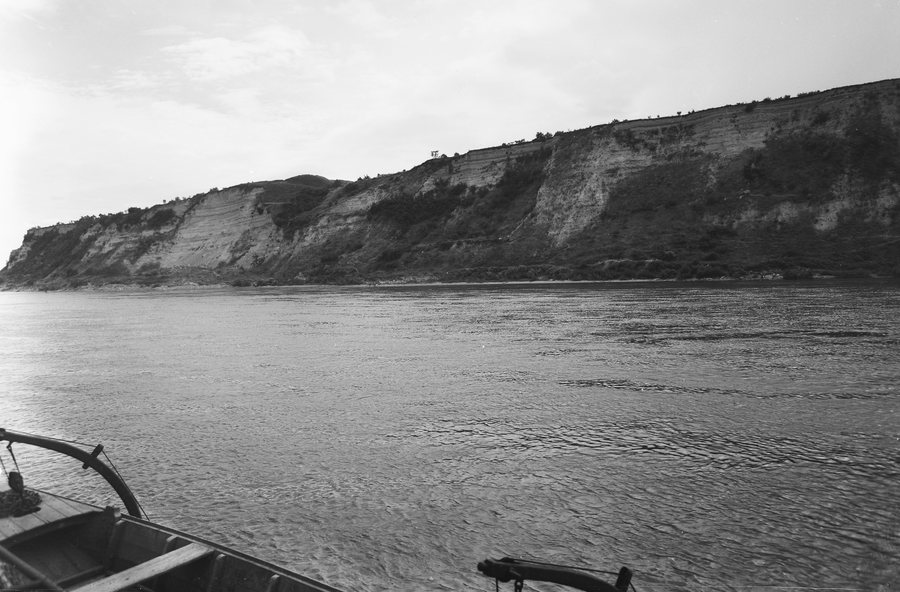 Százhalombatta 1955, löszfal a Dunáról nézve. Fortepan 91106
Photo: Photo: FOTO:Fortepan — ID 91106 : Adományozó/Donor: UVATERV. archive copy at the Wayback Machine
Százhalombatta at a glance
The Catholic Szent-István Church was designed by Imre Makovecz and consecrated in 1996. The Serbian Orthodox Church is a Baroque building dating from 1750, on the main street of the old town. The “Matrica” Museum has a permanent exhibition on local history from the Ice Age to the 19th century; its garden features stone reliefs from the Roman military camp and cemetery of Matrica. The burial mound field near Százhalombatta covers just under 70 hectares and is protected for both archaeological and nature conservation purposes.
Which churches shape the town’s history?
The Serbian Orthodox Church stands on the main street of the old town and was built in the Baroque style in 1750. The Catholic Szent-István Church was designed by Imre Makovecz and consecrated in 1996. Here, you can encounter two denominations and different architectural periods.
For a comparison over time, it is important to note that the dates refer to different events: 1750 is the year the Serbian Orthodox Church was built, while 1996 is the consecration date of the Catholic church. The characteristics also differ: the former is distinguished by its Baroque style and location in the old town, while the latter is notable for its named designer. If you are interested in religious architecture, you can distinguish the churches by denomination, design and historical context.
What history does the “Matrica” Museum tell?
The permanent exhibition at the “Matrica” Museum traces local history from the Ice Age to the 19th century. Its span across time offers a different perspective from the history of a single building: the focus is on a long succession of periods. This gives you a broad historical context if you would like to explore Százhalombatta through more than just its architecture.
The museum garden features stone reliefs from the Roman military camp and cemetery of Matrica. Their origins are therefore more specifically defined than the broad period covered by the permanent exhibition. This distinction is useful for understanding them: the exhibition covers many periods, while the reliefs relate to a specific Roman context.
What makes the protected burial mound field distinctive?
The burial mound field near Százhalombatta covers just under 70 hectares and is protected for both archaeological and nature conservation purposes. Early Iron Age burial mounds are part of the site’s historical context. Parts of the area are still used for agriculture, making this ongoing use another aspect of its character.
Unlike the stone reliefs in the museum garden, the burial mound field is not about individual objects but a large protected area. Both archaeology and nature conservation are part of its significance. Százhalombatta’s cultural and historical profile thus encompasses not only buildings and museum objects, but also a distinct landscape and historical attraction.
Discover more destinations: Érd, Tárnok, Diósd.
FAQ
Which denominations do the two churches represent?
The Szent-István Church is Catholic; the church on the main street of the old town is Serbian Orthodox.
What period does the permanent exhibition cover?
It traces history from the Ice Age to the 19th century. The museum garden also features stone reliefs from Roman Matrica.
How large is the protected burial mound field?
It covers just under 70 hectares and is protected for both archaeological and nature conservation purposes. Parts are still used for agriculture.
For the broader travel overview: Érdi.
