
Discover Tápiógyörgye: Nature and Local History
Accommodation in Tápiógyörgye
Tápiógyörgye brings together nature and local history: the Bíbic nature trail starts at the fishing lake, while church art, sculptures and a war memorial reveal other facets of the town.
Tápiógyörgye at a glance
- The Catholic church was built in 1860 and is dedicated to Saint Anne.
- The statue of Saint John of Nepomuk, created in 1763, now stands in the church garden.
- The Bíbic nature trail can be explored on foot, by bicycle or by horse-drawn carriage.
- The Füle-müle nature trail was established in 2005 in the former castle park.
What nature and leisure spots are there?
There is a birdwatching tower by the fishing lake. The Bíbic nature trail starts at the lake and can be explored in three ways: on foot, by bicycle or by horse-drawn carriage. The choice of how to get around is a practical difference to consider when planning your time in the town.
The Füle-müle nature trail has a different focus. Established in 2005 in the former castle park, it is a birdwatching and botanical trail. It also presents active species conservation measures. The modes of transport are a defining feature of the Bíbic nature trail, while the Füle-müle trail focuses on birds, botany and species conservation.
The former leisure area of the castle park is distinct from these trails: the Strand kert was located in its southern part. Its former facilities included swimming pools and asphalt football and basketball courts. The former park thus brings together nature trails and a leisure area with a place in local history, although they offer different kinds of visitor experiences.
What stories do the church, sculptures and museums tell?
The dated works span the 18th to the 20th century. The statue of Saint John of Nepomuk was created in 1763 and now stands in the church garden. The Catholic church was built in 1860 and dedicated to Saint Anne. A statue of Saint Urban has adorned the courtyard of the Falumúzeum since it was created in 1897.
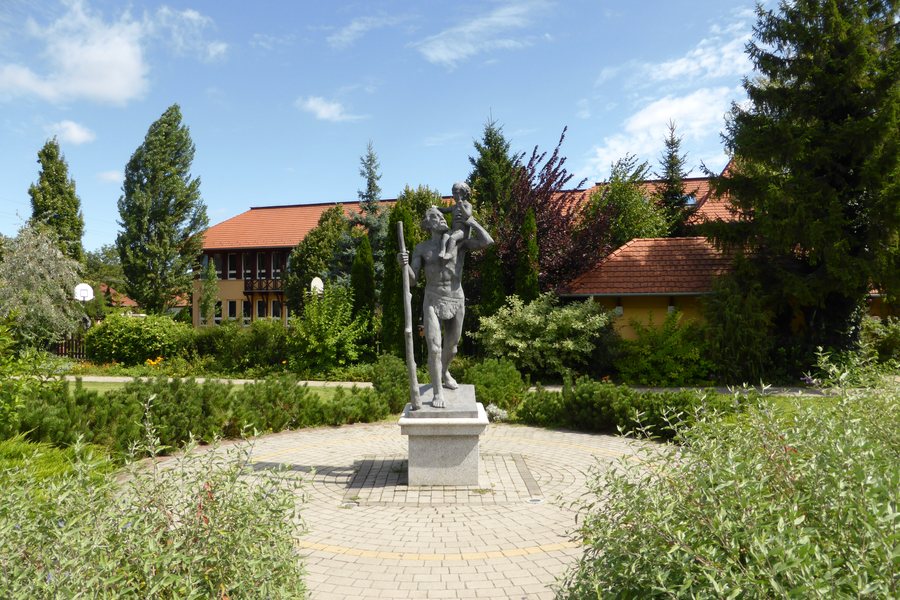
Another chapter is the memorial to the heroes of the First and Second World Wars, unveiled in 1924 and created by Ditrói Siklódy Lőrinc. Oláh Sándor’s Szent Kristóf, Farkas Ádám’s Termés and Rajki László’s Hajnal can also be seen at various locations around the town. The memorials and sculptures differ both in when they were created and in their subject matter.
The two Tájház also have their own distinct focus. The Tájház showcases the local flora and fauna. In a building behind the Falumúzeum, a nature-conservation Tájház houses an exhibition about the natural assets of the surrounding area. Visitors interested in the landscape will therefore find two different exhibition themes here: regional flora and fauna, and the natural assets of the surrounding area.
A visit to the courtyard of the Falumúzeum also offers a chance to enjoy local food: you can try lángos baked in an outdoor oven and fresh bread. This taste of the region complements the themes of local history and nature.
Discover more destinations: Tápiószentmárton, Tápiószele, Nagykáta, Tápiószecső, Mende.
FAQ
How can you explore the Bíbic nature trail?
On foot, by bicycle or by horse-drawn carriage. The starting point is by the fishing lake.
What is the difference between the two Tájház?
The Tájház showcases the local flora and fauna. The nature-conservation Tájház behind the Falumúzeum focuses on the natural assets of the surrounding area.
What can you try in the courtyard of the Falumúzeum?
There is an opportunity to try lángos baked in an outdoor oven and fresh bread.
Back to the regional travel guide: Nagykáta.

