
Veresegyház: Lakes, Thermal Bath and Churches
Accommodation in Veresegyház
Veresegyház combines protected wetlands and lakes with a thermal bath, a market and churches from different periods. This gives you a clear choice when planning your trip: would you like to explore natural areas, spend time in warm thermal water or focus on historic buildings?
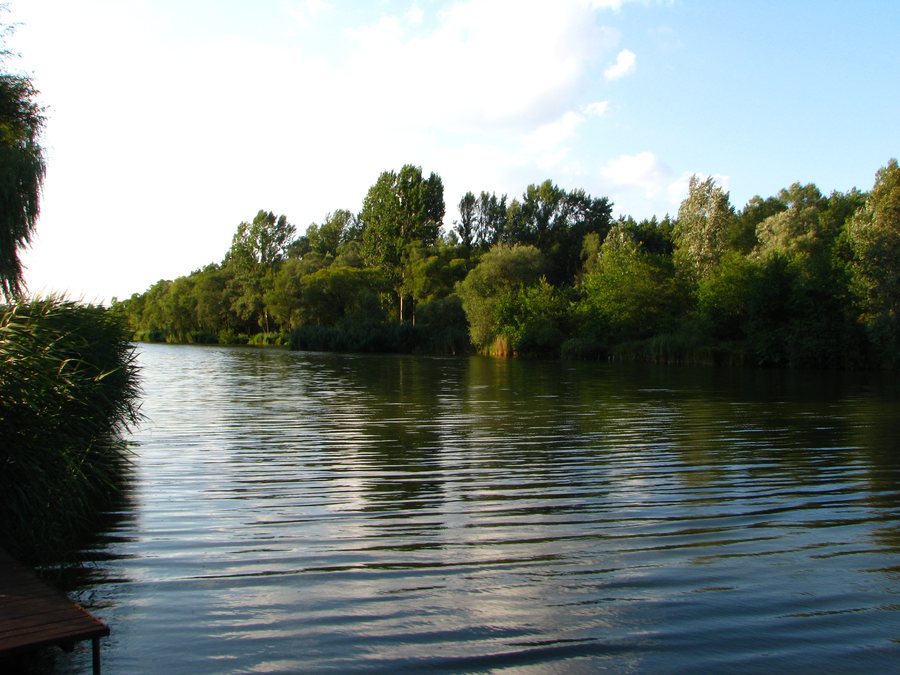 File:Pamut Lake at Ivacs, Veresegyház, HU - panoramio.jpg
Photo: Heru Mornie via Wikimedia Commons, CC BY-SA 3.0
File:Pamut Lake at Ivacs, Veresegyház, HU - panoramio.jpg
Photo: Heru Mornie via Wikimedia Commons, CC BY-SA 3.0
Veresegyház at a glance
- Malom-tó has been locally protected since 1985; its floating bog consists of reeds and sedges.
- Several hundred specimens of marsh helleborine grow in the permanently damp Orchideás-rét.
- The outdoor thermal pool has water at 36–38 °C and is 80 cm deep.
- The market takes place on Wednesdays and Saturdays, except on public holidays, from 6:30 a.m. to 1:00 p.m.
What makes the lake landscape special?
Malom-tó, also known as Veresegyházi Úszószigetek, is characterized by a large, continuous floating bog. Reeds and sedges make up its plant life. The lake was created in the Middle Ages by damming the Sződrákosi-patak and has been under local protection since 1985. This brings together a long history of formation and a clearly designated protected area.
Another natural feature is the locally protected Orchideás-rét. It lies between the eastern shore of Pamut-tó and the Fenyves. The meadow is permanently damp, and several hundred specimens of marsh helleborine grow there. If you want to give more weight to nature and plant life, you can see this meadow and the floating bog as different aspects of the landscape of Veresegyház.
The lakes near Veresegyház are associated with fishing, swimming and walks as leisure activities.
What does the thermal bath offer?
Veresegyházi Termálfürdő has an outdoor thermal pool. The water there is 36–38 °C, and the pool is 80 cm deep. Relaxation and recuperation are specifically mentioned as the pool’s purposes. The temperature and depth give you concrete points of comparison when considering the thermal bath alongside the town’s other nature- and culture-related attractions.
The source of the thermal water is also noteworthy: it rises from a depth of 1,414 to 1,457 metres, supplying around 800 litres per minute at a temperature of 65 °C. The water is cooled before it is channelled into the pools. The temperature of the rising water and that of the bathing pool should therefore be distinguished: the pool is at 36–38 °C, while the thermal water reaches 65 °C at the source.
When is it worth visiting the market?
The market on the main square and Fő utca takes place on Wednesdays and Saturdays, except on public holidays. It runs from 6:30 a.m. to 1:00 p.m. on both days. Producers and traders sell food and other goods at the stalls. You can take these regular days and times into account when choosing your day to visit; the stated exception applies on public holidays.
Which churches tell the story of the town?
The churches of Veresegyház represent different periods of construction. Szentlélek-Templom was built in 2015–2016 next to the former Roman Catholic church. By contrast, the Reformed Church at Kálvin tér 1 was built between 1784 and 1798, in connection with Joseph II’s Edict of Toleration of 1781. If you are interested in the history of religious architecture, these two projects can be seen as clearly separated in time.
FAQ
When is the market in Veresegyház?
Wednesdays and Saturdays from 6:30 a.m. to 1:00 p.m., except on public holidays.
How warm is the water in the thermal pool?
The outdoor thermal pool has a water temperature of 36–38 °C and is 80 cm deep.
What is Orchideás-rét?
A locally protected, permanently damp meadow between the eastern shore of Pamut-tó and the Fenyves, where several hundred specimens of marsh helleborine grow.
When were the churches built?
Szentlélek-Templom was built in 2015–2016 next to the former Roman Catholic church. The Reformed Church at Kálvin tér 1 was built between 1784 and 1798.
For the broader travel overview: Pest.

