
Máriapócs: Monastery, History and Park
Accommodation in Máriapócs
Máriapócs combines a visit with a clear date in its history, religious buildings and a park beside an oak forest. This offers an initial overview of the town’s history and landscape, while also placing it in the broader context of Szabolcs-Szatmár-Bereg.
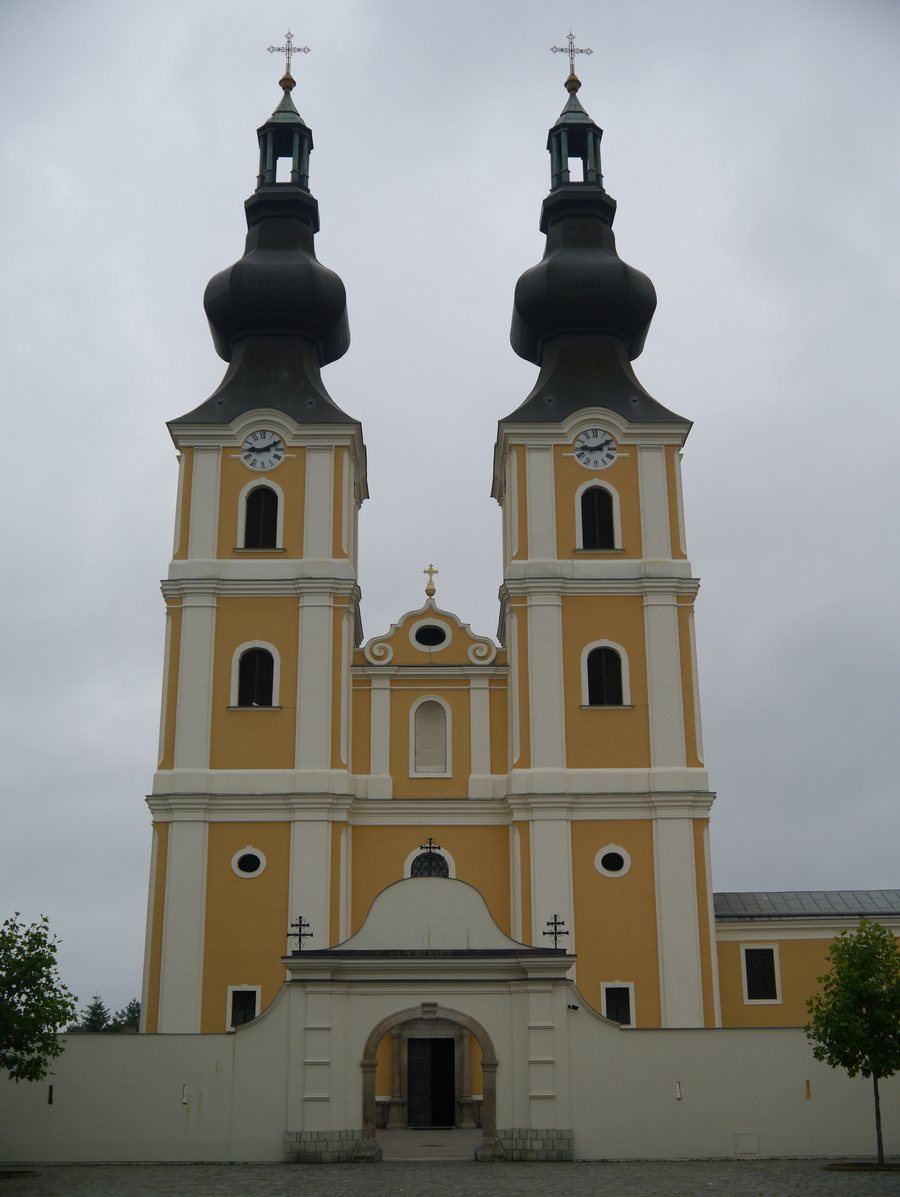 File:Máriapócs Basilika Sieben Schmerzen Mariä Fassade 2.JPG
Photo: Zairon via Wikimedia Commons, CC BY-SA 3.0
Key facts about Máriapócs
- Pope John Paul II visited Máriapócs in 1991.
- The Roman Catholic church is the town’s oldest listed building.
- The Greek Catholic monastery was built in the Baroque style in the 18th century and is Hungary’s only Basilian monastery.
- Szabadidő Park covers just under six hectares; an oak forest lies at its edge.
Which historic sites shape Máriapócs?
Pope John Paul II’s visit in 1991 is a clearly dated reference point in the town’s history. Its architectural heritage includes the Roman Catholic church, the oldest listed building in Máriapócs. The Greek Catholic monastery offers a different architectural accent: it was built in the Baroque style in the 18th century and is Hungary’s only Basilian monastery. The two buildings therefore stand out for different features: the church for its age and listed status, and the monastery for its period of construction, style and unique standing in Hungary.
The Bazilita Gyűjtemény is also one of Máriapócs’s attractions. Together with the religious buildings, it is another cultural point of reference for understanding the town.
What natural landscape does Máriapócs offer?
Szabadidő Park covers just under six hectares. An oak forest lies at the edge of the park. These are two specific features of the local landscape: the approximate size of the park and the adjoining woodland. The park thus adds a distinct landscape dimension to the historic buildings.
What else does the broader destination of Szabolcs-Szatmár-Bereg offer?
The wider destination of Szabolcs-Szatmár-Bereg is home to other distinctive cultural sites. The Vay-Ádám Museum Collection of the Hungarian National Museum is housed in the Renaissance Vay Castle in Vaja. Báthori Castle in Nyírbátor has a permanent exhibition and a tableau depicting members of the Báthori family in a period setting. Andrássy Castle in Tiszadob was built between 1880 and 1885 in the French Gothic style: it was commissioned by former Prime Minister Gyula Andrássy and designed by Ignác Alpár.
The regional landscapes also differ in their defining features. The Bátorliget Ancient Bog in Bátorliget is a roughly 53-hectare strictly protected area. It preserves particularly complete examples of various stages in the vegetation and landscape history of the Great Hungarian Plain. Cégénydányád Park Nature Reserve currently covers 14.28 hectares. The Nyíres-tó and Báb tava peat bogs lie near Csaroda; their origins date back to the Ice Age.
The 1,000-hectare nature reserve near Tiszadob includes oxbow lakes, floodplain forests and grassland. A large heron colony lives in Tölgyes Forest, where 80 to 90 pairs nest. Another regional cultural attraction is the northern Hungarian section of the Route of Medieval Churches, which links 37 churches in the medieval ecclesiastical landscape of Szabolcs-Szatmár-Bereg.
FAQ
When did Pope John Paul II visit Máriapócs?
He visited the town in 1991.
What is the oldest listed building in Máriapócs?
It is the Roman Catholic church.
What makes the Greek Catholic monastery distinctive?
It was built in the Baroque style in the 18th century and is Hungary’s only Basilian monastery.
For the broader travel overview: Nyírbátor.

