
Nyírbátor: Churches, Castle and Báthori History
Accommodation in Nyírbátor
Nyírbátor offers travelers a mix of church architecture, Báthori history and exhibitions. A city history walking trail connects two churches on foot, alongside a museum, a castle, horseback riding, fishing and a thermal spa. When planning your accommodation, you can consider which of these highlights you want to shape your stay.
Nyírbátor at a glance
- The 450-meter-long Várostörténeti Sétány runs between the Minorite Church and the Reformed Church.
- Construction of the Reformed Church probably began in 1484 and was completed in 1511.
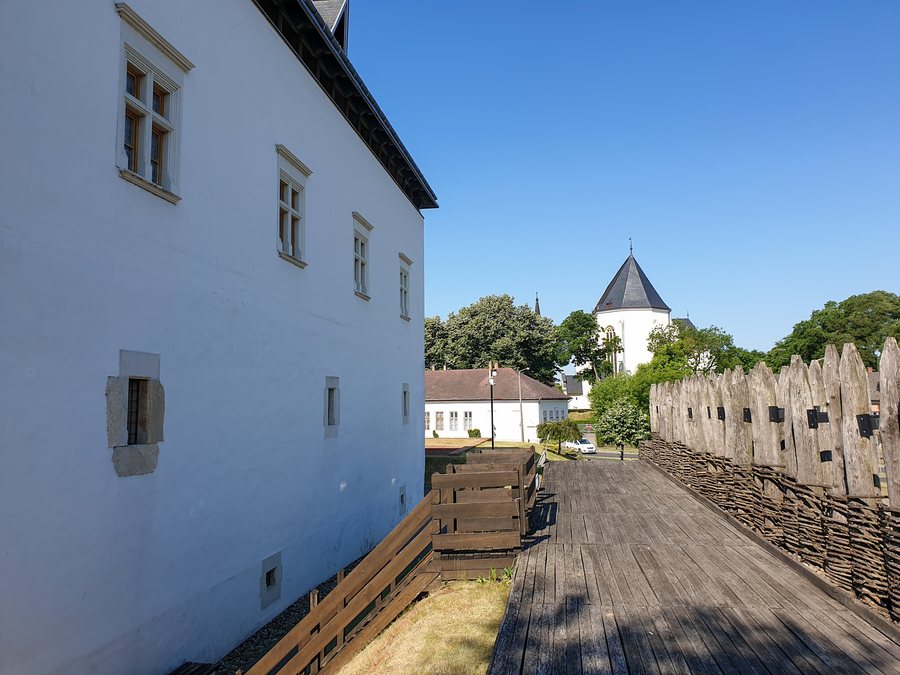
- The Báthori-Várkastély was rebuilt in 2006 and preserves medieval wall remains.
- Fishing is currently possible at Szénaréti-tó.
Which buildings tell the story of Nyírbátor?
The Reformed Church was commissioned by Báthori István, Voivode of Transylvania. Construction probably began in 1484 and was completed in 1511. Beside the church stands a wooden bell tower, built in 1640 from oak beams in the Transylvanian style. At just under 30 meters tall, it is considered Hungary’s oldest and largest wooden bell tower. The church and bell tower thus offer two distinct historical points of reference: the church was built between the late 15th and early 16th centuries, and the tower in the 17th century.
A renovated staircase and a lift lead to the roof structure of the Reformed Church. The restored timber-framed roof structure is open to visitors and is considered unique in Europe. The Minorite Church is also worth a look for its furnishings: the interior features richly decorated altars and a pulpit. The Greek Catholic Church in Nyírbátor is Baroque in style; it was built in 1932 and renovated in 2013.
The building of the Báthori-Várkastély, rebuilt in 2006, preserves the only part of the former castle whose standing walls contain medieval remains. A permanent exhibition is devoted to the era and legends of the Báthori family. Báthori István, a figure in the city’s history, is also commemorated with a statue, which stands between the Reformed Church and the castle.
What can you discover along the city history walking trail?
The 450-meter-long Várostörténeti Sétány runs between the Minorite Church and the Reformed Church and serves as a pedestrian link for residents and tourists alike. Life-size sculptural illustrations explore the roots of the dragon cult in Nyírbátor, the legend of Szentvér utca and the history of the Báthori family. The trail thus combines a practical walking route with several themes from the city’s history.
The collections of the Báthori István Múzeum include archaeology, history, ethnography, the history of weapons, fine arts and applied arts. Permanent exhibitions include “Nyírbátor város évszázadai” and an exhibition commemorating the 70-year history of the border guard. In the museum park there is also a Tree of Life sculpture by woodcarver Schmidt Sándor. It symbolizes the 1956 Revolution and was installed on its 50th anniversary.
What experiences complement a cultural visit?
Horseback riding is available at Fedeles Lovarda, which opened in autumn 2014. Fishing is currently possible at Szénaréti-tó; day permits are available on site, at the Csali fishing shop at the beginning of Fáy út and at Sorompó presszó on Gyulaji út. Since ticket information can change, check the sales outlets before your visit.
The pools at Sárkány Wellness és Gyógyfürdő use water that emerges in Nyírbátor, known as Báthory medicinal water. If you are interested in exhibition topics beyond local history, Városi Galéria has a doll exhibition featuring pieces from the collection of Kissné Szalontai Judit.
FAQ
What does the doll exhibition at Városi Galéria feature?
It includes pieces from the collection of Kissné Szalontai Judit.
What types of collections does the Báthori István Múzeum have?
Its collections include archaeology, history, ethnography, the history of weapons, fine arts and applied arts.
Where can you get day permits for fishing at Szénaréti-tó?
Day permits are available on site, at the Csali fishing shop at the beginning of Fáy út and at Sorompó presszó on Gyulaji út. Check the sales outlets before your visit, as ticket information can change.
What is distinctive about the water at Sárkány Wellness és Gyógyfürdő?
The Báthory medicinal water used in the pools is a calcium-magnesium-hydrogen carbonate water that emerges in Nyírbátor. Its dissolved salt content is 1,526 mg/l.
For the broader travel overview: Szabolcs-Szatmár-Bereg.

