
Szentgyörgyvölgy: Hetés Plain, Őrség and church art
Accommodation in Szentgyörgyvölgy
Szentgyörgyvölgy combines a distinctive landscape setting with notable examples of Reformed and Catholic church art.
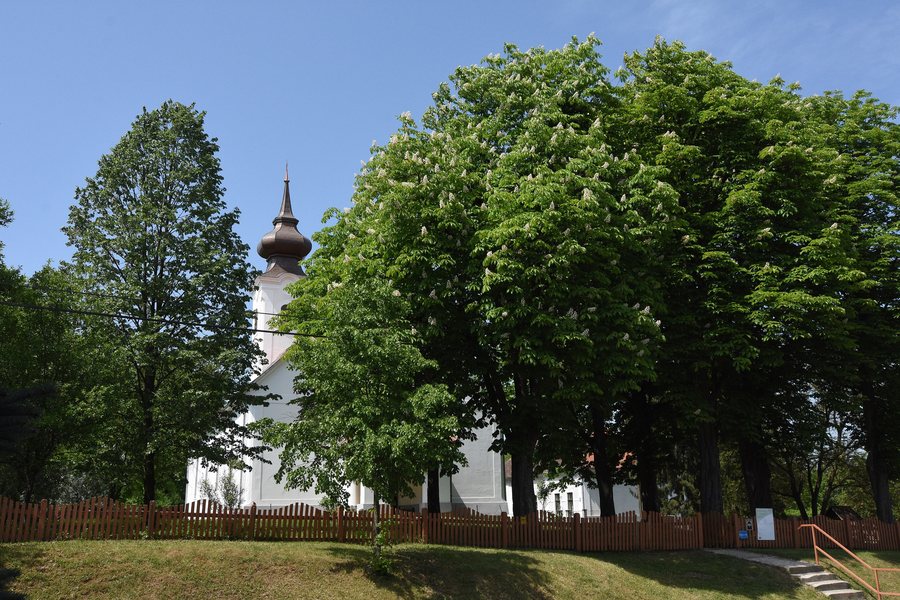
Szentgyörgyvölgy at a glance
- Szentgyörgyvölgy lies on the edge of the Hetés Plain and in the wooded southern part of Őrség.
- The Reformed church has painted wooden panels on its ceiling and gallery.
- The Roman Catholic church is dedicated to Saint George and has a chancel fresco from the Dorffmeister School.
What kind of landscape characterises Szentgyörgyvölgy?
Its location on the edge of the Hetés Plain and in the wooded southern part of Őrség gives Szentgyörgyvölgy a distinct landscape setting. In the surrounding area, the former Szentgyörgyvölgyi Tájvédelmi Körzet (Szentgyörgyvölgy Landscape Protection Area) preserved its original appearance in an almost natural state through selective logging.
This gives you two distinct landscape features to consider when planning your trip: the Hetés Plain and the wooded part of Őrség. If you are interested in natural and cultural landscapes, you can make this setting a focus alongside the churches.
What makes the churches of Szentgyörgyvölgy distinctive?
The Reformed church is particularly notable for its painted wooden panels. There are 88 panels on the ceiling, another 37 on the underside of the gallery and 20 on its balustrade. Among Hungary’s Reformed churches with painted coffered ceilings, it is considered the westernmost and oldest. The number and placement of the panels give a concrete sense of the scale of the painted decoration.
The Roman Catholic church also forms part of the village’s cultural character: it is dedicated to Saint George and has a chancel fresco from the Dorffmeister School. Szentgyörgyvölgy is therefore home to distinct examples of church art side by side—the painted panels of the Reformed church and the fresco in the Catholic church’s chancel. If you are including cultural sites in your travel plans, these offer two clearly different points of interest.
The religious history adds context to these buildings. At the time of the Reformation, the entire population of Szentgyörgyvölgy adopted the teachings of John Calvin and resisted re-Catholicisation for a long time. This historical connection helps explain the importance of the Reformed church in the local context.
What other topics does the Zala destination offer?
The broader destination of Zala offers regional landscape and cultural themes that complement a visit to Szentgyörgyvölgy. The Zalai Borvidék (Zala Wine Region) developed on the slopes and plateaus of the Zalai-dombság hills and on the northwestern slopes of the Keszthelyi-hegység mountains. It comprises two wine-growing districts and 38 settlements. This provides a regional context for viticulture without conflating it with Szentgyörgyvölgy’s landscape or local features.
Another example in Zala is Kis-Balaton: it is the county’s largest body of water, is strictly protected and covers 14,745 hectares. It is also the setting for István Fekete’s classic novels Tüskevár and Téli berek. Its natural environment, protected status and literary connection offer a different perspective from the church art and landscape themes of Szentgyörgyvölgy.
How can you focus your accommodation search?
First consider whether you want to focus your stay on Szentgyörgyvölgy, with its landscape and church art, or include other themes across the Zala destination. This distinction can help you tailor your hotel search to your travel group’s interests. Compare the specific details of each listing with your own requirements rather than inferring particular accommodation features from the sights.
Discover more destinations: Lenti, Bödeháza, Csesztreg, Felsőszenterzsébet, Ortaháza, Kerkafalva, Alsószenterzsébet, Lovászi.
FAQ
What kind of landscape characterises Szentgyörgyvölgy?
The village lies on the edge of the Hetés Plain and in the wooded southern part of Őrség. In the surrounding area, the former Szentgyörgyvölgyi Tájvédelmi Körzet (Szentgyörgyvölgy Landscape Protection Area) preserved its original appearance in an almost natural state through selective logging.
What is special about the Reformed church?
It has 88 painted wooden panels on the ceiling, 37 on the underside of the gallery and 20 on its balustrade. Among Hungary’s Reformed churches with painted coffered ceilings, it is considered the westernmost and oldest.
What church art can you see in Szentgyörgyvölgy?
The Reformed church is known for its painted wooden panels. The Roman Catholic church, dedicated to Saint George, has a chancel fresco from the Dorffmeister School.
For the broader travel overview: Lenti.

