
Dobeles Novads: Hotels amid Nature and Culture
Accommodation in Dobeles Novads
Dobeles Novads brings together striking natural features and a rich, multifaceted cultural history. Krievkalni is a long, forested ridge regarded as a unique landform; its highest point is 149 metres above sea level. A hiking trail on Krievkalni leads to a rest area with benches and a fire pit.
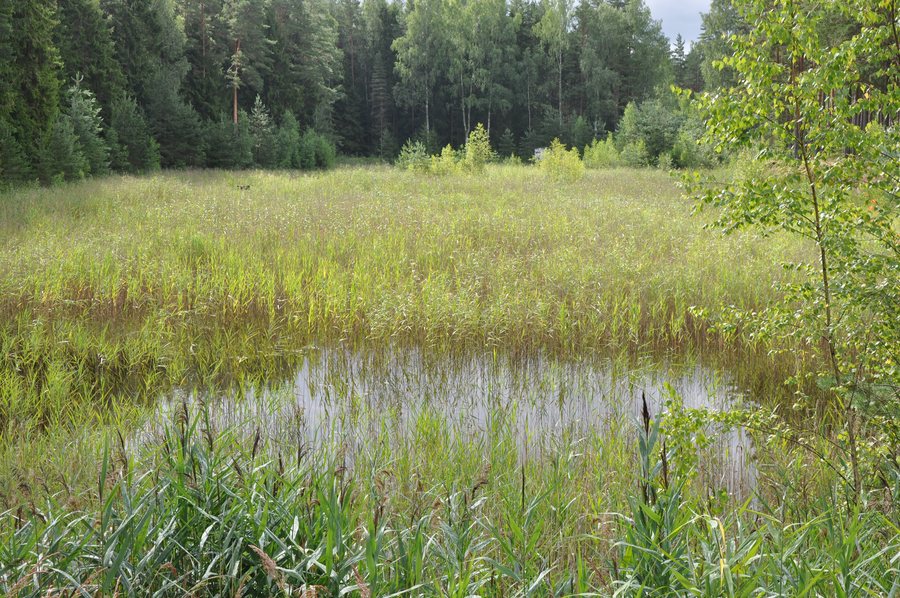 File:Aizaudzis dīķis, Jaunbērzes pagasts, Dobeles novads, Latvia - panoramio.jpg
Photo: M.Strīķis via Wikimedia Commons, CC BY-SA 3.0
File:Aizaudzis dīķis, Jaunbērzes pagasts, Dobeles novads, Latvia - panoramio.jpg
Photo: M.Strīķis via Wikimedia Commons, CC BY-SA 3.0
Nature
The Pokaiņi forest features steep hills, deep valleys and springs. Only the most necessary facilities have been created there to preserve its largely untouched character. The Ķeveles Springs also shape the landscape: they consist of seven springs that emerge from a ravine and flow together into a single stream. Next to the springs is a rest area with a fire pit, swings, a table and benches.
Pētera Upīšis’s Lilac Garden covers five hectares and includes more than 300 lilac varieties and hybrids. The garden also offers sweet cherry tastings and harvesting in early July, as well as an apple festival in early October.
Trails and Water
On the left bank of the Bērze in Dobele, trails and wooden walkways lead through the marshy riverbank. A viewing platform by the water offers views of the fountains in the river and the ruins of Dobele Castle. In the Latvian State Forests nature park in Tērvete, a network of small and large trails runs through the park. The trails can be used on foot, by bicycle and with a stroller; a viewing tower rises above the pine treetops.
The nature park includes wooden sculptures and “living” fairy-tale characters associated with Latvian writer Anna Brigadere. Tērvetes Gaisa takas features rope, cable and wooden structures several metres above the ground. Tērvetes Tarzāna Park has nine courses of varying difficulty and more than 100 obstacles.
Culture and History
In 1335, the Livonian Order began building the stone castle in Dobele on the site of a burned-down Semigallian wooden castle. The chapel of the Livonian Order in Dobele Castle began operating in 2020; the complex has become a multifunctional centre for cultural and tourism development.
The permanent exhibition “Reiz Dobelē…” at the Dobele Regional Museum tells the story of Dobele and its surroundings from prehistory to the mid-20th century. The regional museum preserves more than 23,000 objects connected with the history and notable figures of the city of Dobele and Dobeles Novads. The “Pikšas” museum is located in an old farmhouse in Zemgale where Kārlis Ulmanis spent his childhood.
The Bērze Watermills are a technical monument built in 1863. Their complex, with a diversion channel and weir, is the only still-operating complex in Latvia where grain is processed using hydropower. Groups can visit the Bērze Watermills by prior arrangement and learn about the historic buildings, traditional grain processing, and the structure and operation of the small hydroelectric power station.
Regional Impressions
At Rūķīšu tējas, visitors can learn about the cultivation, harvesting and drying of medicinal plants on guided tours, sample herbal teas and purchase selected teas.
Trains have stopped at Dobele railway station since 15 August 1927. Historically, there were direct rail connections to Liepāja, Jelgava and Riga.
Other Places
Other subareas of Dobeles Novads include Prinči, Auri, Biksti, Aizstrautnieki, Zebras Muiža and Dobele. Other destinations in the catalogue include Engures Novads and Mazsalaca.
To the overarching travel overview: Latvia.

