
Hotels in Liepāja Between Culture and Nature
Accommodation in Liepāja
Liepāja brings together culture, history, nature and local produce at a range of distinct, clearly identifiable locations. Between the concert hall, museum, historic sites, park landscapes and waterfront paths, a diverse picture of the city emerges, revealed through individual places and their respective characteristics.
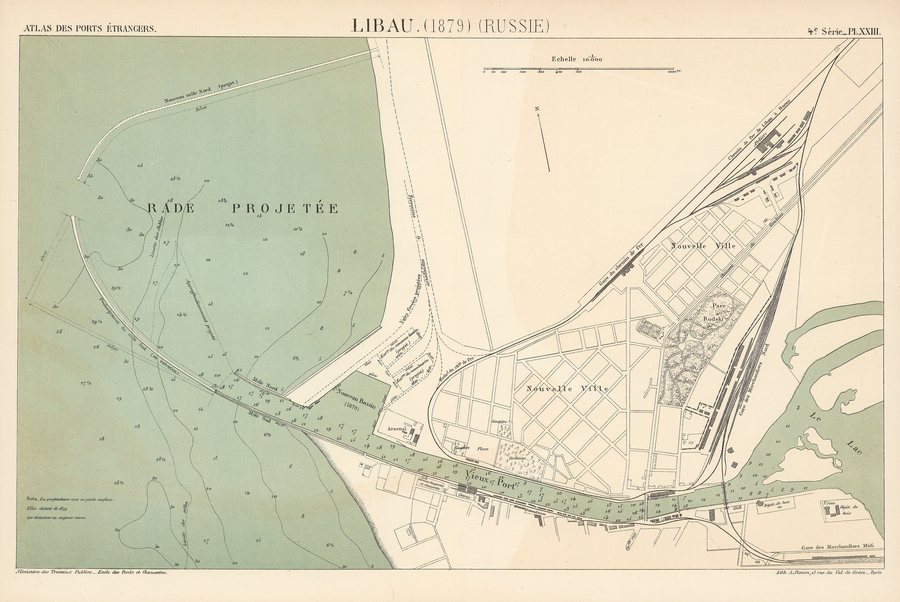 File:Liepaja Libau 1879.jpg
Photo: École nationale des ponts et chaussées (France) via Wikimedia Commons, Public domain
File:Liepaja Libau 1879.jpg
Photo: École nationale des ponts et chaussées (France) via Wikimedia Commons, Public domain
Culture
The “Lielais dzintars” Concert Hall is a cultural and events centre and the home of the Liepāja Symphony Orchestra. During a guided tour, visitors can explore the concert and art spaces, step onto the stage and enjoy panoramic views from the seventh floor. Following its reconstruction, the “Pūt, vējiņi!” Concert Garden also offers an extensive cultural programme throughout the summer.
The Liepāja Museum preserves more than 130,000 objects and artefacts. Its permanent exhibitions tell the story of Liepāja from the Stone Age to the 19th century; visitors can also learn about the art and life of the 20th-century woodcarver Miķelis Pankoks. The “Liepāja – kā pa notīm!” walking route connects significant historical, cultural and architectural sights in the city centre. A map and musical notes set into the pavement help with orientation.
The Amatnieku nams brings together 16 artisans from the Kurzeme region. Visitors can observe how traditional costumes are woven and how silverwork, ceramics, basketry, leather goods and amber products are made. Pētertirgus is also one of the distinctive settings of urban life. Its pavilion was designed in the Art Nouveau style by architect Louis Melville and opened in 1910. The market offers a wide range of seasonal fruit and vegetables, forest products, flowers, plants and other produce from farms throughout the year.
History
The “Hoijeres kundzes viesu nams” Interior Museum, dating from the 17th to the 19th century, has a restored layout from the late 17th century. It includes a taproom, Hoijeres kundze’s living quarters, a historic mantel chimney and a bread oven. According to surviving accounts, Tsar Peter I visited Liepāja and Hoijeres kundze’s inn in 1697.
At Fortification Battery No. 3 stands a symbolic memorial to the Kurelian movement, a Latvian military unit from the Second World War that fought against both occupying powers—Nazi Germany and the Soviet Union. At the Northern Fort, partially demolished sections of artillery batteries, underground structures and powder magazines can still be seen today.
Nature
The 3-kilometre-long Jūrmalas Park, covering 50 hectares, is one of Latvia’s largest landscaped parks. A path for pedestrians and cyclists runs through the entire park. There are also walking paths, a children’s activity area, cafés, various attractions, football and basketball courts, and tennis courts.
Beberliņi Recreation Park covers 45.3 hectares. Among its key natural assets is a protected pine forest growing on dunes, surrounding the 8.8-hectare artificial body of water known as Beberliņi. A 2-kilometre path is available for active recreation, including roller skating and cycling.
The Trade Canal connects Lake Liepāja with the sea; in the urban section, yachts moor there in summer. A nature trail of approximately 4 kilometres allows for peaceful walks, crosses wooden footbridges and offers two viewing platforms with expansive views of Lake Liepāja.
More destinations
More destinations: Libau, Pļaviņu Novads, Gulbenes Novads, Engures Novads, Carnikavas Novads, Mērsraga Novads, Cesvaines Novads, Jaunpiebalgas Novads.
To the overarching travel overview: Latvia.

