
Prienų District Municipality
Accommodation in Prienų District Municipality
Šilavoto Davatkynas and the Historic Paci Route offer tangible points of connection to the cultural history of Prienų District Municipality. Here, the history of a religious community, a tradition of plein-air painting and a range of stops along a historic route come together.
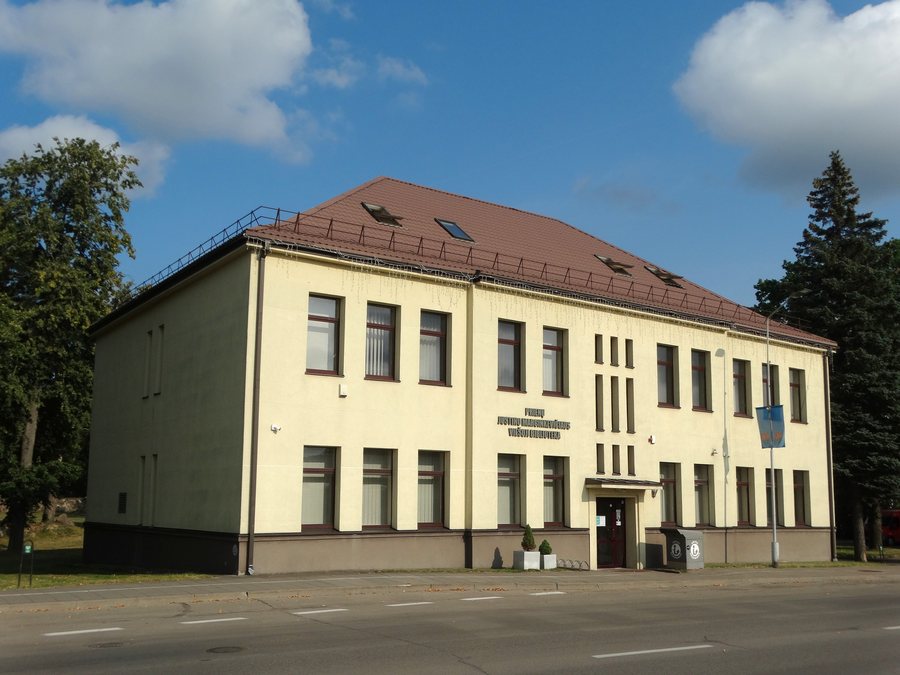
Prienų District Municipality at a glance
- M. Dabrišiūtė settled at Šilavoto Davatkynas around 1895.
- Over more than 100 years, 14 women known as “davatkėlės” lived there in an informal religious community.
- The Historic Paci Route leads to churches, museums, a library, a monument and a watermill.
- The plein-air painting gatherings organized by painter A. Vilpišauskas at Šilavoto Davatkynas became a tradition.
What does Šilavoto Davatkynas tell us?
The history of Šilavoto Davatkynas is connected with M. Dabrišiūtė, who settled there around 1895. Over a period of more than 100 years, 14 women lived here in an informal religious community. “Davatkėlės” is the traditional name for these women. They cared for the sick and supported the church.
Religious practice and social support are at the heart of this story. For travelers interested in local culture, the site offers a different perspective from a simple sequence of buildings: the women’s traditional activities give the community a tangible historical dimension.
Which stops does the Historic Paci Route connect?
The route leads to Veiveriai St. Louis Church and the Veiveriai Region History Museum, whose exhibition is dedicated to partisan Juozas Lukša-Daumantas. Other stops include Šilavoto St. Church of the Heart of Jesus and Šilavotas “Davatkynas.” In Prienai, the route features the Justinas Marcinkevičius Public Library, Prienai Church of the Revelation of Christ and Prienai Region Museum. It also includes a monument to Kęstutis, Grand Duke of Lithuania, and the Prienai watermill.
The stops vary in focus: alongside churches are museums and a library, a monument and a watermill. The route can therefore be explored as a cultural sequence covering different themes, while Šilavoto Davatkynas particularly highlights the history of the religious community. If you plan to visit indoors, check the relevant visitor information in advance.
The plein-air painting gatherings organized by A. Vilpišauskas also form part of Davatkynas’s cultural history: they became a tradition. This describes a tradition, not a specific event date. Also discover Byliškės and Balbieriškio eldership.
How can you plan your hotel search around the places you want to visit?
First, consider whether you mainly want to explore the history of Davatkynas or the range of stops along the Historic Paci Route. When searching for a hotel, you can then compare the locations of specific options with your planned visits.
What else does the wider destination of Kaunas County offer?
In the wider destination of Kaunas County, Kaunas Castle offers its own cultural and historical highlights. Built in the mid-14th century, it is considered the city’s oldest historical landmark and one of the oldest brick castles in Lithuania. Exhibitions in the restored and reconstructed tower cover the castle’s history, important historical figures, changes to its walls and the evolution of its functions from the 14th century to the present day. The castle also offers guided tours and educational programs.
Also in Kaunas County is Raudondvaris Manor Castle, a Renaissance architectural monument dating from the early 17th century. The interactive audio tour “Dramaturas” leads visitors through 14 stops in the halls, cellars, park and surrounding manor complex. Its AI-created story combines the manor’s history with the romantic tragedy of Žygimantas Augustas and Barbora Radvilaitė. Check whether the tour is running seasonally before your visit.
Which nature trails can you compare in Kaunas County?
Obelynė Botanical Park was founded in Akademija by naturalist Tadas Ivanauskas. Another natural highlight is the five-hectare Kadagių Valley: a slope covered with wild common juniper on the shore of Kaunas Lagoon, within Kaunas Lagoon Regional Park. In the upper part of the valley, a 1.3-kilometer educational trail was built along the steep slope in 2010. It offers views of the widened Nemunas, Dabinta Island and geological exposures.
The Šaltinių Trail consists of paths ranging from 2.6 to 6 kilometers through Kačerginė Pine Forest. Viewpoints offer views of the Nemunas, and the paths lead to Pypliai Hill and back. The trail opened on September 8, 2026. Kaunas County also has educational and health trails ranging from 2 to 17 kilometers. For comparison, you can choose between a 1.3-kilometer educational trail and paths with longer signposted distances.
For a broader destination comparison, also discover Kaunas District Municipality, Jonava District Municipality, Kėdainiai District Municipality, Kaišiadorys District Municipality, Raseiniai District Municipality and Jurbarkas District Municipality.
FAQ
What makes Šilavoto Davatkynas historically significant?
M. Dabrišiūtė settled there around 1895. For more than 100 years, 14 women known as “davatkėlės” lived in an informal religious community. They cared for the sick and supported the church.
What kinds of stops can you find along the Historic Paci Route?
The route leads to churches, museums and a library, as well as a monument and a watermill. Šilavotas “Davatkynas” is also listed as a stop.
Which trail lengths can you compare in Kaunas County?
The educational trail in Kadagių Valley is 1.3 kilometers long. The Šaltinių Trail paths are 2.6 to 6 kilometers long.
For the wider travel overview: Kaunas County.

