
Šilutė District Municipality: Delta, Culture and Nature
Accommodation in Šilutė District Municipality
River deltas, landscapes along the Curonian Lagoon, and historic cultural sites shape the character of Šilutė District Municipality. Museums, bird migration, and nature trails offer different focal points for planning your trip. If you are looking for a hotel, you can start by considering which places and themes you want to focus on during your stay.
Quick facts about Šilutė District Municipality
- The deltas of the Nemunas and Minija rivers cover almost a quarter of the municipality’s area.
- Cape Ventė is the municipality’s westernmost point and a peninsula on the eastern shore of the Curonian Lagoon.
- A small-craft harbor was established in Kintai in 2014 to meet the needs of fishermen and tourists.
Which historic sites can you discover?
In Šilutė, the history of the Hugo Šojus Manor dates back to 1721, when it was established as a state manor. The elegant building combines late Classicism and Historicism and features decoration typical of the Klaipėda Region. Since 2015, it has housed the Hugo Šojus Museum.
In Kintai, the Kintai Vydūnas Cultural Centre and Memorial Museum is housed in a former school dating from 1705. Vilhelmas Storosta-Vydūnas worked there from 1888 to 1892. The centre also organizes tourist routes around Kintai. The page for Kintai has more information about the town.
Another architectural highlight is the Vilkėnai Manor ensemble. Built between 1880 and 1897, it includes a two-storey Neo-Renaissance manor house with a tower, as well as a landscaped park combining different styles. The municipality is therefore home to different architectural landmarks: a manor with late-Classical and Historicist features, and a later Neo-Renaissance ensemble.
What do the trails and landscapes have to offer?
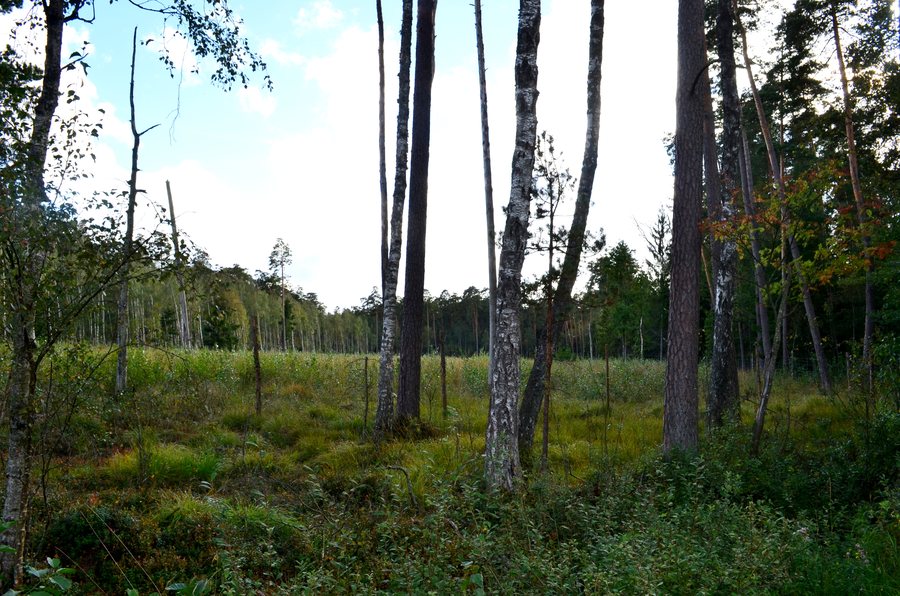
The Aukštumala Nature Trail is 2,400 metres long and lies within the Aukštumalė telmological reserve. It offers insights into a raised bog, its characteristic plants and animals, and the surrounding landscape. The Tulkiaragė Nature Trail runs along a dyke by Lake Krokų Lanka and is 1.8 kilometres long in one direction. When comparing the figures, note that the stated length of the Tulkiaragė trail is explicitly for one direction.
The Kintai Forestry District nature trail also has its own viewpoint: its observation towers offer views over the Curonian Lagoon. One notable plant is the Kintai giant thuja, the largest thuja in Lithuania. It is about 19.5 metres tall, with a crown approximately 12 metres wide.
At Cape Ventė, the landscape is closely linked to the history of ornithological research. The museum there presents the history of bird ringing and the study of bird migration. The station is home to Europe’s largest traps for catching migratory birds. The red-brick lighthouse at the cape was built in 1852 and is open to visitors to climb; check access information before your trip.
The Uostadvaris Lighthouse is a separate site: it is 18 metres tall, is considered a technical monument, and serves as an observation tower with views of the area around Rusnė and Minija. It is no longer used for navigation. The Uostadvaris water pumping station, built in 1907, houses the Šilutė Polder Museum; access is restricted.
How can you tailor your accommodation search to your interests?
The places described offer a range of themes, from manor-house architecture and museum collections to bog landscapes and bird migration. Kintai is also home to the small-craft harbor established in 2014 to meet the needs of fishermen and tourists.
For more information about nearby places, you can also visit the pages for Minė, Degučiai, and Usėnai. Discover more destinations: Kretinga District Municipality, Neringa Municipality, and Klaipėda District Municipality.
FAQ
What topics are covered in the Švėkšna exhibition?
The Švėkšna Museum exhibition comprises four halls dedicated to ethnography, archaeology, manor history, and local history.
What activities are mentioned in Minija?
Water- and land-based tourism activities are offered in the village of Minija, including boating and water skiing.
What does the Ethnographic Fishing Village Museum display?
It displays fishing and household objects, as well as the way of life and activities of a typical fishing farmer from the Klaipėda Region.
For the broader travel overview: Klaipėda County.

