
Kiduliai
Accommodation in Kiduliai
When planning your trip to Kiduliai, it is worth distinguishing between two areas of interest: the Kiduliai educational trail and the cultural heritage sites, some of which are located in Kiduliai and others in Kidulių eldership.
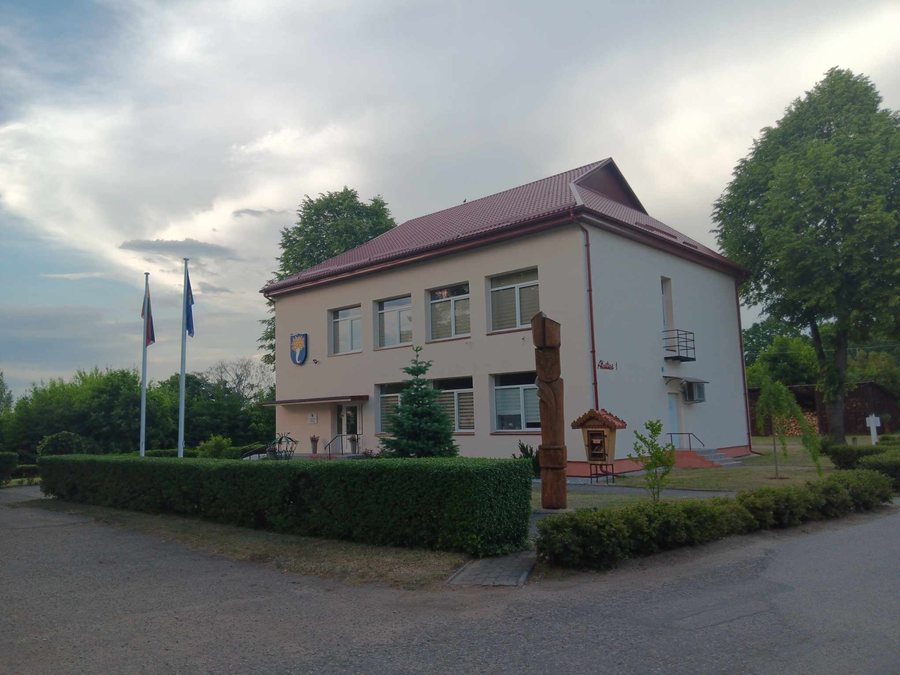 File:Kidulių seniūnija 2024.jpg
Photo: The original uploader was Normantas Bataitis at Lithuanian Wikipedia . via Source, CC0
File:Kidulių seniūnija 2024.jpg
Photo: The original uploader was Normantas Bataitis at Lithuanian Wikipedia . via Source, CC0
Kiduliai at a glance
The Kiduliai educational trail runs along wooded slopes by the Nemunas and includes eleven information stops. In Kiduliai, a chapel-pillar monument in the cemetery commemorates the Lithuanian book smugglers of Kiduliai; it was created by V. Eimanavičius. Other cultural heritage sites and the “Prisiminimų parkas” recreational area are located in Kidulių eldership.
What can you experience on the Kiduliai educational trail?
The trail combines wooded slopes by the Nemunas with the opportunity to observe characteristic plant life, as well as birds and animals. Eleven information stops line the route. This gives it a clear focus on nature among the excursion and cultural themes described here. If you are especially interested in landscapes and wildlife observation, it offers a specific point of reference for planning your trip.
Location is also important when comparing it with the cultural sites: it is named the Kiduliai educational trail, while several of the heritage sites mentioned are associated with Kidulių eldership. This distinction helps avoid treating these themes as if they were all in one place.
What memorial sites can you find in Kiduliai?
A chapel-pillar monument in the Kiduliai cemetery commemorates the Lithuanian book smugglers of Kiduliai. It was created by the sculptor V. Eimanavičius. This memorial site is a specific local highlight, distinct from the archaeological and church heritage sites in Kidulių eldership. If you include cultural themes in your trip plans, you can consider this site separately from the educational trail.
Which cultural heritage sites are in Kidulių eldership?
The Kukarskė hillfort is an archaeological monument of national significance. French soldiers’ graves are in Palankinė. Kaimelis is also among the places mentioned in Kidulių eldership: there, the parish’s “Pavasarininkų paminklas” dates from 1938. The churchyard of Kaimelis Church also contains a cross commemorating the priest J. Pečiulis, created by the sculptor V. Cikana.
The parish Church of St. Michael the Archangel in Kaimelis also houses Mikalojus Konstantinas Čiurlionis’ 1907 painting “Šv. Rokas.” As a cultural highlight, it complements the memorial sites and hillfort with a specific work identified by its artist and year.
Which focus suits your trip plans?
The educational trail focuses on wooded slopes, plant life and wildlife observation; the cultural heritage sites represent archaeological, church and commemorative themes. The “Prisiminimų parkas” recreational area, established by R. Karopčikas, is in the Nemunas floodplains of Kidulių eldership. You can choose among these different focuses according to your interests without combining them into a single route.
The places mentioned here are spread across Kiduliai and other locations in Kidulių eldership.
Discover more destinations: Grinaičiai, Girėnai, Pervazninkai.
FAQ
What can you observe on the Kiduliai educational trail?
The trail runs along wooded slopes by the Nemunas. Visitors can observe characteristic plant life, as well as birds and animals; the route includes eleven information stops.
What monument stands in the Kiduliai cemetery?
A chapel-pillar monument created by V. Eimanavičius stands there in memory of the Lithuanian book smugglers of Kiduliai.
Which cultural sites are associated with Kaimelis?
The cultural heritage mentioned in Kaimelis includes the parish’s “Pavasarininkų paminklas” from 1938, a commemorative cross in the churchyard created by V. Cikana, and the painting “Šv. Rokas” by M. K. Čiurlionis, dated 1907 and housed in the Church of St. Michael the Archangel.
For the broader travel overview: Šakių rajono savivaldybė.

