
Mažeikiai District Municipality: Museums, Industrial History and Manor Culture
Accommodation in Mažeikiai District Municipality
Those wishing to explore regional culture from different perspectives will find themes ranging from archaeology and folk art to oil processing, pharmacy and manor culture in Mažeikiai District Municipality. The diverse exhibitions and cultural sites offer guidance for travelers who want to choose what to explore according to their personal interests.
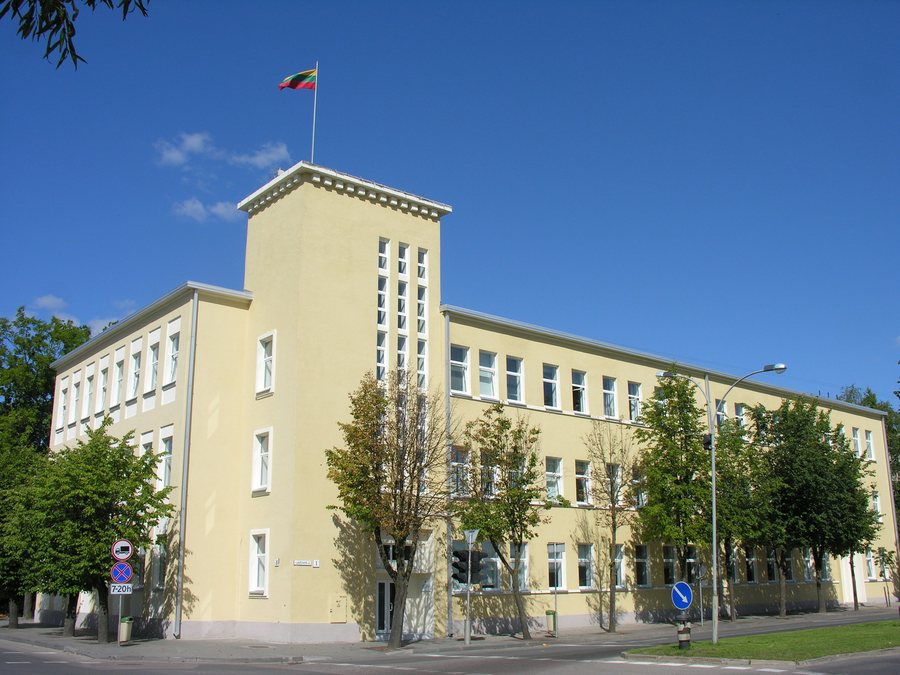 File:Mazeikiu savivaldybe.jpg
Photo: Algirdas at Lithuanian Wikipedia via Wikimedia Commons, CC BY-SA 3.0
File:Mazeikiu savivaldybe.jpg
Photo: Algirdas at Lithuanian Wikipedia via Wikimedia Commons, CC BY-SA 3.0
Mažeikiai District Municipality at a glance
Mažeikiai Museum showcases the history, archaeology, ethnography and folk art of the Žemaitija region. Its cultural heritage exhibition covers the Curonians, Semigallians and Samogitians; the permanent exhibition Naftos kelias (The Oil Road) is devoted to oil processing and the history of the Mažeikiai oil refinery. Other topics include pharmacy, Lithuanian manor culture and historical monuments.
What regional history do the museums showcase?
Several approaches to the region’s history come together at Mažeikiai Museum. The exhibition Mažeikių kraštas: tarp kuršių, žiemgalių ir žemaičių (The Mažeikiai Region: Between the Curonians, Semigallians and Samogitians) focuses on the cultural heritage of the Curonians, Semigallians and Samogitians. The museum also showcases the history, archaeology, ethnography and folk art of the Žemaitija region. Visitors interested in different aspects of the regional past will find cultural, archaeological and folk traditions here.
The permanent exhibition Naftos kelias (The Oil Road) offers a different perspective. It covers the extraction and processing of petroleum products, production processes and products, as well as the history of the Mažeikiai oil refinery. The exhibition is therefore not only about the products themselves: their manufacture and the refinery’s history are also among its topics. This makes it a good choice for travelers interested in industrial history as well as traditional culture.
What historic sites and experiences are there?
Located near Gyvoliai, the Švedkalnis hillfort is a small defensive fort dating from sometime between the 1st millennium and the 13th century. The hillfort has wooden boardwalks, an information board, a viewpoint and visitor paths. Its historical details and existing features give the site a focus distinct from that of the museum collections.
Plinkšiai Recreation Area is suitable for events and has several viewpoints. It also has a path designed for the recreation of people with disabilities. This path is a specific feature of the area; the viewpoints and suitability for events are other described features. Visitors interested in this kind of recreational site will find a different approach here from the regional history exhibitions.
Where can you discover manor culture and the history of pharmacy?
Since 2012, a museum exhibition in the restored Renavo Manor Estate has introduced visitors to Lithuanian manor culture. It adds a distinctive cultural dimension alongside the historical and folk culture themes at Mažeikiai Museum. For travelers interested in manor culture, Renavo is a destination in its own right among the region’s attractions.
Viekšniai Pharmacy Museum is a rural-style pharmacy museum. The pharmacist family’s living quarters have been preserved, along with the complete history of the pharmacy, recorded by hand. The exhibition covers pharmacy, the household of an intellectual from the first half of the 20th century and an exhibition in the medicinal plant garden. Medicinal and culinary herbs are grown there, and practical educational activities are also held. The museum thus combines the history of pharmacy with insights into domestic culture and botany.
A separate site is the ecological medicinal herb farm of herbalist and pharmacognosist Jadvyga Balvočiūtė. Groups and individual visitors come to see its medicinal plant exhibition. Those with a particular interest in medicinal plants can consider this site alongside the medicinal plant garden at the pharmacy museum; these are two distinct offerings described separately.
What other cultural monuments shape the selection?
Pikeliai Holy Trinity Church is an architectural monument of state significance. Its seven Renaissance- and Baroque-style altars are recognized as art monuments of state significance. These designations make the church a notable attraction for travelers interested in architecture and historic art.
The Venta Railway Bridge complex also has designated monument status: it is classified as an immovable cultural property. The Muzikinė vasara Dautaruose (Musical Summer in Dautarai) festival is held at Dautarai Manor. Both examples complement the museums and historical sites with further aspects of cultural life and the built heritage.
Other locations featured on the municipality’s website include the subordinate locations Kalnėnai and Seda, as well as Telšiai District Municipality, Rietavas Municipality and Plungė District Municipality, which are listed at the same higher level.
FAQ
What topics does Mažeikiai Museum cover?
The museum showcases the history, archaeology, ethnography and folk art of the Žemaitija region. An exhibition also focuses on the cultural heritage of the Curonians, Semigallians and Samogitians.
What is the permanent exhibition Naftos kelias about?
It covers the extraction and processing of petroleum products, production processes and products, as well as the history of the Mažeikiai oil refinery.
What does Viekšniai Pharmacy Museum include?
The pharmacy museum includes the preserved living quarters of the pharmacist family, a handwritten history of the pharmacy, several exhibitions and a medicinal plant garden with medicinal and culinary herbs.
Which cultural monuments have special designations?
Pikeliai Holy Trinity Church is an architectural monument of state significance; its seven altars are recognized as art monuments of state significance. The Venta Railway Bridge complex is classified as an immovable cultural property.
For the higher-level travel overview: Telšiai County.

