
Discover Chisinau: Museums, Parks and Wine
Accommodation in Chisinau
Chisinau reveals various sides of a city break: extensive museum collections, historic grounds, spacious green areas, lakeside areas and its own wine culture. This allows you to organize your trip according to your group's interests – with art, literature, nature, urban history and wine as clear focal points.
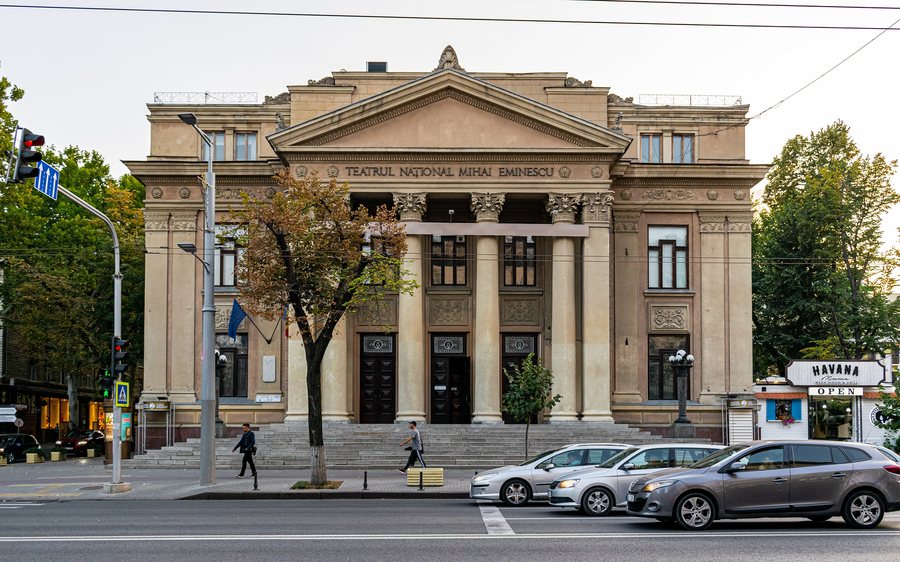 File:Teatrul Național "Mihai Eminescu", Chisinau, Republica Moldova Mihai Eminescu National Theatre, Chisinau, Republic of Moldova (50730297817).jpg
Photo: Photo: Photobank MD from Chisinau, Moldova
File:Teatrul Național "Mihai Eminescu", Chisinau, Republica Moldova Mihai Eminescu National Theatre, Chisinau, Republic of Moldova (50730297817).jpg
Photo: Photo: Photobank MD from Chisinau, Moldova
The National Art Museum of the Republic of Moldova houses more than 40,000 works from various artistic fields. For visitors interested in culture, this scale provides a broad starting point for incorporating different forms of artistic expression into their own planning.
The National Museum of Ethnography and Natural History was founded in autumn 1889 as the first public museum in Bessarabia. This makes it one of the historically early-established museum sites through which you can get to know Chisinau beyond simply sightseeing in the city.
The city's green spaces also shape the choice: The Botanical Garden lies on the outskirts of Chisinau in the Botanica district, near the so-called City Gates. Parcul Valea Morilor lies on the shore of Lake Valea Morilor and covers 114 hectares; the lake itself covers 34 hectares.
Which museums give Chisinau cultural depth?
The National Art Museum of the Republic of Moldova features permanent exhibitions and interactive activities. This combination caters to different types of museum visits: You can spend more time engaging with the collections or choose an approach that involves more active engagement in addition to viewing.
Another focus is the National Museum of Romanian Literature „Mihail Kogălniceanu“. It has more than 100,000 exhibits, including books, works of art and documents.
The museum's manuscript collection comprises 28,000 items. This may be particularly relevant to your interests if you place greater emphasis on literary heritage and written records than on general exhibitions. Together with the Art Museum and the Museum of Ethnography, it creates a diverse cultural profile that allows for several reasons to visit side by side.
Which gardens and landscapes shape the city?
The Botanical Garden was founded on September 1, 1951. Its special focus in natural history includes the area for tropical and subtropical plants. The collection there comprises approximately 2,550 species gathered from around the world. The approximate figure remains important: It describes the scale, not an exact number.
In addition to its location by the lake, Parcul Valea Morilor offers concrete opportunities for spending time there. The park contains a beach and a boat rental station.
At 114 hectares, Parcul Valea Morilor is one of Chisinau's larger green spaces. Comparing it with the lake's area of 34 hectares helps you distinguish the park and body of water as two interconnected but differently sized components of this landscape.
The Parcul Dendrariu in Chisinau's Buiucani district covers 83 hectares. Its size makes it an independent nature-related attraction within the city, while the Botanical Garden, with its tropical and subtropical plant section, has a more strongly botanical focus.
The public garden Ștefan cel Mare in Chisinau is the oldest preserved city park and was laid out in 1818. Together with the larger gardens and parks, it shows that nature in the city appears not only as an outdoor space but also as part of its longstanding history.
Which historic sites are part of the city's history?
The Scuarul Catedralei in Chisinau, with the Metropolitan Cathedral, the bell tower and the Triumphal Arch, forms part of a well-known and important historic ensemble of the capital. The square thus brings together several prominent elements in an urban setting and offers a tangible way to experience Chisinau as a historically shaped capital.
For placing this site in its historical timeline, the founding period between 1830 and 1840 is decisive. Together with Parcul Ștefan cel Mare, laid out in 1818, this creates a historical perspective encompassing both a public park and an architectural ensemble.
How can you get to know Chisinau through wine?
The Vinăria ATU in Chisinau offers guided tours and wine tastings.
Vinăria ATU is the first urban winery in the Republic of Moldova and cultivates approximately 17 hectares of vineyards. The vineyard area should be understood as an approximate figure. Nevertheless, it provides a tangible sense of scale for trip planning, while the designation as the first urban winery describes the distinctive urban character of this wine-related attraction.
Which subregions can you classify additionally?
For regional orientation, the following subregions are part of the broader overview: Chisinau, Vadul Lui Vodă, Tohatin, Vatra, Ghidighici, Trușeni, Codru and Durlești. The individual location pages help you view Chisinau not only as a single city but also in its regional context.
FAQ
How long does the sightseeing tour through Chisinau take?
The Troleibuzul Turistic Chișinău Sightseeing offers travelers a one-hour ride.
Which languages are the audio guides available in?
The audio guides on the Troleibuzul Turistic Chișinău Sightseeing are available in Romanian, Russian and English.
Since when has Parcul Dendrariu been under state protection?
Parcul Dendrariu has been under state protection since July 16, 1998.
When was Scuarul Catedralei founded?
Scuarul Catedralei in Chisinau was founded between 1830 and 1840.
For the overarching travel overview: Moldova.
