
Grodzisk Wielkopolski
Accommodation in Grodzisk Wielkopolski
Grodzisk Wielkopolski combines historic urban layouts with cultural and leisure attractions such as a city park, a museum, and a summer swimming pool. If you are looking for a destination with a history of its own and a variety of reasons to visit, the city offers several specific themes to help you plan your trip.
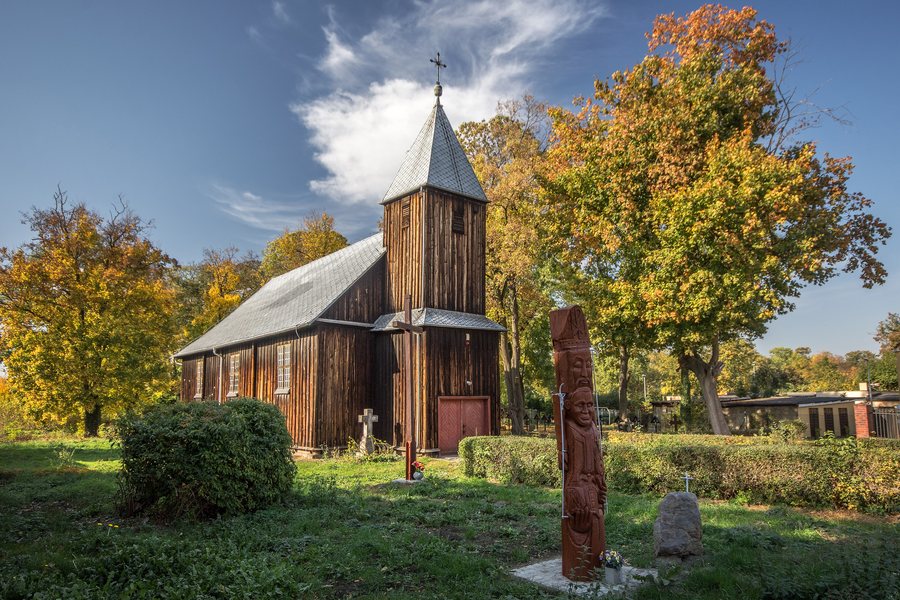 File:SM Grodzisk Wielkopolski Kościół Świętego Ducha 2018 (3).jpg
Photo: Sławomir Milejski via Wikimedia Commons, CC BY-SA 4.0
File:SM Grodzisk Wielkopolski Kościół Świętego Ducha 2018 (3).jpg
Photo: Sławomir Milejski via Wikimedia Commons, CC BY-SA 4.0
Grodzisk Wielkopolski at a glance
- The Stary Rynek preserves the medieval town plan; a 19th-century town hall defines the centre.
- The later New Town is laid out around a rectangular market square.
- The city park contains a listed 19th-century palace and a 1.36 ha pond.
- Other distinctive features include a historical panorama, a reconstructed windmill, and a summer swimming pool.
What do the squares and buildings tell us about the city?
The Stary Rynek forms the centre of Grodzisk Wielkopolski. The 19th-century town hall defines the square, while the preserved medieval layout reveals the historic town plan. The later New Town follows a different square layout: its rectangular market square is at Plac Powstańców Wielkopolskich. Anyone interested in urban history can explore these two distinct urban structures without conflating them into a single layout.
A neo-Gothic church, originally Protestant, stands in the New Town’s market square. The building dates from 1905 and is now the Catholic Church of Najświętszego Serca Pana Jezusa. Both its former and present religious affiliations are part of the building’s history.
What history does the museum tell?
The Muzealna Izba Tradycji Ziemi Grodziskiej is housed in a listed 19th-century palace in the city park. One of its greatest attractions is a panorama depicting the defence of the city during the Greater Poland Uprising. The painting is 12 m long and 3 m high and depicts events on 28 April 1848.
The dimensions give a clear sense of the panorama’s scale; its subject is closely linked to a specific date in the city’s history. For a cultural trip to Grodzisk Wielkopolski, visiting the museum offers an opportunity to learn about the city’s defence and the Greater Poland Uprising.
What makes the city park distinctive?
The city park is a former landscape park dating from the mid-19th century. It contains a 1.36 ha pond through which the Letnica flows. Together with the listed palace that houses the museum, these features give the park historical and landscape significance. The pond and the course of the river are specific features of the park, not merely a general description of its green spaces.
What unique experiences are on offer?
The Kozlak windmill, built in 1766, was reconstructed in Grodzisk Wielkopolski in 2011 and is considered a local tourist attraction. Its construction and subsequent reconstruction took place at different points in its history. Anyone interested in historic buildings will find another distinct subject here, alongside the town squares and the museum.
A salt well has been installed at the open-air Centre for Ecology and Education. It is made of natural stone and uses Zabłocka brine. The summer swimming pool offers a water recreation area, social facilities, lockable lockers, a relaxation area, and a large green space. Visitors can therefore choose between an attraction centred on brine and a swimming venue with several designated areas.
What is known about Grodzisk beer?
Grodzisk beer earned the nickname “Polish champagne.” This was due to its vigorous foaming and many bubbles. The nickname thus refers to the beer’s distinctive foam and effervescence, and is part of the city’s local character, which includes its culinary side as well as its historic sites.
To compare other local destination pages, you can also visit Granowo, Kotowo, Szczepowice, Kamieniec, Wielichowo and Rakoniewice.
FAQ
What does the museum panorama depict?
It depicts the defence of the city on 28 April 1848 during the Greater Poland Uprising and measures 12 m long by 3 m high.
What is in the city park?
It contains the listed 19th-century palace housing the Muzealna Izba Tradycji Ziemi Grodziskiej, as well as a 1.36 ha pond through which the Letnica flows.
Why is Grodzisk beer called “Polish champagne”?
The nickname refers to the beer’s vigorous foaming and many bubbles.
For the broader travel overview: Grätz.

.jpg)