
Brdów: Monastery History and Cycling Routes
Accommodation in Brdów
Brdów offers two distinct points of interest to consider when planning your trip: cycling routes that pass through the town and the history of the Pauline monastery. This lets you decide whether you would rather focus your trip on cycling or cultural history.
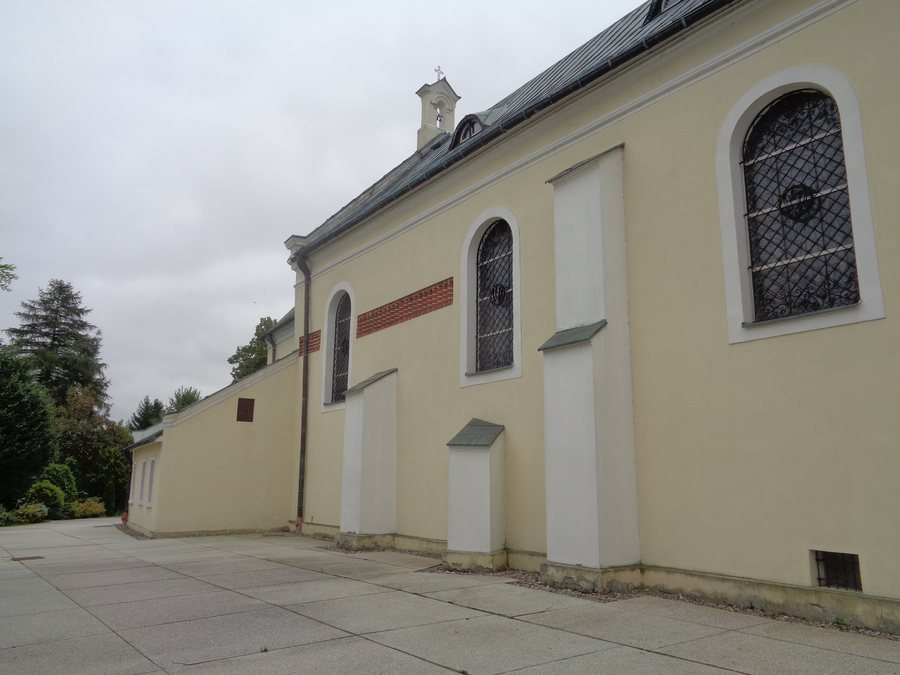
Brdów at a glance
- The Green Cycling Route, about 85 km long, starts and ends in Koło and passes through Brdów, among other places. 48 km of the route are within the municipality.
- Another cycling route, about 40 km long, runs from Brdów via Wrząca Wielka, Koło and Powiercie to Grzegorzew.
- The Pauline monastery in Brdów is considered one of the first Pauline monasteries in Poland.
- The monastery’s founding charter dates from 1436.
Which cycling routes pass through Brdów?
The two routes described differ in length and course. The Green Cycling Route is about 85 km long and both starts and ends in Koło. Brdów lies along the route; in addition, 48 km are specified as being within the municipality. These figures therefore refer to different sections: the total length of the route and the portion within the municipality.
The municipal strategy for 2023–2030 describes the Green Cycling Route. Check the current route markers before setting out.
The second route is shorter, at about 40 km, and starts in Brdów. It runs via Wrząca Wielka, Koło and Powiercie to Grzegorzew. Middle-school students from Sokołów and Powiercie marked and described the route; it is also covered in the municipal strategy for 2023–2030. Check the current route markers before setting out. The different endpoints and stated lengths are particularly useful when comparing your options. However, the distance alone does not tell you how long your ride will take.
What does the Pauline monastery tell us about Brdów?
The Pauline monastery is considered one of the first monasteries of this order in Poland. Its founding charter dates from 1436 and was issued by King Władysław III Warneńczyk. This should be distinguished from an account of its foundation, according to which Władysław Jagiełło was the monastery’s actual founder. The charter and the account thus reflect two different historical connections.
The complex includes the church in Brdów, dedicated to Saint Wojciech. This specific detail also helps put the monastery’s history in context: alongside the monastery’s foundation, the church’s dedication is part of the town’s recorded history. If you are interested in religious and cultural heritage, Brdów offers a clearly defined focus for exploring local history.
Which Marian images are associated with Brdów?
A Marian image depicting the Child Jesus was given to the church by King Władysław III Warneńczyk. It is traditionally called Matka Boska Brdowska. Another image, known as Matka Boża Zwycięska Brdowska, draws pilgrims to the Marian sanctuary in Brdów. These two connections offer different perspectives on the town’s religious significance: one image is associated with a royal gift, the other with pilgrimage.
A specific detail about the craftsmanship of the Matka Boża Zwycięska Brdowska image has also been recorded: it was painted on five linden-wood boards. Together with the names of the images and the monastery’s history, this provides a cultural focus that goes beyond the year of the founding charter. You can take these aspects into account when deciding whether Brdów suits the interests of your travel group.
Discover more destinations: Grabiny, Dąbie, Lubiny.
FAQ
How long is the Green Cycling Route?
It is about 85 km long, starts and ends in Koło, and passes through Brdów, among other places. 48 km of the route are within the municipality.
Who marked and described the route that is about 40 km long?
Middle-school students from Sokołów and Powiercie marked and described the cycling route from Brdów via Wrząca Wielka, Koło and Powiercie to Grzegorzew. Check the current route markers before setting out.
When was the founding charter of the Pauline monastery issued?
The charter dates from 1436 and was issued by King Władysław III Warneńczyk. According to the account, Władysław Jagiełło was the monastery’s actual founder.
For the broader travel overview: Wartbrücken.

