
Golina: Wooden Church, Manor House Park and Cycling Routes
Accommodation in Golina
An 18th-century wooden church and a seven-hectare landscape park offer concrete cultural and scenic highlights in Golina. The municipality also has cycling and cultural attractions.
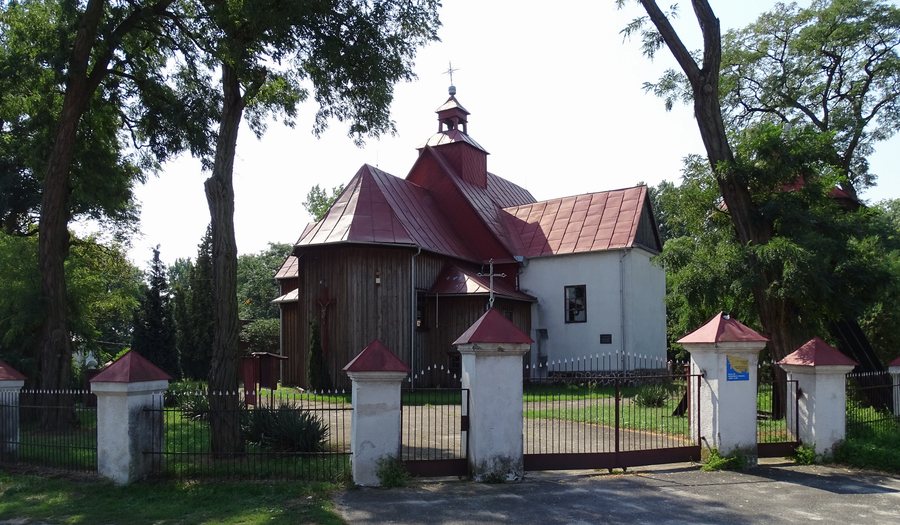 File:Golina, Greater Poland.jpg
Photo: Andreas Ederus Thorunensis via Wikimedia Commons, CC BY-SA 4.0
File:Golina, Greater Poland.jpg
Photo: Andreas Ederus Thorunensis via Wikimedia Commons, CC BY-SA 4.0
Golina at a Glance
The Church of St. James the Apostle was built between 1765 and 1767; its interior has three naves and Baroque and Rococo furnishings. A seven-hectare landscape park with mature trees and trees protected as natural monuments lies by the manor house in Golina, with an island surrounded by a moat. Family cycling rallies are organized in the municipality. A cycling route is described in a municipal strategy for 2016–2026.
What makes Golina’s wooden church distinctive?
The parish Church of St. James the Apostle is part of the “Wooden Churches of Konin County” cultural route. It was built between 1765 and 1767. Inside, three naves are complemented by Baroque and Rococo furnishings. This brings together the church’s history and several clearly identifiable features of its interior, rather than describing it solely in terms of its age. If you are interested in sacred architecture, these details offer a concrete starting point for exploring Golina’s cultural attractions.
What does the landscape park by the manor house include?
The landscape park covers seven hectares. Its defining features include abundant mature trees and numerous trees protected as natural monuments. An island surrounded by a moat completes the picture. This combination sets the park apart from a simple green space: the trees, protected natural monuments and moat are each distinct elements of its description. Together with the wooden church, the park reveals two different sides of Golina: cultural heritage and a designed landscape.
What cycling activities and routes are there in Golina municipality?
“Rodzinne Rajdy Rowerowe,” or family cycling rallies, are organized in Golina municipality. A municipal strategy for 2016–2026 also describes a cycling route between churches in the landscape of the Warta River’s prehistoric valley. The route follows a flood embankment. The strategy lists the ferry crossing over the Warta at Sławsk and the landscape park in Golina as additional attractions along the route. The cycling activities can therefore be distinguished: the rallies are organized events, while the embankment, river ferry and park appear in the route description as features or attractions. If you plan to take the ferry, check the schedule in advance.
What craft-related attractions can you find in the municipality?
The village of Węglew in the municipality is home to a private folk craft museum. According to its collection description, it contains 450 exhibits related to disappearing professions and the former way of life of residents of the Konin region. A park dedicated to disappearing and endangered professions is located next to the museum. The museum and park share a thematic focus that differs from Golina’s church architecture: their emphasis is on traditional work and former ways of life.
The tourist and educational “Trail of Disappearing Crafts and Traditions” is also part of this theme. The municipal cultural heritage plan describes the trail as starting at the Folk Craft Museum in Węglew Kolonia and passing, among other places, through Ląd, Zagórów, Turek, Brudzew, Jabłków near Kramsk, Brdów, Budzisław Kościelny and Kazimierz Biskupi. It then returns to Lubiecz in Golina municipality. Along the way, visitors are introduced to folk artists who practise traditional crafts. The trail passes through several places before returning to Lubiecz in Golina municipality.
Discover more destinations: Wiśniewa, Sługocinek, Grodziec, Stare Miasto, Sompolinek, Skulsk, Jabłonka and Brzeźno.
FAQ
When was the wooden Church of St. James the Apostle built?
The church was built between 1765 and 1767. Its interior has three naves and Baroque and Rococo furnishings.
Where does the cycling route described for the municipality go?
It runs between churches in the landscape of the Warta River’s prehistoric valley, following a flood embankment. The municipal strategy also lists the ferry at Sławsk and the landscape park in Golina as additional attractions.
What can you see on the Trail of Disappearing Crafts and Traditions?
The trail introduces folk artists who practise traditional crafts. According to its description, it starts in Węglew Kolonia and passes through several places before returning to Lubiecz in Golina municipality.
For the wider travel overview: Konin.

