
Discover Włoszakowice
Accommodation in Włoszakowice
Włoszakowice brings together early Baroque architectural history and music, along with distinctive features in its palace park. Local points of interest can help you explore the character of the destination according to your own interests.
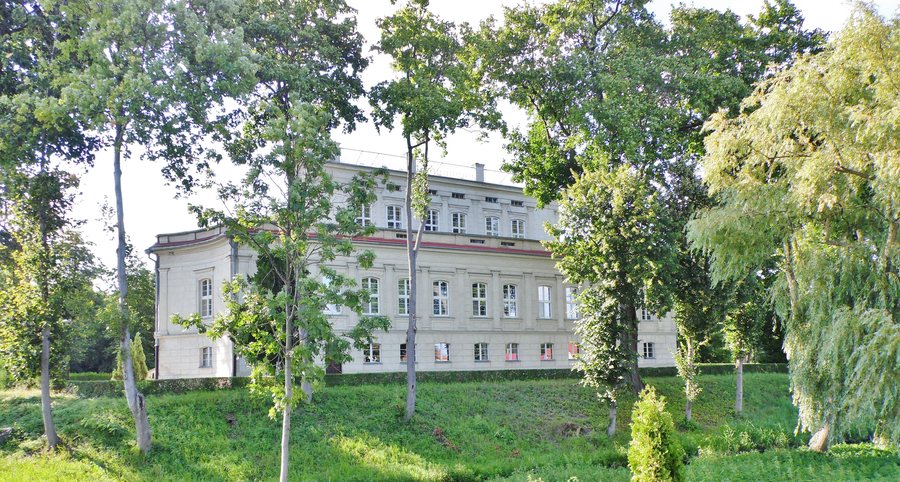
Włoszakowice at a glance
The Holy Trinity Church was built between 1640 and 1643, funded by the Opaliński family, the former owners of the local estate. Its organ was designed and built by Michał Engler of Wrocław; Karol Kurpiński took his first steps in his musical career on it. The palace park is home to a plane tree that is especially old for Wielkopolska and Poland, sculptures depicting local wildlife, and stones bearing the history of the municipality.
What does the Holy Trinity Church tell us about the town?
The early Baroque Holy Trinity Church links a specific period of construction with the history of the local estate: it was built between 1640 and 1643, funded by the Opaliński family, the estate’s former owners. These dates and the named benefactors give the church a clear historical connection to Włoszakowice, rather than making it merely an architectural feature.
The organ is also part of this story. Michał Engler of Wrocław designed and built it, and Karol Kurpiński took his first steps in his musical career on it. The organ is still functional today. Before visiting, check separately under what conditions access to the church and organ is possible.
What can you discover in the palace park?
Nature and local design sit side by side in the palace park. It is home to the oldest plane tree in Wielkopolska and one of the oldest in Poland. The tree’s special status can be considered alongside the park’s other features without treating them as a single attraction: each tells something about the place in its own way.
Sculptures by folk woodcarver Jerzy Sowijak of Bukówiec Górny depict local wildlife. Large stones along the paths bear the history of the municipality of Włoszakowice. The park thus brings together a natural feature, works of art, and reminders of the municipality’s history. These different themes can help you decide which aspects of a destination interest you most.
How is Karol Kurpiński connected to Włoszakowice?
Kurpiński’s connection to the town is evident in several specific ways: he was baptized in Włoszakowice on 6 March 1785; his exact date of birth is unknown. He took his first steps in his musical career on the organ of the Holy Trinity Church. There is also a monument in front of the school named after him, created by folk woodcarver Leon Dudek of Bukówiec Górny. The residents of Włoszakowice initiated the project.
These connections can be distinguished clearly: the church links Kurpiński to the town’s musical history, his baptism to his biography, and the monument to the local remembrance of him. Those interested in these topics will find several different points of connection, without confusing his unknown date of birth with his baptism date.
Discover more destinations: Charbielin, Osieczna, Leszno, Kąkolewo, Lubonia, Radomyśl, Trzebania, Rydzyna.
FAQ
When was the Holy Trinity Church built?
The early Baroque church in Włoszakowice was built between 1640 and 1643, funded by the Opaliński family, the former owners of the local estate.
What connects Karol Kurpiński to the church?
The organ of the Holy Trinity Church, designed and built by Michał Engler of Wrocław, was where he took his first musical steps. It is still functional today; you should check the access arrangements in advance.
What makes the palace park special?
It is home to the oldest plane tree in Wielkopolska and one of the oldest in Poland. The park also features sculptures of local wildlife by Jerzy Sowijak, as well as stones bearing the history of the municipality.
Go to the broader travel overview: Lissa.

