
Opalenica
Accommodation in Opalenica
Churches from different building periods, the history of the sugar factory, and traces of a former narrow-gauge railway give Opalenica several cultural points of interest. Sports facilities add a more active dimension. When planning your trip, you can weigh up architecture, local history, and physical activity.
Opalenica at a glance
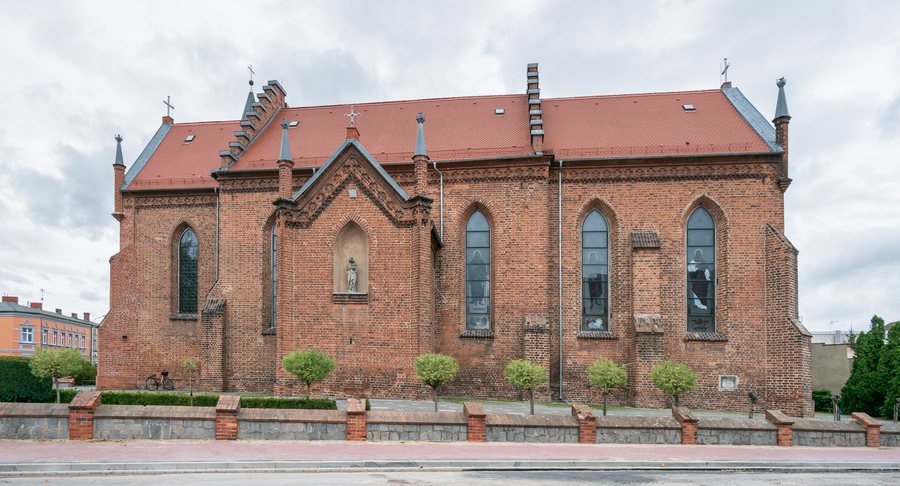
The parish church of St. Matthew was built in 1518, rebuilt after a fire in 1620, and consecrated in 1649. St. Joseph’s Church was built in 1895 in the Neo-Gothic style. The sugar factory was founded in 1883. The sports facilities described for 2023 include a football and athletics stadium, five tennis courts, and two sports halls.
What do the churches tell us about local history?
St. Matthew’s is an example of Gothic ecclesiastical architecture; its interior is Baroque in style. Features include a vaulted presbytery and a main altar. The sequence of its construction, rebuilding after the fire, and consecration reveals several building phases in the same church. To put its history in context, the later development matters as well as the year 1518.
At St. Joseph’s, pointed-arch windows and characteristic Neo-Gothic decorative elements indicate the architectural style. At the turn of the 20th century, the church served the Protestant congregation. Together, the two churches illustrate different aspects of local architectural and religious history, while their individual features remain distinct.
Another building in the historic centre is the former gymnasium next to St. Matthew’s, a significant example of public architecture. The town hall also serves as a landmark for visitors in the town centre. These buildings complement the churches by offering a view of public architecture and helping visitors orient themselves in the town.
What is the connection between the sugar factory and the villa?
The sugar factory was founded in 1883. Its historic buildings retain a clearly recognisable form and distinctive architectural details. The historic complex also includes the director’s villa, built in 1884, with its surrounding garden. The dates 1883 and 1884 help place the factory’s history in context; the villa should be viewed as part of the complex.
Unlike the religious buildings, the focus here is on industrial history. When exploring Opalenica, note this distinction: the churches illustrate architectural and community history, while the factory buildings and villa tell the story of a historic industrial complex. The buildings’ distinctive form and architectural details provide a tangible way to explore the subject.
Which activities can add different dimensions to your stay?
The municipal report for 2023 lists a football and athletics stadium, five tennis courts, and two sports halls at the sports complex by the Municipal Stadium. It also mentions a 300-metre synthetic running track, which is used by recreational runners as well. As sports facilities can change, check the latest information before planning a visit.
The former narrow-gauge railway is another subject to explore on a walk. Surviving fragments and traces of the route offer a starting point for learning about its history. The railway no longer runs in its original form; the interest here is in historical traces, not a train ride. This makes the sports facilities a current planning consideration, while the railway is a historical topic.
What should you know before travelling?
The platform at Opalenica railway station is accessible via a ramp. Check the station access arrangements before travelling. This specific information refers to the platform; it does not automatically describe other routes or facilities.
Discover more destinations: Wąsowo, Pawłówek, Silna Nowa, Zbąszyń, Łęczyce, Dakowy Mokre, Wojnowice, Nowy Tomyśl.
FAQ
Which building phases can be identified at St. Matthew’s?
The church was built in 1518, rebuilt after a fire in 1620, and consecrated in 1649. It is an example of Gothic ecclesiastical architecture and has a Baroque interior.
What does the historic sugar factory complex include?
The complex includes historic factory buildings and the director’s villa, built in 1884, with its surrounding garden.
What facilities does the sports complex include?
The municipal report for 2023 lists a football and athletics stadium, five tennis courts, two sports halls, and a 300-metre synthetic running track, which is also used by recreational runners. Check the latest information before visiting.
Is the platform at Opalenica railway station accessible via a ramp?
Yes, the platform is accessible via a ramp. Check the station access arrangements before travelling.
Back to the main travel overview: Nowy Tomyśl.

