
Discover Środa Wielkopolska
Accommodation in Środa Wielkopolska
Środa Wielkopolska combines a historic center with sacred buildings from different periods and a reservoir to the north. A cycling route runs through the town, and a historic narrow-gauge railway is also part of its character. You can therefore choose different focuses for your stay, from local history, architecture and landscapes to outdoor activities.
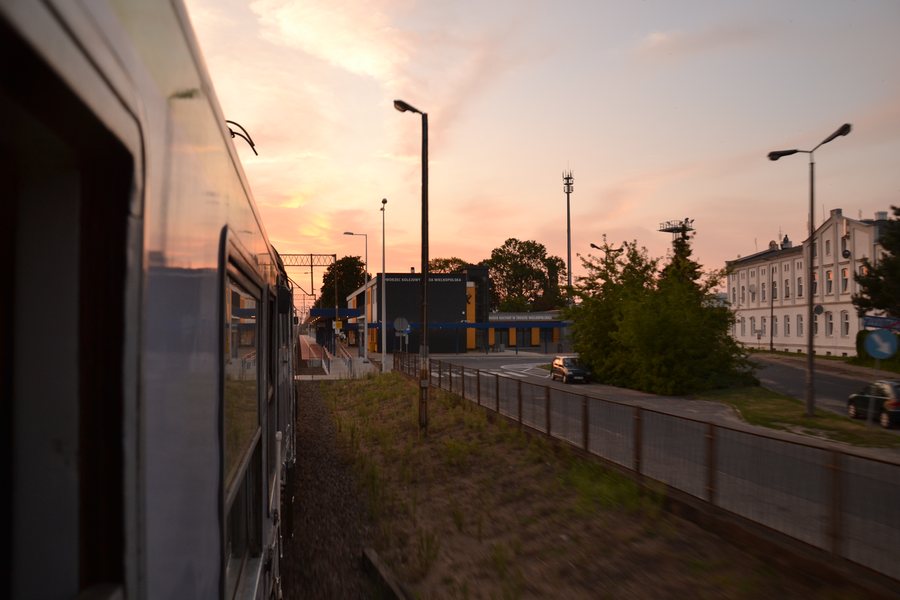 File:WK15 Środa Wielkopolska (1) Lichen99.jpg
Photo: Lichen99 via Wikimedia Commons, CC BY-SA 3.0 pl
Key facts about Środa Wielkopolska
- The Collegiate Church of the Assumption of the Blessed Virgin Mary is Late Gothic and was built of brick between 1423 and 1428.
- The artificial reservoir to the north was created by damming the Moskawa from 1968 to 1971; its geodetic area is 47.7 hectares.
- The original street layout is preserved in the historic center within the former fortifications. Stary Rynek is the preserved market square of the medieval town.
- The Transwielkopolska Cycling Route passes through Środa Wielkopolska; the historic narrow-gauge railway connects the town with Zaniemyśl.
What traces of the town’s history can be seen in the center?
The historic center can be understood through two distinct features: the town layout and the market square. The original street network is preserved within the former fortifications. Stary Rynek, in turn, is the medieval town’s historic market square. Together, the streets and square offer different clues to the history of the place.
The Collegiate Church of the Assumption of the Blessed Virgin Mary adds a distinctive architectural feature. This Late Gothic brick building was constructed between 1423 and 1428. It was also politically significant: during the First Polish Republic, regional assemblies of the Poznań and Kalisz Voivodeships were held there. Its construction and historic use thus bring together architectural history and regional politics.
Other buildings offer a comparison between different periods. On Wiosny Ludów Street stands a former Evangelical church in the Neo-Romanesque style, built between 1881 and 1888. Near Środa Wielkopolska’s water tower is a monument to General Jan Henryk Dąbrowski, erected in 1997. Designed by Robert Sobociński, it is considered the first monument of its kind in Poland. Late Gothic and Neo-Romanesque architecture thus stand alongside a more recent memorial dedicated to the general.
How do water and outdoor activities fit into the picture?
The artificial reservoir to the north was created by damming the Moskawa; its geodetic area is given as 47.7 hectares. Its primary role is as a recreational area for the town’s residents. The beach volleyball sand courts on Plażowa Street are a separate feature: two are next to a tennis court, and two more are directly on the shore of Lake Średzkie.
For cycling, the Transwielkopolska Cycling Route is a direct connection to the town, as it passes through Środa Wielkopolska. The historic narrow-gauge railway offers a different connection: its line links Środa Wielkopolska and Zaniemyśl. These two transport options are clearly distinct—a cycling route through the town and a historic railway connecting two places.
The Środa Narrow-Gauge Railway Museum is located in the ŚRODA WIELKOPOLSKA MIASTO station building. For anyone interested in railway history, the historic line and the museum’s location are two different aspects of the subject.
What nature can be found within the municipality?
The municipality also has natural and scenic attractions: in its southwest, the Struga Średzka stream forms the extensive Bagna Średzkie wetlands, a protected landscape area. Birds found there include herons, mute swans, grebes, black-headed gulls, lapwings and penduline tits. These species offer a specific impression of the birdlife in this protected landscape.
Which focus suits your stay?
If you are considering Środa Wielkopolska as a destination, you can start with your interests: the historic center and its varied buildings lend themselves to a focus on local history and architecture. The cycling route, reservoir and narrow-gauge railway offer other points of interest, while the protected landscape area adds a natural dimension at the municipal level.
Discover more destinations: Czarne Piątkowo, Solec, Brodowo, Teresa, Murzynowo Kościelne, Chłapowo, Jeziory Wielkie, Pierzchno.
FAQ
When was the Collegiate Church of the Assumption of the Blessed Virgin Mary built?
The Late Gothic church was built of brick between 1423 and 1428.
How was the reservoir north of Środa Wielkopolska created?
It was created by damming the Moskawa from 1968 to 1971 and has a geodetic area of 47.7 hectares.
Which places does the historic narrow-gauge railway connect?
The historic railway line connects Środa Wielkopolska and Zaniemyśl. The Środa Narrow-Gauge Railway Museum is located in the ŚRODA WIELKOPOLSKA MIASTO station building.
For the main travel overview: Schroda.

