
Nekla: Church, Manor House and Park
Accommodation in Nekla
For planning a trip around Nekla, the parish church of St. Andrew and the manor complex with its park offer two distinct cultural and historical points of interest. Their construction and development histories span from the manor house dating to around 1870 to the consecration of the new church in 1901; the park adds its own history of design and named natural monuments.
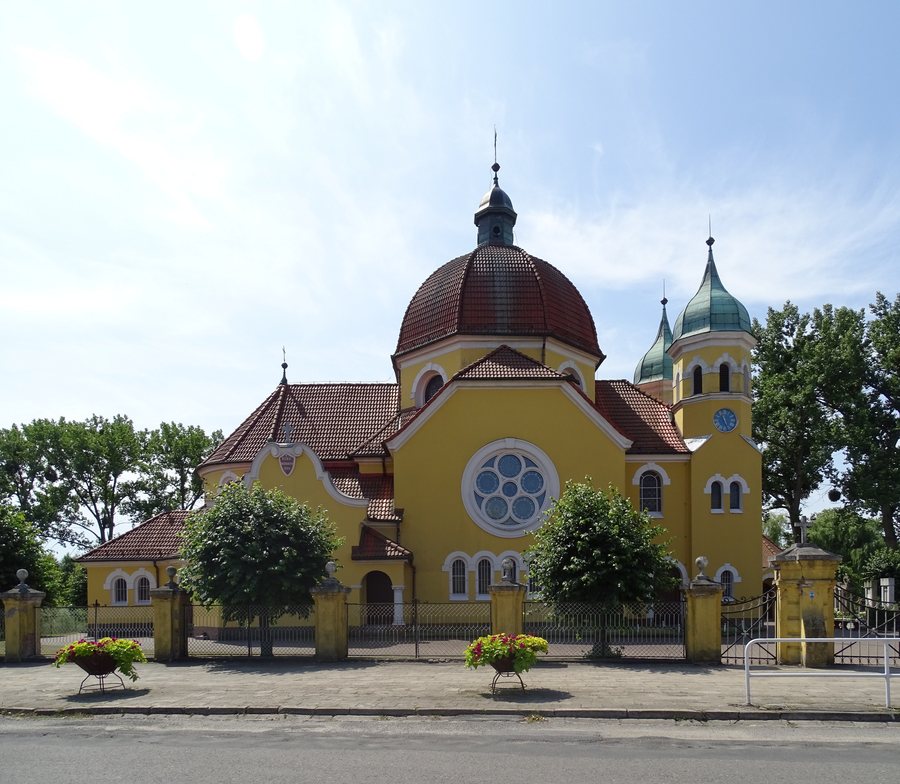 File:Nekla, Greater Poland.jpg
Photo: Andreas Ederus Thorunensis via Wikimedia Commons, CC BY-SA 4.0
Nekla at a glance
- Construction of the new parish church began in September 1899; it was consecrated on June 21, 1901.
- The church contains three transferred Baroque altars, a pulpit, and a Rococo baptismal font.
- The manor complex comprises a palace, the former stable and carriage house, and the surrounding park.
- The park covers 17.33 hectares; more than 3,500 deciduous and coniferous trees and shrubs grow there.
What architectural and artistic history does Nekla offer?
Construction of the new parish church of St. Andrew began in September 1899. It was consecrated on June 21, 1901—less than two years after construction began. Alongside this construction timeline, the transferred furnishings shape the interior: three Baroque altars come from the former church, joined by a pulpit and a Rococo baptismal font. The furnishings thus bring together pieces from different periods of design.
The façade features a stone Passion group by the Poznań artist Władysław Marcinkowski. The stained-glass windows come from the Royal Art Institute in Munich. The façade sculpture and windows add artistic accents distinct from the altars and baptismal font inside, complementing the church’s construction history with specific artistic connections.
What defines Nekla’s architectural history?
The manor house in Nekla was built around 1870 in the Eclectic style. Eclecticism refers to the use of design elements from different styles; the term therefore describes architecture not confined to a single visual language. The manor complex comprises a palace, the former stable and carriage house, and the surrounding park. The former stable and carriage house in the park was converted in the 1980s for the Nekielski Ośrodek Kultury. The construction date and later change of use reveal different historical chapters in the buildings’ stories.
What can you learn about Nekla’s park?
The park surrounding the manor complex covers 17.33 hectares. It was transformed from a French garden into an English landscape park. Its history is therefore not just a matter of area, but also of a change in garden design. More than 3,500 deciduous and coniferous trees and shrubs grow in the park.
The park’s natural monuments include European larches, oaks, and black alders. One particularly old pear tree, named Józefinka, is more than 200 years old. The landscape is notable not only for its design history but also for individual named natural monuments.
How can you choose a focus for your trip?
When planning your trip, you can choose a focus based on your interests: the church is defined by its construction history, transferred altar furnishings, and artworks on the façade and windows. The park’s highlights are its changing garden design, trees, and natural monuments. This can help you decide whether to learn more about religious art or historic landscape design before your trip.
Discover more destinations: Węgierki, Lipie, Września, Miłosław, Bierzglinek, Grzybowo and Zasutowo.
FAQ
When was the new parish church of St. Andrew consecrated?
It was consecrated on June 21, 1901. Construction began in September 1899.
What furnishings are in the church?
It contains three Baroque altars transferred from the former church, a pulpit, and a Rococo baptismal font. The façade also features a stone Passion group by Władysław Marcinkowski.
How large is the manor complex’s park?
The park covers 17.33 hectares. It was transformed from a French garden into an English landscape park.
For the broader travel overview: Września.

