
Discover culture and history in Nieszawa
Accommodation in Nieszawa
Nieszawa offers several different starting points for a cultural trip: a museum with exhibitions about two artists, a memorial chapel, and the history of a Franciscan monastery and church. If you are looking for a hotel in Nieszawa, you can use these themes as a guide to tailor your stay to your personal interests.
Nieszawa at a glance
- The Muzeum w Nieszawie is housed in a Neoclassical building from the first half of the 19th century on the north side of the market square.
- On the ground floor, two rooms are devoted to Stanisław Noakowski; exhibitions about Ludwik Bouchard are on the first floor.
- Other historic sites include Golgota Nieszawska and the Franciscan monastery and Franciscan church.
- The alternative route of the Szlak Kopernikowski between Toruń and Włocławek also passes through Nieszawa.
What does the museum show about Noakowski and Bouchard?
The museum combines its focus on artists with a collection about the history of the town. It collects documents and memorabilia related to Stanisław Noakowski, as well as archival materials about the history of Nieszawa. Two rooms on the ground floor document Noakowski’s life and work (1867–1928). He was an architectural theorist, educator, draughtsman and painter. This section of the exhibition therefore focuses on both his biography and his varied fields of work.
The first floor is devoted to Ludwik Bouchard (1828–1912), Noakowski’s teacher, who worked as an art critic, painter and educator. The exhibition includes oil paintings, watercolours, drawings and ceramics, as well as furniture designed by Bouchard. The two subjects are easy to distinguish: the focus for Noakowski is on his life and work in two rooms, while Bouchard’s wide range of exhibited work is especially tangible. You can therefore tailor your museum visit to the artist or art form that interests you most.
The museum also has a multimedia-equipped multipurpose hall. The Muzeum w Nieszawie is adapted to the needs of people with disabilities.
Which other cultural sites tell the story of Nieszawa?
Golgota Nieszawska offers a different perspective from the museum: the brick chapel stands above the burial site of January Uprising insurgents from Kujawy. It is therefore a specific place of remembrance. Anyone interested in the town’s history can consider this memorial alongside the archival materials about Nieszawa’s history held by the museum. These are different ways of engaging with the past: here, a chapel above a burial site; there, documents and memorabilia in a museum collection.
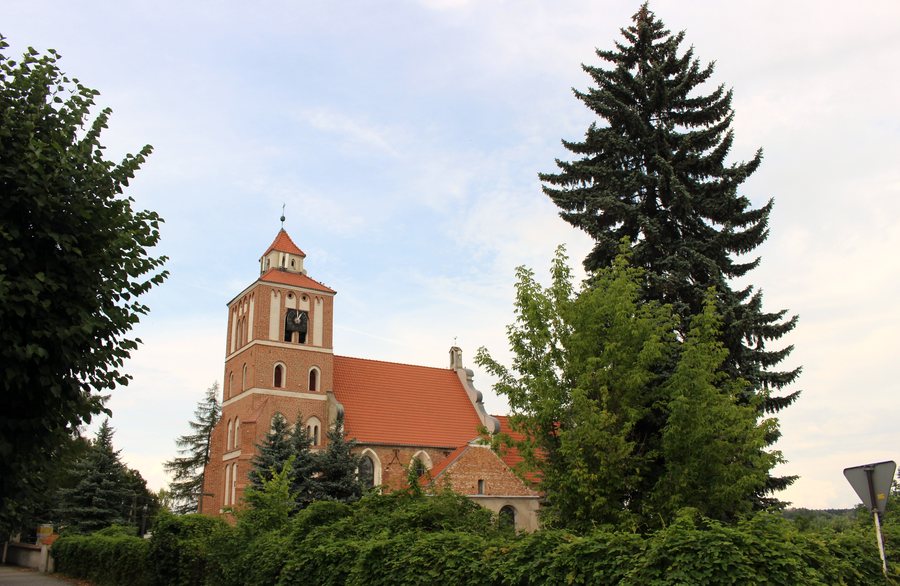
The Franciscan church and monastery also offer an insight into architectural history. Both were originally built of wood in the 1460s. In the 17th century, a brick church and monastery were built. The change from wooden structures to the later brick buildings forms a distinct historical thread. Together with the Neoclassical museum building and the brick Golgota Nieszawska, it shows how different architectural forms and places of remembrance shape Nieszawa’s cultural themes.
How can you include Nieszawa in a trip?
The alternative route of the Szlak Kopernikowski between Toruń and Włocławek also passes through Nieszawa. If you are comparing several destinations, you can first decide which cultural themes matter to you: the museum’s artists and collections, the memorial site of Golgota Nieszawska, or the history of the church and monastery.
Discover more destinations: Stawki, Przybranowo, Aleksandrów Kujawski, Kwiatkowo, Ciechocinek, Odolion.
FAQ
What can you learn about Stanisław Noakowski at the Muzeum w Nieszawie?
Two rooms on the ground floor document his life and work. Noakowski (1867–1928) was an architectural theorist, educator, draughtsman and painter. The museum also collects documents and memorabilia related to him.
What works are included in the exhibition about Ludwik Bouchard?
On the first floor, the museum displays oil paintings, watercolours, drawings and ceramics, as well as furniture designed by Bouchard. Bouchard (1828–1912) was Noakowski’s teacher and worked as an art critic, painter and educator.
What is the historical connection of Golgota Nieszawska?
The brick chapel stands above the burial site of January Uprising insurgents from Kujawy. As a memorial site, it differs from the museum’s collections and exhibitions.
For the broader travel overview: Aleksandrowski.

