
Discover Skępe
Accommodation in Skępe
Skępe brings together several distinct themes to consider when planning your trip: a striking oak tree, the history of former forests, a bathing area at Jezioro Skępskie Wielkie, and an important monastery complex. This lets you balance nature, water and culture according to your own interests.
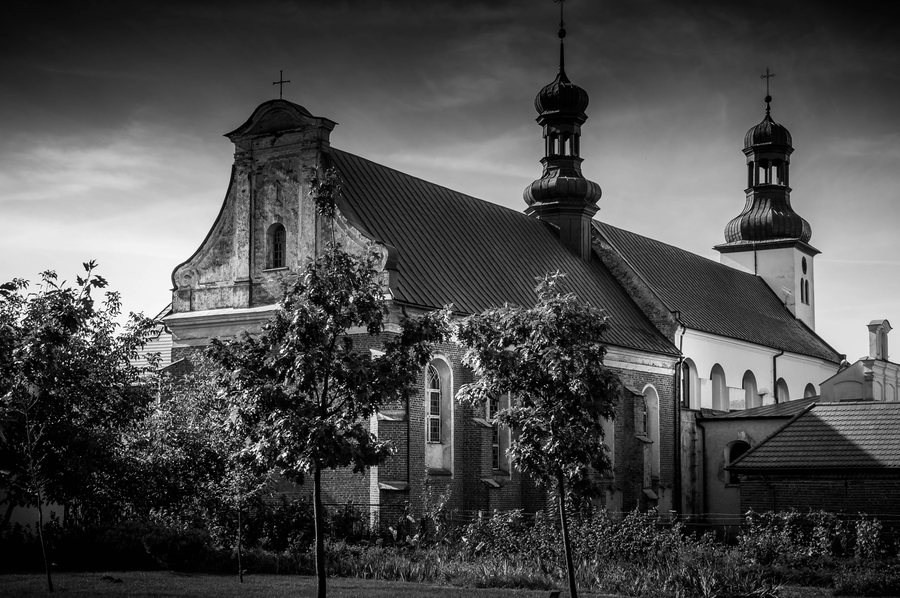 Monastery of the Bernardine Fathers in Skępe
Photo: Chojnicki.Dawid via Wikimedia Commons, CC BY-SA 4.0
Monastery of the Bernardine Fathers in Skępe
Photo: Chojnicki.Dawid via Wikimedia Commons, CC BY-SA 4.0
Skępe at a glance
- The Napoleon Oak grows by the monastery wall and has a trunk circumference of up to 515 cm.
- Borek is a remnant of the formerly extensive Masovian forests.
- At Jezioro Skępskie Wielkie, there is a bathing area with a beach for leisure and sports, as well as an area for children.
- The church in the monastery complex is Late Gothic and heavily Baroque in style.
What nature-related features define Skępe?
The Napoleon Oak offers a specific point of interest if you want to include natural landmarks in your selection: its trunk circumference is up to 515 cm.
Another feature is Borek. The forest in Skępe is a remnant of the extensive former Masovian forests, which also stretched across the northeastern part of the Dobrzyń Land. This lets you distinguish between two different natural perspectives: the Napoleon Oak as a named individual tree and Borek as part of a once more extensive forest landscape.
What is known about the bathing area at Jezioro Skępskie Wielkie?
The bathing area at Jezioro Skępskie Wielkie has a designated beach for leisure and sports. A beach area for children is also listed there. The children’s area may be available seasonally.
So, if the bathing area is a key consideration for your trip, take into account both the designated areas and the seasonal availability of the children’s area.
What is the cultural significance of the monastery complex?
The monastery complex in Skępe is one of the largest and most popular pilgrimage shrines in Kuyavian-Pomeranian and Masovian regions. This regional significance gives the place a cultural and religious dimension distinct from its nature and water-related features. The church in the complex is Late Gothic and heavily Baroque in style.
Two aspects of the monastery are therefore relevant for your comparison: its status as a pilgrimage shrine and the architectural description of the church. Together with the Napoleon Oak, Borek and the bathing area, these offer a range of themes to help you decide which aspects are of particular interest to you on a trip to Skępe.
FAQ
How large is the Napoleon Oak?
The Napoleon Oak in Skępe has a trunk circumference of up to 515 cm and grows by the monastery wall.
Which areas are designated at the bathing area?
The bathing area at Jezioro Skępskie Wielkie has a beach for leisure and sports, as well as a beach area for children. The children’s area may be available seasonally.
What characterizes the church in the monastery complex?
It is Late Gothic and heavily Baroque in style. The monastery complex is also one of the largest and most popular pilgrimage shrines in Kuyavian-Pomeranian and Masovian regions.
For the broader travel overview: Lipno.

