
Bzowo: Church and History on the Vistula Valley Slope
Accommodation in Bzowo
Bzowo combines its location on the steep slope of the Vistula Valley with a late Baroque church and other historic buildings. If you are looking for a destination where several distinct layers of history can be seen, local history, architecture, and landscape come together here.
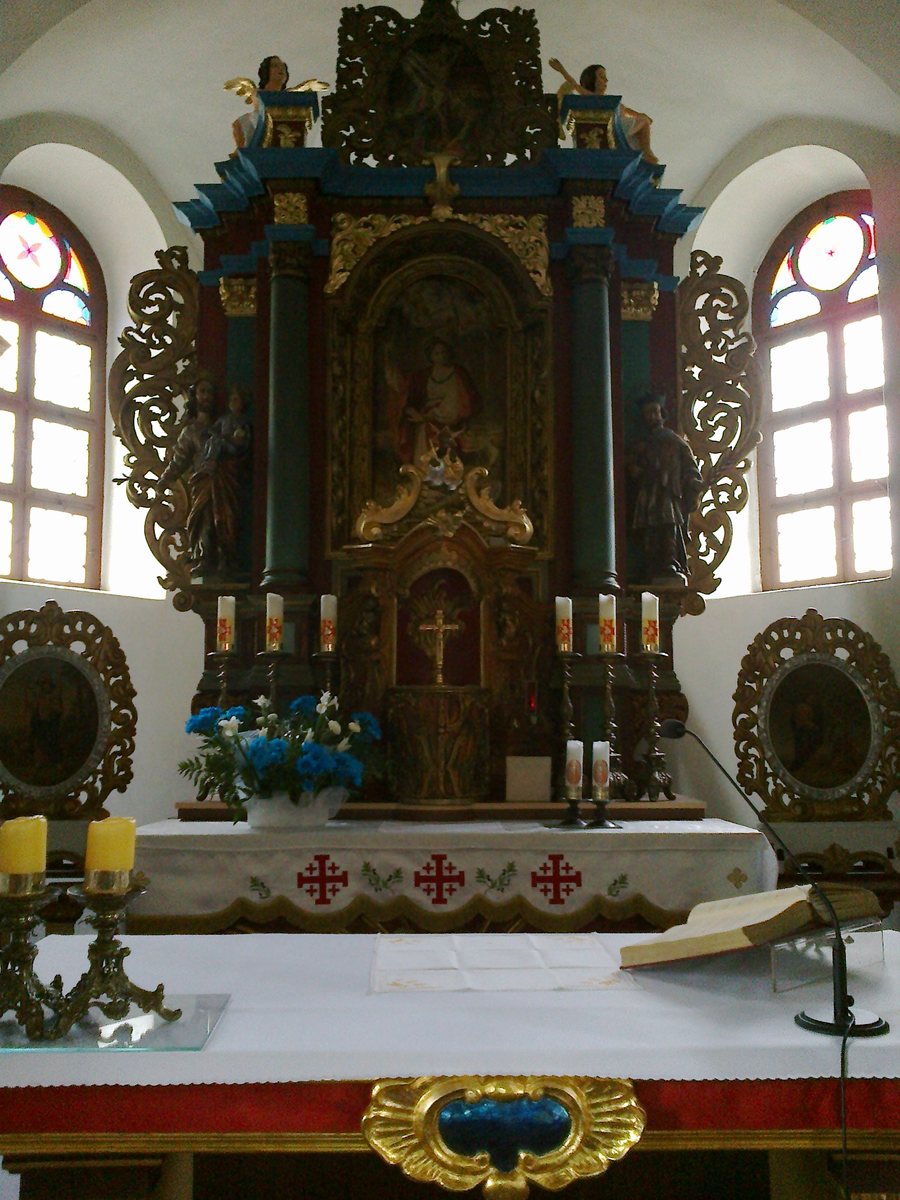 File:Widok na barokowy ołarz Kościoła parafialnego w Bzowie.jpg
Photo: Kacper z Bzowa via Wikimedia Commons, CC BY-SA 4.0
Bzowo at a glance
Bzowo lies on the steep slope of the Vistula Valley. The village once consisted of two settlements, Bzowo and Głowno, which were joined in the 16th century. Historic buildings include the Church of St. Margaret, wooden houses dating from the mid-19th century, and a former horse trough from the 19th century.
What does the Church of St. Margaret tell us about Bzowo?
The late Baroque Church of St. Margaret was built and completed in 1768 from brick and stone. It still stands today. Its construction and continued existence make it a tangible reference point for local history, without equating different periods of construction.
The church is classified as late Baroque, while its interior is described as Rococo; these terms therefore refer to two different aspects of the building. The church has a tower and a Rococo interior dating from the 18th century. On July 24, 1938, Bishop Konstanty Dominik consecrated the church. Its construction and completion in 1768 and its later consecration mark different stages in its history.
What older traces add to the local history?
Bzowo’s history also includes the earlier joining of two settlements: Bzowo and Głowno were united in the 16th century. The parish in Głowno is first mentioned in 1325. This date belongs to the history of the parish, while the settlements were united in the 16th century.
The cemetery beside the Roman Catholic parish Church of St. Margaret was established at the beginning of the 18th century. A cemetery was probably already located on the same site in the 14th century. Bzowo therefore brings together different historical timeframes: the early mention of the parish, the possible earlier cemetery site, and the cemetery’s later establishment.
What historic buildings are there besides the church?
Bzowo has wooden houses built using Dutch, or Olęder, log construction, dating from the mid-19th century. Log construction is a building method in which layers of wood are stacked on top of one another. Comparing these houses with the church, which was built from brick and stone, brings the difference in building materials into focus without suggesting that the buildings date from the same period.
The village’s historic buildings also include a former horse trough from the 19th century. It complements the religious architecture and houses with evidence of earlier practical uses. Taken together, these buildings show not only different materials but also different functions within the village.
What can help you choose accommodation?
When choosing a hotel, you could first consider which aspect of Bzowo matters most to your trip: the church architecture, local history, or its location on the steep slope of the Vistula Valley. This can help you assess the destination in light of your interests.
Discover more destinations: Rybno.
FAQ
When was the Church of St. Margaret built?
The late Baroque church was built and completed in 1768 from brick and stone. Bishop Konstanty Dominik consecrated it on July 24, 1938.
What older historical dates are known for Bzowo?
The parish in Głowno is first mentioned in 1325. The cemetery beside the parish church was established at the beginning of the 18th century; a cemetery probably already existed on the site in the 14th century.
What historic buildings are there besides the church?
Bzowo has wooden houses built using Dutch, or Olęder, log construction, dating from the mid-19th century. The village also has a former horse trough from the 19th century.
Where is Bzowo?
Bzowo lies on the steep slope of the Vistula Valley.
Go to the main travel overview: Krzewiny.

