
Accommodation in Mała Nieszawka near Toruń
Accommodation in Mała Nieszawka
Mała Nieszawka is suitable for travelers looking for accommodation near Toruń who would also like to follow a local route on foot or by bike. The documented routes pass the flood protection embankment, castle ruins and a historic wooden church. This gives the town a practical role as a starting point: what matters is not general proximity to all the sights, but the location of your chosen accommodation in relation to the route you actually want to take.
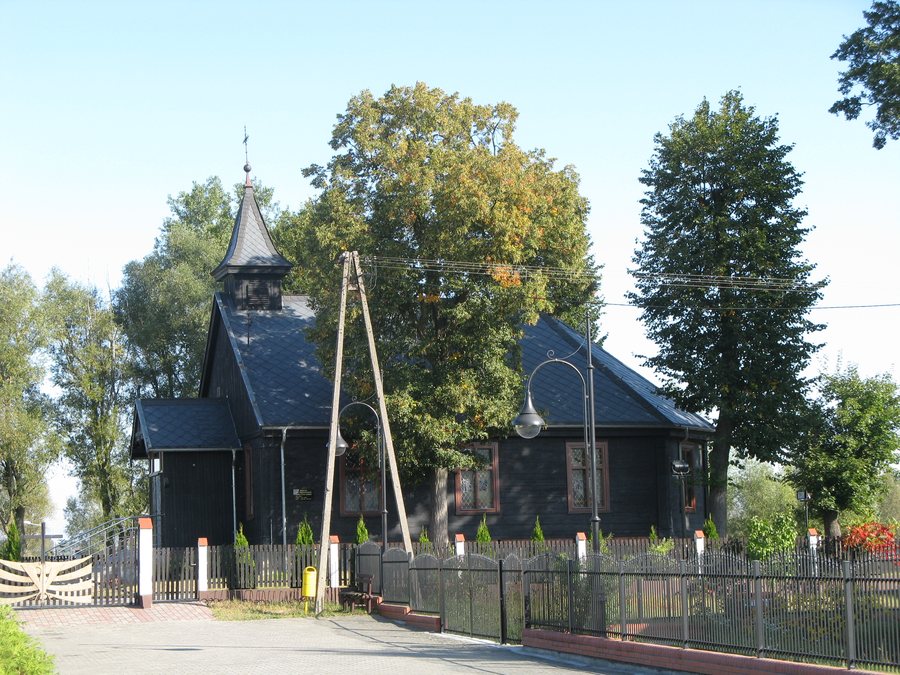
Key facts about Mała Nieszawka
- The town is home to the ruins of a Teutonic castle built in the 13th century.
- A blue hiking trail runs through Mała Nieszawka past the ruins and the wooden church.
- A green cycling route also follows the flood protection embankment along this section.
- The former Mennonite chapel is now the Church of the Sacred Heart of Jesus; access is restricted.
Which routes pass through the town?
The blue hiking trail comes from Toruń over a bridge and first passes Dybów Castle and Fort X. In Mała Nieszawka, it runs alongside the local castle ruins and the wooden church. It then continues toward Cierpice, where the documented section ends at the cemetery and a church. If you are planning this route, treat it as a route between towns, not as a short walk that necessarily starts at every accommodation.
Near Dybów Castle and Fort X, the green cycling route follows a similar course along the embankment. Beyond Mała Nieszawka, it passes the municipal office, village houses, the Mennonite cemetery and the castle ramparts in Wielka Nieszawka; it then continues via Dybów and Rojewo. An extension to Inowrocław is planned, so it is not part of a route described as complete. When choosing accommodation, consider whether you can conveniently reach the cycling route from the specific address and how far you want to ride.
Castle ruins and former Mennonite chapel
The Teutonic castle ruins give the route through Mała Nieszawka a historical point of interest. Their construction is dated to the 13th century. This confirms the location of the ruins, but does not establish that they are freely accessible at all times or that there is a visitor center or guided tour. The former Mennonite chapel is now used as the Church of the Sacred Heart of Jesus. It is accessible during services; access at other times is restricted. This matters more when planning your day than simply including it on a list of sights.
Which accommodation location is right for you?
For a day of hiking, an address with suitable access to the blue trail is useful; for a cycling trip, access to the green route and space for your own equipment matter more. If your main goal is to see the ruins and the church, check the accommodation’s actual location in relation to them. None of these facts about the town establishes specific hotel amenities, parking availability or bookability. When comparing an individual room or holiday home, check the address, dates, price and explicitly listed amenities rather than assuming an offer based on the town’s name.
FAQ
What historical sights are documented in Mała Nieszawka?
The ruins of a Teutonic castle built in the 13th century and the former Mennonite chapel are specific local landmarks.
Do the hiking and cycling routes run along the embankment?
Yes. The documented blue hiking trail and green cycling route pass the flood protection embankment and the ruins in the Mała Nieszawka area.
Can you visit the church interior at any time?
No, unrestricted access is not documented. The present-day Church of the Sacred Heart of Jesus is accessible during services; entry is restricted at other times.

