
Discover Rajbrot: churches, history and regional cuisine
Accommodation in Rajbrot
Get to know Rajbrot through three specific themes: Gothic wooden architecture, First World War memorial sites, and regional food culture. For your visit, the church, two soldiers’ cemeteries described in different ways, and the traditions of bread-making and Szołdra are of particular interest.
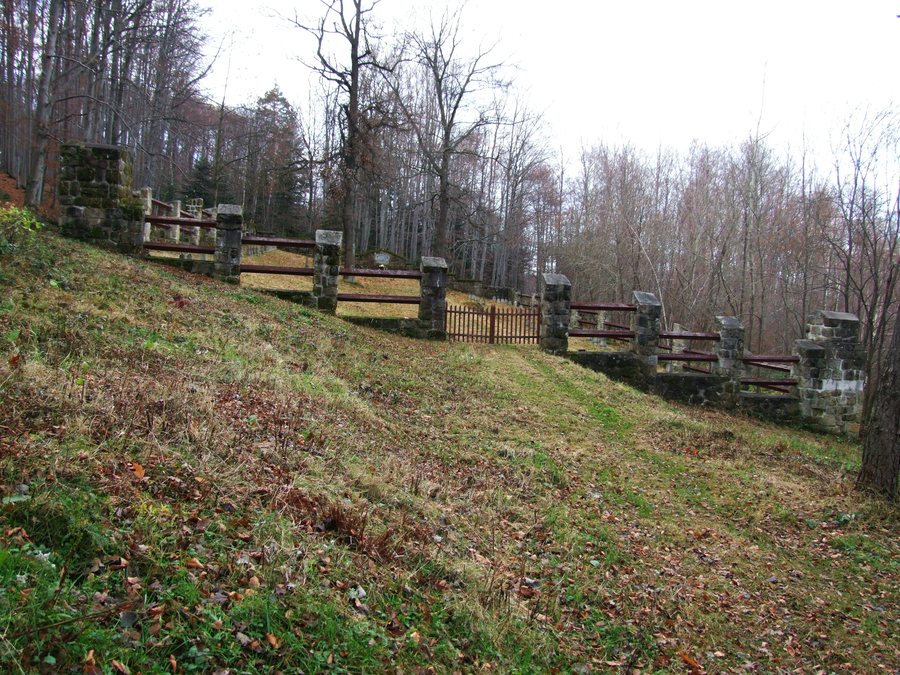 File:Cmentarz wojenny nr 300 Kobyła Rajbrot - 1.jpg
Photo: Jerzy Opioła via Wikimedia Commons, CC BY-SA 4.0
Rajbrot at a glance
- The Church of the Nativity of the Blessed Virgin Mary was built around 1511 and is the third church on this site.
- Soldiers from three armies who fell in December 1914 are buried at Military Cemetery No. 300, Rajbrot-Kobyła.
- Military Cemetery No. 303 lies on a wooded hill and is surrounded by a high stone wall.
- The culinary traditions described here include large, round loaves of bread and Szołdra ham.
What makes the church in Rajbrot noteworthy?
The Church of the Nativity of the Blessed Virgin Mary is considered a well-preserved example of Gothic wooden architecture. It is an east-facing log structure with a high, steep roof. East-facing means that the building faces east; in log construction, layers of timber are stacked on top of one another. Together, the orientation, construction method, and roof shape give the church its distinctive appearance.
There are specific details to discover inside as well: high-quality wooden sculptures, including a Crucifixion group on the rood arch, the Madonna of Rajbrot, and a small figure of the risen Christ. If you would like to see the interior furnishings in person, check visiting arrangements before your visit.
Which historic sites can be distinguished?
Military Cemetery No. 300, Rajbrot-Kobyła, is a listed historic site. Russian, Austro-Hungarian, and German soldiers who fell in fighting from 7 to 12 December 1914 are buried there. The focus at this site is on those buried there and the precisely specified period.
Military Cemetery No. 303, from the First World War, offers a different point of reference: its description highlights its location on a wooded hill and its high stone wall. The two memorial sites therefore differ in the details on record: for No. 300, the key details are those buried there and the period of fighting; for No. 303, they are its hilltop location and enclosure.
A granary dating from the turn of the 18th and 19th centuries stands within the grounds next to the church. It adds a building with a different purpose and a later date than the church to the historic structures you can see in Rajbrot.
What do bread and Szołdra reveal about the food culture?
A description from 2023 records the continuation of the bread-making tradition in Rajbrot: many women regularly bake large, round loaves. The description links the tradition to a clearly recognizable result—the loaves’ shape and size are part of its specific character.
Szołdra is a ham made from the upper part of the pork leg. The meat is cured for several days in a traditional brine with peppercorns, allspice, bay leaf, and garlic, then hand-tied into shape. While the round loaves are central to the bread tradition, Szołdra is defined by the cut of meat used, the seasonings, and the several-day preparation.
Discover more destinations: Borówna, Rzezawa, Winnica, Grobla, Nowy Wiśnicz, Lipnica Murowana, Bochnia, Kamionna.
FAQ
When was the Church of the Nativity of the Blessed Virgin Mary built?
It was built around 1511. It is the third church to have been built on this site.
How do Military Cemeteries No. 300 and No. 303 differ?
No. 300, Rajbrot-Kobyła, is a listed historic site where soldiers who fell in fighting from 7 to 12 December 1914 are buried. No. 303 is described by its wooded hill and high stone wall.
What is Szołdra?
Szołdra is a ham made from the upper part of the pork leg. The meat is cured for several days in seasoned brine and hand-tied into shape.
For the broader travel overview: Bochnia.

