
Łapczyca – Church and Historic Routes
Accommodation in Łapczyca
Łapczyca offers a cultural and historical perspective on a Gothic church, ancient trade routes, and the remains of a medieval hillfort. These highlights provide concrete guidance when choosing the town for a stay focused on history and religious tradition.
Quick facts about accommodation in Łapczyca
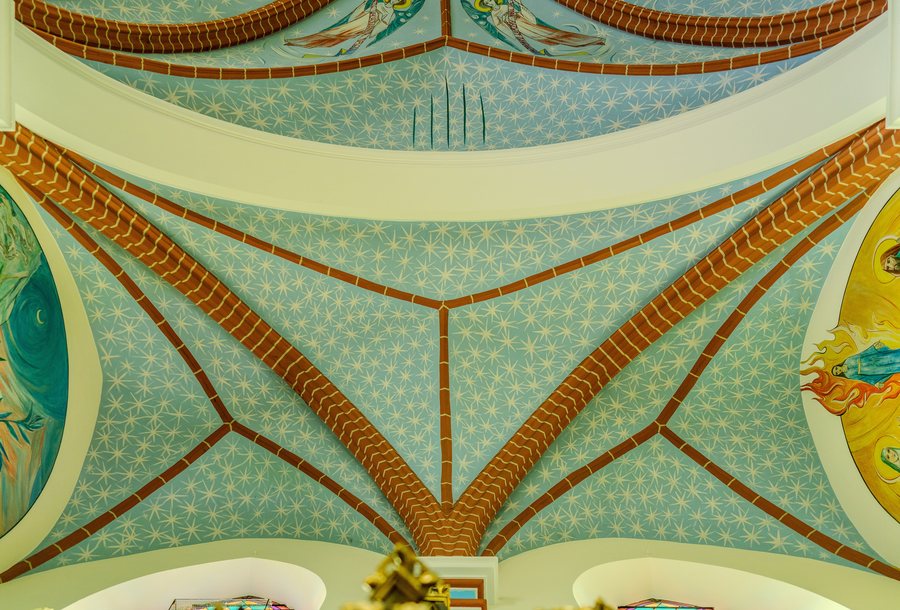
A prominent landmark is the Church of the Nativity of the Blessed Virgin Mary: this Gothic brick building was constructed in 1340 and founded by King Casimir the Great. The Via Regia Antiqua runs from Bochnia to Chełm; this church is one of the landmarks along it. Łapczyca is also home to the remains of a medieval hillfort, which flourished from the 9th to the 11th century.
What makes the church in Łapczyca special?
The church combines a precise historical context with a distinctive setting in the townscape. Its construction in 1340 and its foundation by King Casimir the Great are part of its history. As a Gothic brick building, it is a specific point of interest for travellers interested in medieval sacred architecture. Its dedication to the Nativity of the Blessed Virgin Mary also gives it religious significance, reflected in the pilgrimage to Łapczyca.
The church stands on a hill among spreading lime trees. An earlier trade route from Kraków towards Ruthenia and Hungary ran beside it. The site can therefore be viewed not only through the building itself, but also in terms of its location on a historic route. The combination of the hill, lime trees, and church describes the setting without reducing it to a single architectural detail.
Which historic routes are associated with Łapczyca?
The Via Regia Antiqua runs from Bochnia to Chełm and passes by the church. Its name is part of a longer historical sequence: the church stands on the former Amber Road, later called the Royal Road and today known as the Via Regia Antiqua. In Łapczyca, you will therefore encounter several names for this historic route. Its direction can be traced between Bochnia and Chełm; the older trade route from Kraków towards Ruthenia and Hungary provides another historical connection.
Which religious tradition shapes the town?
An annual pilgrimage from Bochnia to the church in Łapczyca has taken place since 1849. It commemorates the reputed miraculous deliverance from a cholera epidemic. Alongside its architectural and historical significance, the pilgrimage gives the church a lasting place in a religious tradition. Visitors to Łapczyca can discover this spiritual connection as a distinct aspect of the town, rather than viewing the church only as a building or a stop on a historic route.
What other traces of history are there?
The remains of a medieval hillfort add an older settlement history to the picture of Łapczyca. Its heyday lasted from the 9th to the 11th century. Unlike the church, whose construction date is given as 1340, the hillfort is associated with a period of time. These different time frames help distinguish the town’s historical traces: a medieval sacred building on the one hand, and the remains of a fortification with an earlier heyday on the other.
How should I understand the road connections?
The route continues to Łapczyca along the Raba Route. There, it joins National Road 94 and runs towards Bochnia. This information identifies a road connection and its direction for your reference. It complements the historic routes associated with the church: National Road 94 is part of the Raba Route, while the Via Regia Antiqua and the Amber Road shed light on the town’s history.
FAQ
When was the church in Łapczyca built?
The Church of the Nativity of the Blessed Virgin Mary was built in 1340 and founded by King Casimir the Great.
How long has the pilgrimage to Łapczyca been taking place?
An annual pilgrimage from Bochnia to the church in Łapczyca has taken place since 1849.
When was the medieval hillfort at its peak?
The hillfort flourished from the 9th to the 11th century.
For the main travel overview: Winnica.

.jpg)