
Discover Dąbrowa Tarnowska
Accommodation in Dąbrowa Tarnowska
Dąbrowa Tarnowska offers several distinct points of interest for a cultural trip: an exhibition with different ways to explore it, significant buildings and traces of local history. When planning your trip, you can therefore choose based on whether you are especially interested in exhibitions, wooden architecture, classical music or historical sites.
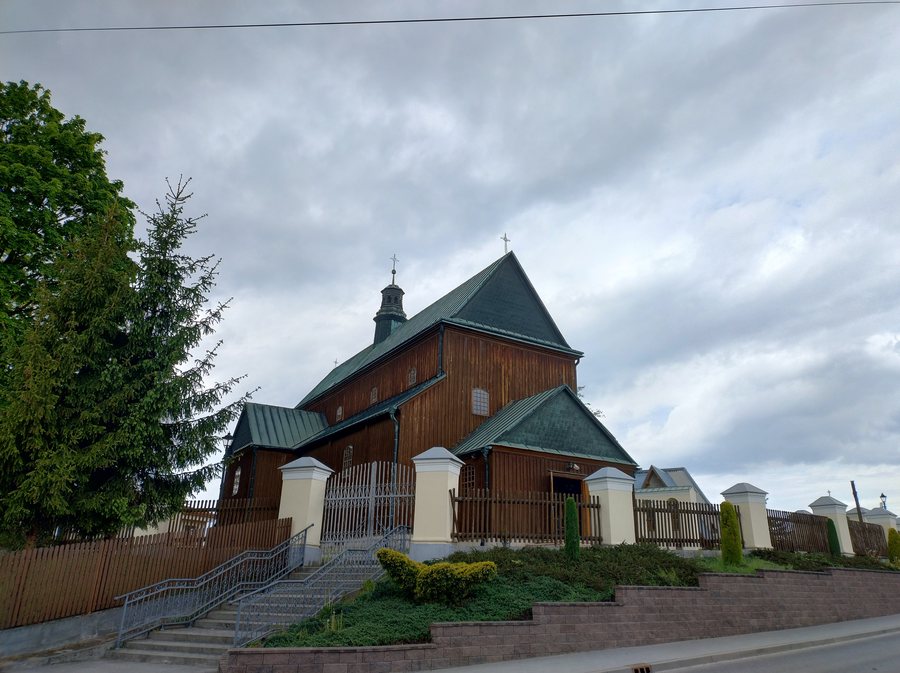 File:Dąbrowa Tarnowska (kościół Wszystkich Świętych) 01.jpg
Photo: Patryk Duszkiewicz via Wikimedia Commons, CC BY-SA 3.0
File:Dąbrowa Tarnowska (kościół Wszystkich Świętych) 01.jpg
Photo: Patryk Duszkiewicz via Wikimedia Commons, CC BY-SA 3.0
Dąbrowa Tarnowska at a glance
The Ośrodek Spotkania Kultur offers group visits to the exhibition, with or without a guide, as well as self-guided visits in various languages. The Church of All Saints is on the Lesser Poland Voivodeship Route of Wooden Architecture and is one of the largest wooden churches in Poland; classical music concerts are held there. The synagogue is the largest surviving synagogue in Lesser Poland. The Jewish cemetery was established around the turn of the 17th and 18th centuries; about 200 gravestones have survived there to this day. The castle’s history is also part of the town’s character, from its renovation in 1697 to the parts of the castle park that now serve as a recreational area for residents.
Which way of exploring suits your cultural interests?
At the Ośrodek Spotkania Kultur, groups can visit the exhibition with or without a guide. Those who prefer to explore the exhibits at their own pace can opt for a self-guided visit, available in various languages. This gives you different ways to see the exhibition, without having to plan your trip around just one option.
The Church of All Saints appeals to travelers interested in wooden architecture. Its location on the Lesser Poland Voivodeship Route of Wooden Architecture also connects it to this regional theme. As one of the largest wooden churches in Poland, it holds a special place among this type of building. The church therefore offers two distinct cultural highlights: wooden architecture and classical music concerts.
Which historical sites set these places apart?
The synagogue and Jewish cemetery each offer their own points of interest. The synagogue is the largest surviving one in Lesser Poland, making it particularly interesting to travelers interested in Jewish architectural and cultural history. The cemetery offers a different kind of historical evidence: it was established around the turn of the 17th and 18th centuries. About 200 gravestones have survived there to this day.
The castle’s history can be traced to a specific year: in 1697, the Lubomirski owners began an extensive renovation and expansion of the castle in Dąbrowa Tarnowska. The present-day use of substantial surviving parts of the castle park is a separate matter: they serve as a recreational area for residents.
How can you prioritize your travel interests?
If attending a concert is important to you, check the current schedule before your trip.
If you would like to compare Dąbrowa Tarnowska with other places in the same broader selection, you will also find Grądy, Luszowice, Mędrzechów and Lipiny there.
FAQ
What types of visits are available at the Ośrodek Spotkania Kultur?
Groups can visit the exhibition with or without a guide. Self-guided visits are also available in various languages.
What makes the Church of All Saints notable?
It is on the Lesser Poland Voivodeship Route of Wooden Architecture, is one of the largest wooden churches in Poland and hosts classical music concerts.
When was the Jewish cemetery established?
It was established around the turn of the 17th and 18th centuries. About 200 gravestones have survived there to this day.
To the broader travel overview: Dąbrowa.

_01.jpg)