
Zalas: Pottery Tradition, Church and Porphyry Quarry
Accommodation in Zalas
Zalas combines a historic pottery tradition with a Neo-Gothic church, a wooden bell tower and a large porphyry quarry. These varied features give you a concrete impression of the town’s history and landscape.
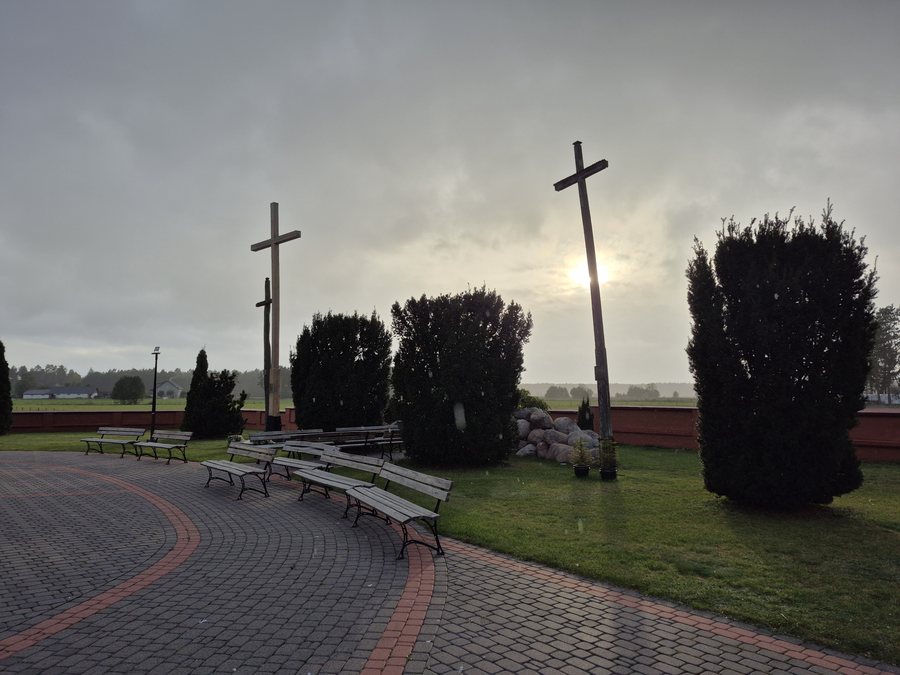 Kościół pw. Św. Stanisława Kostki Zalas 02
Photo: Aleksandra Domurad via Wikimedia Commons, CC BY 4.0
Zalas at a glance
- Historically, Zalas was known for its clay deposits; over time, many residents became potters.
- A large porphyry quarry lies in the eastern part of the town.
- The Neo-Gothic church was built between 1905 and 1910 with funding from the Potocki family.
- A wooden bell tower dating from the early 18th century stands next to the church.
- The Confraternity of Penance of Saint Mary Magdalene has been associated with the church since 1710.
- An obelisk unveiled in 2008 commemorates Stanisław Chałupa, a lieutenant colonel and pilot.
What does the pottery tradition tell us about Zalas?
This historic connection begins with the clay deposits: Zalas was known for them, and over time many residents became potters. This links a local raw material with a traditional craft. The history of pottery thus offers a distinct way to explore the town’s past, alongside its later buildings and memorials.
For travellers interested in crafts and cultural history, this connection offers a concrete point of reference. It differs from the architectural history of the church: here, the focus is on the development of a craft, while the church invites visitors to explore architecture and religious history. Together, these themes offer different perspectives on Zalas without needing to be combined into a single historical narrative.
What stories do the church and bell tower tell?
The Neo-Gothic church was built between 1905 and 1910 with funding from the Potocki family. A wooden bell tower dating from the early 18th century stands right next to it. The two buildings therefore date from different periods: the tower is considerably older than the church. This comparison of their ages helps make clear that the architectural history does not belong to a single era.
The Confraternity of Penance of Saint Mary Magdalene is also associated with the church, a connection that dates back to 1710. This makes it possible to distinguish architectural history from religious tradition at this site: the church has a documented construction period in the early 20th century, while the confraternity represents an older historical continuity. Unveiled in 2008, the obelisk provides another, distinct memorial. It is dedicated to Stanisław Chałupa, remembered as a lieutenant colonel and pilot.
What does the porphyry quarry add?
A large porphyry quarry is located in the eastern part of Zalas. This adds a landscape theme to the cultural history. The town’s story therefore encompasses the historic connection between clay and pottery, a quarry in the east, and the architectural and commemorative history surrounding the church, bell tower and obelisk.
These themes are easy to distinguish: the quarry is a specific point of reference in the landscape, pottery points to a historic craft, and the buildings and obelisk offer their own historical points of reference. If you compare destinations based on these kinds of interests, these different facets can help you place Zalas in context.
How can you put these historical points of reference in context?
The dates mentioned span several periods: the early 18th century for the bell tower, the confraternity’s association with the church dating back to 1710, the church’s construction between 1905 and 1910, and the unveiling of the obelisk in 2008. These are different kinds of historical reference points: a construction period, religious continuity and the commemoration of a person.
For planning your trip, it is especially useful to consider which aspect of the town interests you: traditional crafts, sacred architecture or the porphyry quarry as a landscape feature. This way, you can get to know Zalas through specific features and compare it with other destinations. Discover more destinations: Bolechowice, Zielonki, Balice, Wielka Wieś, Rybna, Chrosna, Ochojno, Wesoła.
FAQ
What was Zalas historically known for?
Historically, Zalas was known for its clay deposits. Over time, many residents became potters.
What is known about the church and bell tower?
The Neo-Gothic church was built between 1905 and 1910 with funding from the Potocki family. A wooden bell tower dating from the early 18th century stands beside it.
Where is the porphyry quarry?
The large porphyry quarry is in the eastern part of Zalas.
Who does the obelisk commemorate?
The obelisk, unveiled in 2008, commemorates Stanisław Chałupa, a lieutenant colonel and pilot.
For the main travel overview: Kraków.

