
Kozłów: Earthworks, Manor and Church History
Accommodation in Kozłów
Kozłów offers visitors interested in cultural history concrete points of reference: faint traces of the earthworks of a fortified manor, a history stretching back to the 14th century, and churches with different historical connections.
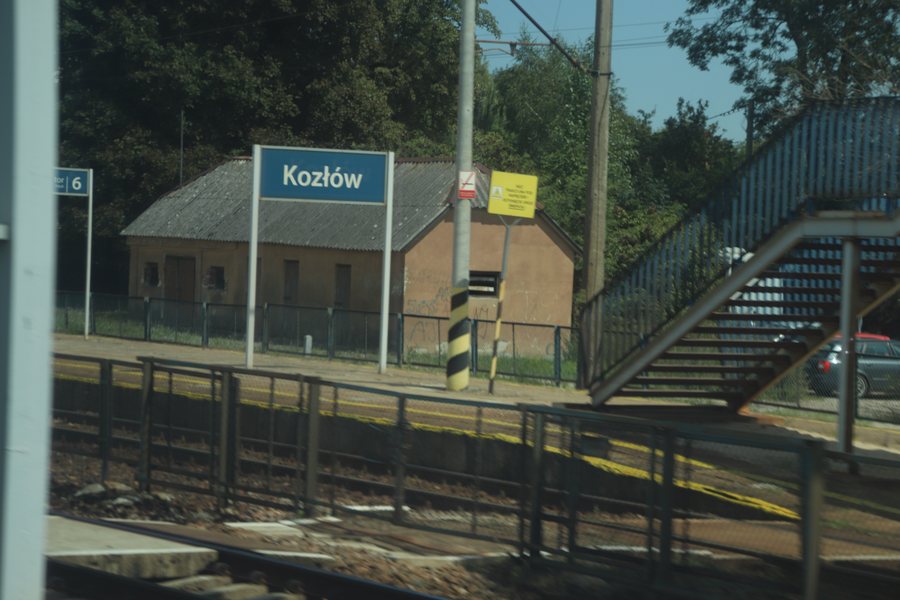
Kozłów at a glance
- In the last quarter of the 14th century, Piotr z Kozłowa and his son Mszczuj built a fortified manor with a chapel.
- The manor included an elliptical earthwork and an adjoining oval structure to the south.
- The Church of the Exaltation of the Holy Cross was built on the foundations of earlier wooden churches.
- A described route ends in Kozłów at this church and includes a visit there.
What do the earthworks of the fortified manor reveal?
The faint traces of the earthworks can be understood from their shape and proportions. The central earthwork is elliptical and measures about 55 × 35 metres. An oval structure measuring about 23 × 18 metres adjoins it to the south. A 14- to 16-metre-wide moat separated the two areas.
The earthworks are difficult to make out in the landscape. For those interested in historic fortifications, this offers a different perspective from visiting a surviving structure. The focus is on the shapes, their approximate dimensions, and the position of the adjoining structure in relation to the earthwork.
Which historical connections shape the area?
The history of the fortified manor dates back to the last quarter of the 14th century. Piotr z Kozłowa built it with his son Mszczuj, and the complex included a chapel. This gives the fortified manor and religious building a specific historical connection in this place.
The church history also encompasses several milestones. The Church of the Exaltation of the Holy Cross in Kozłów was built on the foundations of earlier wooden churches. In addition, construction of a new brick church began in Kozłów in 1901; the previous wooden church was dismantled that same year. For culturally minded travellers, this offers a second perspective on the area’s history: alongside the manor’s earthworks, there is the development of church architecture and the transition from timber to masonry construction.
Which stops are included in the wider route?
A described route ends in Kozłów at the Church of the Exaltation of the Holy Cross and includes a visit there. Nearby, a cycling route passes through Tczyca; the described visit there includes a fortified settlement site and the neo-Gothic Church of St Giles.
Other stops described along the route offer insight into the surrounding area: a stretch through the forest leads to Biała Góra, described as the highest point in the Miechów Upland at 414 metres above sea level. The same forest section passes through the Biała Góra and Kępie nature reserves. Along the described route, an artificial reservoir lies to the right of the road, 1.5 kilometres beyond Tczyca. The route also reaches Tunel, home to the railway tunnel described as the longest in Poland. These destinations are part of the route and surrounding-area context, not attractions in Kozłów.
How can you put Kozłów in context for your trip?
If you are interested in cultural history, you can assess Kozłów through two themes: the faint traces of the fortified manor and the history of its churches. The nearby route description adds other stops, including Tczyca and the forest section near Biała Góra. This makes it possible to distinguish what is directly in Kozłów from what belongs to the wider area covered by the described route.
Discover more destinations: Antolka, Kamienica, Kalina Wielka, Książ Wielki, Miechów, Racławice.
FAQ
What traces of the fortified manor can be found in Kozłów?
The described traces are faint earthworks: an elliptical earthwork measuring about 55 × 35 metres and an adjoining oval structure to the south, measuring about 23 × 18 metres. A 14- to 16-metre-wide moat separated them.
When was the fortified manor built?
Piotr z Kozłowa and his son Mszczuj built it in the last quarter of the 14th century; the complex included a chapel.
Is a visit to the church in Kozłów part of a route?
Yes. A described route ends at the Church of the Exaltation of the Holy Cross and includes a visit there.
For the broader travel overview: Miechów.

