
Falsztyn
Accommodation in Falsztyn
Falsztyn combines preserved Spisz architecture and historical traces with a location above Lake Czorsztyńskie. Find guidance here for your stay, covering culture, landscape and cycling routes—including a steep climb on the Velo Dunajec route.
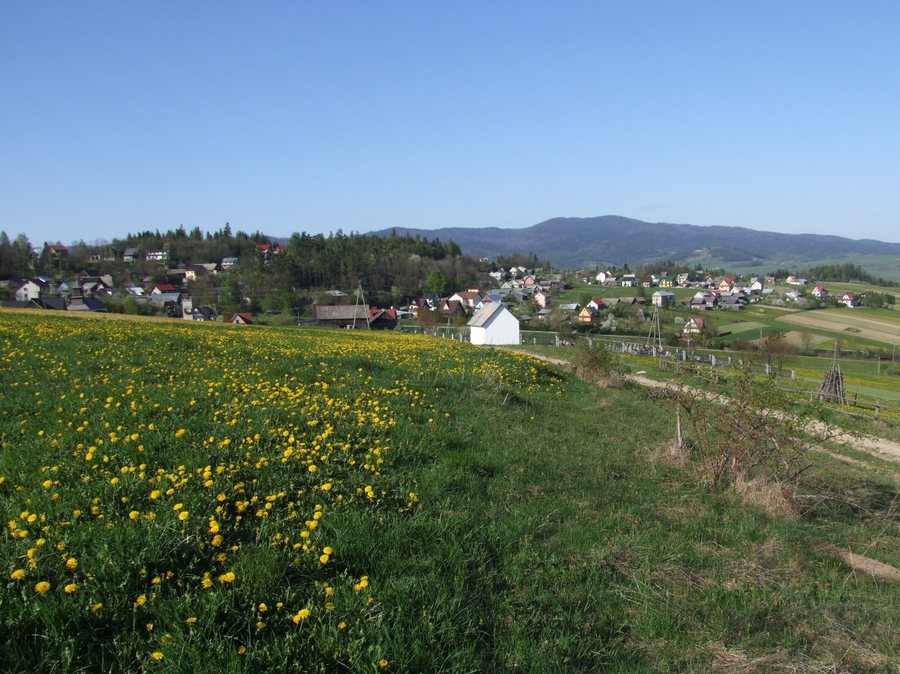
Falsztyn at a glance
- The village stretches above the artificial Lake Czorsztyńskie.
- Falsztyn offers views of the Tatra, Pieniny and Gorce mountains.
- A cycling route runs through Falsztyn; one section of the Velo Dunajec route includes a short, steep climb.
- The village’s character includes old Spisz architecture, wooden farmsteads and the remains of a small market settlement.
What can you discover in Falsztyn?
Old Spisz architecture survives around a bend in the road on a side ridge of the Spisz Mountains. Several old wooden farmsteads and the remains of a small Spisz market settlement add to the village’s character. Those interested in local history can also visit the manor house of the Jugenfeld and Salamon families.
The Chapel of Our Lady Queen of Poland also tells a story of changes to local buildings: in 1982, residents converted it from a former farm building that had previously housed a granary. Mass is listed at the chapel at 9:00 a.m. on Sundays and public holidays. At Sokola Skała, a wooded promontory near Falsztyn, local tradition associates the site with a small medieval castle or monastery. This is a local tradition, not a confirmed description of the surviving buildings.
How can you experience the landscape around Falsztyn?
Its location above the artificial Lake Czorsztyńskie shapes the landscape. From Falsztyn, views extend across three mountain ranges: the Tatra, Pieniny and Gorce. Nearby, Zielone Skałki lies between Falsztyn and Niedzica on a peninsula that juts into the lake. The limestone cliffs there drop steeply 80 to 100 metres to the water.
Zielone Skałki is not open to tourists. However, an unpaved road and a cycling path run along the southern boundary of the protected area; this does not mean the area itself is accessible. More than thirty plant species grow in Falsztyn’s extensive pastures and meadows. With a little luck, you may spot a falcon, eagle, buzzard or hawk in the village. The variety of plants and the possibility of seeing birds of prey offer nature lovers different reasons to take in the landscape attentively.
Which cycling routes pass through Falsztyn?
A cycling path runs through Falsztyn, allowing you to ride towards Frydman and onward via Dębno to Nowy Targ. In the other direction, the described ride goes as far as Niedzica Castle. The Velo Dunajec route has a short but steep climb near Falsztyn. Take this gradient into account when choosing your route; the information does not indicate a specific riding time.
The southern section of the Route Around Czorsztyn Lake follows the Velo Dunajec route from Niedzica through Falsztyn and over the side embankment in Frydman to the bridge in Dębno. The route is about 15 kilometres long. This gives you an approximate distance for planning your day, while the climb near Falsztyn is a separate route consideration. If you would like to combine cycling with local history, you can treat the route information and the cultural sites described here as different interests to consider for your stay.
Which other destinations would you like to compare?
If you would like to compare more places for your travel plans, you can find Obidowa, Szczawnica, Raba Wyżna, Rokiciny Podhalańskie, Nowy Targ, Lasek, Bańska Niżna and Lipnica Wielka here.
FAQ
How long is the southern section of the Route Around Czorsztyn Lake?
It is about 15 kilometres long and runs from Niedzica through Falsztyn to the bridge in Dębno, via the side embankment in Frydman.
Is Zielone Skałki accessible to visitors?
Zielone Skałki is not open to tourists. An unpaved road and a cycling path run along the southern boundary of the protected area.
When are Mass times listed at the chapel?
Mass is listed at 9:00 a.m. on Sundays and public holidays.
For the higher-level travel overview: Nowotarski.

