
Trybsz: Gorge, Hiking Trail, and Church Art
Accommodation in Trybsz
Trybsz brings together a distinctive river landscape and a long ecclesiastical history. The Białka Gorge, a hiking trail to Polana Podokólne, and the church’s art offer different points to consider when deciding whether the town suits your travel interests.
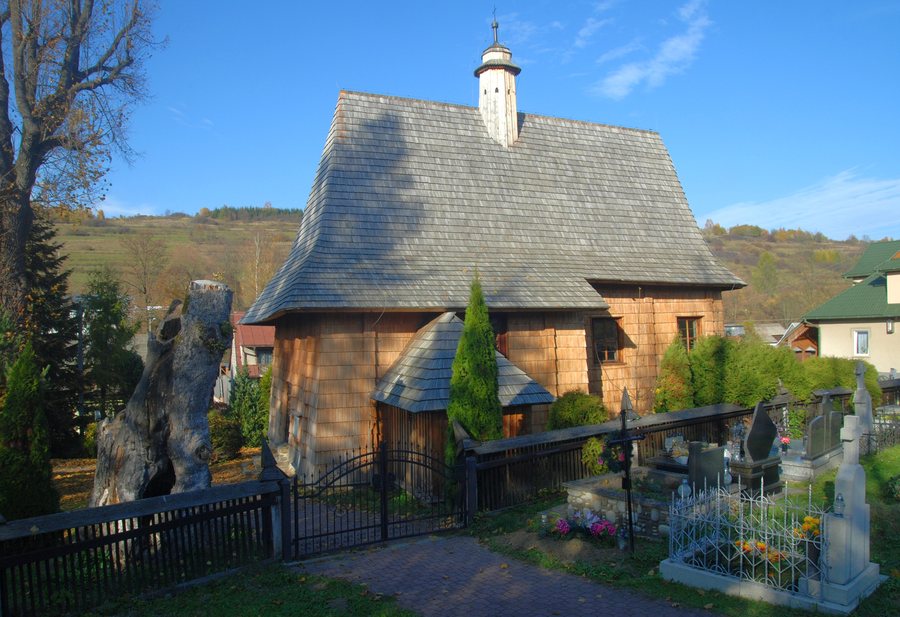 File:Trybsz, kościół św. Elżbiety Węgierskiej (HB2).jpg
Photo: Henryk Bielamowicz via Wikimedia Commons, CC BY-SA 4.0
File:Trybsz, kościół św. Elżbiety Węgierskiej (HB2).jpg
Photo: Henryk Bielamowicz via Wikimedia Commons, CC BY-SA 4.0
Trybsz at a Glance
- Near Trybsz, the Białka forms a picturesque gorge between the rock formations of Obłazowa and Kramnica.
- A green-marked hiking trail leads from Trybsz to Polana Podokólne. It is 14.7 kilometers long.
- The wooden Church of St. Elizabeth of Hungary dates from 1567.
- The Przełom Białki Nature Reserve is located in the vicinity of Trybsz.
What defines the landscape and surroundings?
The gorge is formed by the Białka River between the steep rock formations of Obłazowa on the Podhale side and Kramnica on the Spisz side. The landscape thus brings together a river course, two named rock formations, and the different regional names for the two sides. If you are interested in landscapes, this gives you a specific focus for planning your trip.
The Przełom Białki Nature Reserve is also located in the vicinity of Trybsz. The gorge and the nature reserve are two useful points of reference if you would first like to explore the river landscape of the town and its surroundings. The green-marked trail to Polana Podokólne adds a hiking route with a set destination to this landscape perspective.
How much time should you allow for the hiking trail?
The green-marked hiking trail leads from Trybsz to Polana Podokólne and is 14.7 kilometers long. The stated walking time for the route in this direction is five hours and 15 minutes; in the opposite direction, it is five hours. The times therefore differ depending on the direction. When planning your time, it is also important to bear in mind that actual walking times can vary from one hiker to another.
The route, distance, and walking time give you a concrete basis for comparing this hike with other plans for your trip. The hiking trail leads from Trybsz to Polana Podokólne.
What cultural details are characteristic of Trybsz?
The wooden Church of St. Elizabeth of Hungary dates from 1567 and is considered one of two wooden churches in Polish Spisz, alongside the church in Jurgów. Its age and construction make it a distinctive part of local ecclesiastical history. The comparison with the church in Jurgów gives culture enthusiasts a specific regional point of reference, without suggesting that the two churches are part of the same complex.
The church’s furnishings include wall polychromes depicting scenes from the Old and New Testaments. The ceiling painting shows the Assumption of Mary against a backdrop of the Pieniny Mountains, the Dunajec Valley, the castles in Czorsztyn and Niedzica, and the Belianske Tatras. Religious imagery and named landscapes meet here within the same composition.
Another work of art is located in the new church: the image of Saint Elizabeth forms the central panel of a 16th-century triptych. It was transferred from the old church and installed above the choir. The historic wooden church dates from 1567; the image transferred from it, dating from the 16th century, is located in the new church.
If you are looking for hotels for a trip focused on nature and culture, the gorge, hiking route, and church art can serve as different considerations when choosing your destination.
Discover more destinations: Rabka-Zdrój, Chyżne, Chochołów, Czorsztyn, Dursztyn, Ochotnica Górna, Bańska Niżna, Gronków.
FAQ
What landscape is characteristic of Trybsz?
Near Trybsz, the Białka forms a picturesque gorge between the steep rock formations of Obłazowa on the Podhale side and Kramnica on the Spisz side.
How long is the hiking trail to Polana Podokólne?
The green-marked trail is 14.7 kilometers long. The stated walking time from Trybsz is five hours and 15 minutes, and five hours in the opposite direction; it can vary from one hiker to another.
What are the distinctive features of the Church of St. Elizabeth of Hungary?
The wooden church dates from 1567. The artworks described include wall polychromes, a ceiling painting with a regional backdrop, and an image of Saint Elizabeth in the new church.
To the broader travel overview: Nowy Targ County.

.jpg)