
Łopuszna between Gorce trails and wooden heritage
Accommodation in Łopuszna
Łopuszna combines hiking trails into the Gorce Mountains with a distinctive valley landscape and historic wooden buildings. If you are looking for a hotel for a nature or cultural getaway, the routes and sights offer concrete pointers to the interests that could shape your trip.
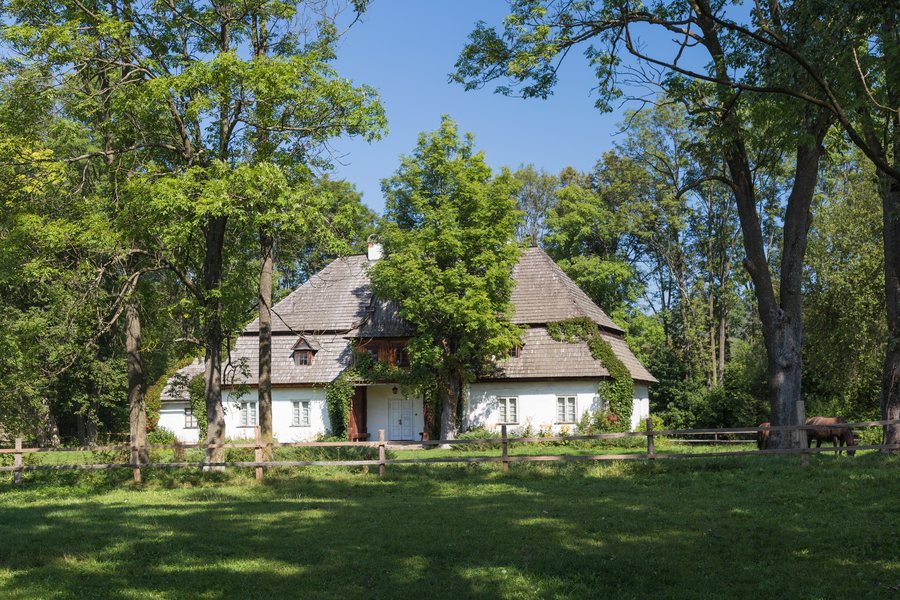 File:2020 Powiat nowotarski, Łopuszna, Dwór 01.jpg
Photo: Marcin Konsek via Wikimedia Commons, CC BY-SA 4.0
File:2020 Powiat nowotarski, Łopuszna, Dwór 01.jpg
Photo: Marcin Konsek via Wikimedia Commons, CC BY-SA 4.0
Łopuszna at a glance
- Two hiking trails lead from Łopuszna to Turbacz, the highest peak in the Gorce Mountains.
- Pucołowski Stawek is located along a hiking trail and offers sweeping views of the Nowotarska Basin and the Tatra Mountains.
- The village’s cultural landscape includes a wooden manor house, a Gothic wooden church and the Tischner Memorial Room.
What hiking trails and walks are there?
Two trails lead from Łopuszna to Turbacz for mountain hikes. One is the older Seweryn Goszczyński Trail, already known at the beginning of the last century. It runs via Zarębek Niżni and Zarębek Średni to the Srokówki clearing near Pucołowski Stawek, east of Wysznia (1,103 m). From there, it continues to Kiczora and over Hala Długa to Turbacz. Check current trail conditions before setting out.
There are also walking routes for less experienced hikers. From the village centre, they lead to Zarębek Wyżni via the hill of Goderman (705 m), as well as to Mount Chrobowska, also called Gobrowska, and to Koszary Harklowskie. This gives you a choice of different destinations: the route to the highest peak in the Gorce Mountains or walks to the places and hills mentioned above.
What shapes the landscape around Łopuszna?
The Łopuszna Valley is characterised by deeply cut valleys with elevation differences of 350 to 400 metres, steep wooded mountain slopes and clear mountain streams. Forest clearings lie along hiking trails; well-known clearings on mountain terraces and ridges include Chłapkowa, Chowańcowa, Srokówka, Wysznia, Jankówki, Cioski and Gawrowa.
Pucołowski Stawek is a distinctive feature of the landscape. It formed when a landslide from the slopes of Wysznia dammed the natural outflow of water. The pond is considered a geomorphological feature and a great rarity in the Gorce Mountains landscape. From there, sweeping views extend across the Nowotarska Basin and the Tatra Mountains. A short path leads to the pond from the scenic Srokówki clearing.
Which cultural sights are worth seeing?
The wooden manor house in Łopuszna has log walls that were originally boarded, as well as a porch and a dormer. The Church of the Holy Trinity is a Gothic wooden church with a straight-ended chancel and an external chapel. The main altar of the wooden parish church also contains a triptych painted on wood in the mid-15th century; its central panel depicts the Coronation of Mary.
The lower, museum level of the Tischner Memorial Room contains the priest’s mementos, favourite objects, manuscripts, books and photographs. Check visiting arrangements before your visit. The century-old Klamerus Cottage was moved from the village centre and furnished with the interior of a peasant home from the early 20th century. The exhibition at the Klamerus House is currently unavailable.
How do you choose Łopuszna as a place to stay?
When choosing a hotel in Łopuszna, consider whether the hiking trails to Turbacz or the village’s cultural sights are more important for your trip.
Discover more destinations: Kluszkowce, Szaflary, Maniowy, Mizerna, Raba Wyżna, Piekielnik, Krempachy, Maruszyna.
FAQ
Which trails lead from Łopuszna to Turbacz?
Two hiking trails lead from Łopuszna to Turbacz. The Seweryn Goszczyński Trail described here runs, among other places, via Zarębek Niżni, Zarębek Średni, the Srokówki clearing and Kiczora, as well as over Hala Długa to the summit. Check current trail conditions before setting out.
What makes Pucołowski Stawek special?
The pond formed when a landslide from the slopes of Wysznia dammed the natural outflow of water. It is considered a geomorphological feature and offers sweeping views of the Nowotarska Basin and the Tatra Mountains.
What cultural features can you find in Łopuszna?
The village’s cultural landscape includes the wooden manor house, the Gothic Church of the Holy Trinity and the Tischner Memorial Room, with its mementos, manuscripts, books and photographs. The exhibition at the Klamerus House is currently unavailable.
For the main travel overview: Nowotarski.

