
Czarna Góra – History and Nature in the Polish Spiš
Accommodation in Czarna Góra
Czarna Góra combines the history of the Polish Spiš with scenic views, summer swimming and mountain biking routes.
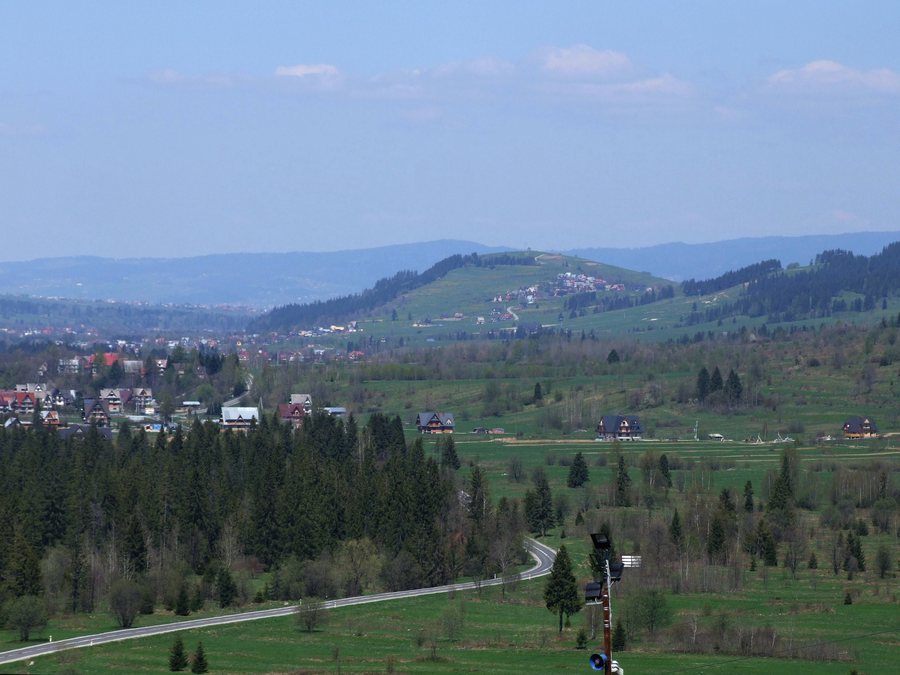
Key facts about Czarna Góra
- Czarna Góra is one of the fourteen villages of the Polish Spiš.
- The village was founded around the turn of the 17th century.
- A chapel dedicated to the Holy Trinity was built in 1872 in the part of the village above the Białka.
- In Budzówka, a wayside chapel dedicated to St. John of Nepomuk was endowed after the 1874 flood.
What does the village’s history tell us?
Regional affiliation and the period of its founding offer two different clues to the history of Czarna Góra: the village is one of the fourteen villages of the Polish Spiš and was founded around the turn of the 17th century. The chapels point to more specific places and dates. Above the Białka stands the Chapel of the Holy Trinity, built in 1872; in Budzówka, a wayside chapel commemorates the endowment made after the 1874 flood.
A walk through the village’s history can therefore connect religious buildings with different reasons for their construction. The chapel in Budzówka is dedicated to St. John of Nepomuk, while the other is dedicated to the Holy Trinity. These details help distinguish the buildings without conflating their histories.
What cultural perspective does the Korkosz farmstead offer?
In the northern part of Czarna Góra, in the Zagóra district, stands the wooden farmstead of the once-wealthy Korkosz family. It houses an ethnographic exhibition about a prosperous Spiš farmstead during the interwar period. Alongside the village’s history, this offers a glimpse into farm life and property ownership during a specific historical period.
The farmstead and the exhibition focus on different aspects: the building is associated with the Korkosz family, while the exhibition’s theme extends to farming in the Spiš during the interwar period. Visitors interested in cultural history will find a tangible connection to the region here, distinct from the chapels and the circumstances in which each was built.
What can you experience outdoors?
From Litwinka, you can see four national parks: Tatra, Babia Góra, Gorce and Pieniny. The viewpoint offers a way to take in the wider landscape and a clearly named destination for anyone interested in the region’s protected areas.
In summer, holidaymakers swim in a river in Czarna Góra that is described as clean. Swimming is therefore a seasonal option. The longest ski lift in the Bukowina Tatrzańska municipality is also located on the eastern slope of Litwińska Grapa.
Which mountain biking routes pass through Czarna Góra?
The 30-kilometre “Białka – Droga Królewska – Czarna Góra” route passes through the village. Check the route’s current condition before setting off. Another described route runs from Bukowina Tatrzańska along a paved road downhill to Czarna Góra, continues through Trybsz to Leśnica, then climbs back through the village to Bukowina Tatrzańska.
The two routes can be distinguished by their descriptions: the first is specified as 30 kilometres long; the second is defined by its course between Bukowina Tatrzańska, Czarna Góra, Trybsz and Leśnica. If you plan to include cycling in your trip, these details can help you familiarize yourself with the routes described.
Discover more destinations: Poronin, Search, Białka Tatrzańska, Jurgów, Małe Ciche, Biały Dunajec, Rzepiska, Bukowina Tatrzanska.
FAQ
When is swimming possible in Czarna Góra?
Swimming in the river described as clean is mentioned as a summer activity.
Which national parks can be seen from Litwinka?
From Litwinka, you can see Tatra, Babia Góra, Gorce and Pieniny National Parks.
What is known about the mountain biking routes?
A 30-kilometre route passes through Czarna Góra. Another route runs from Bukowina Tatrzańska through Czarna Góra, Trybsz and Leśnica, and back to Bukowina Tatrzańska.
Go to the main travel overview: Tatra.

