
Babica: Chapels, History and Landscape
Accommodation in Babica
Babica brings together religious sites of remembrance and traces of history with a landscape shaped by a stream, wooded hills and scenic views. This can help you decide whether the place suits your interests in culture and nature.
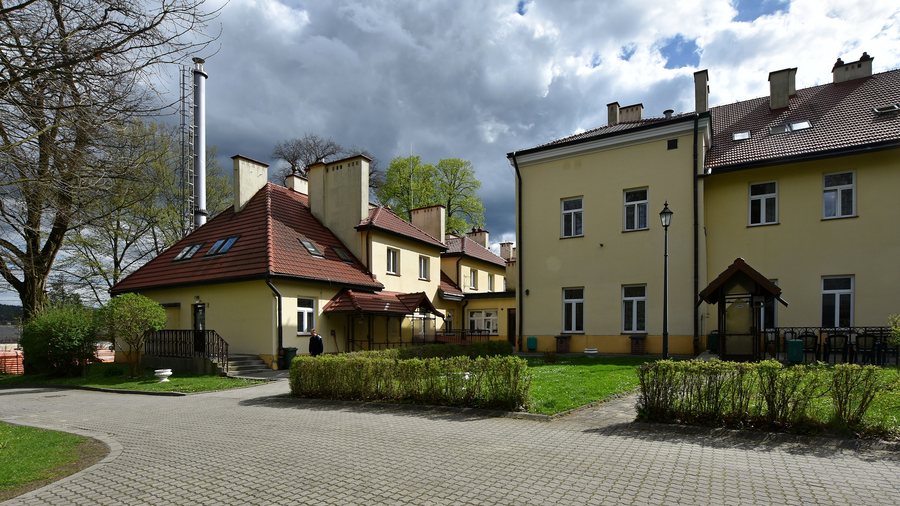
Babica at a glance
The Babica stream divides the village into two parts and flows into the Wysoka stream as a tributary. Babica lies on the route connecting Wadowice and Stanisław Górny. Notable features of the village include a roadside chapel built in 1828, other wayside chapels, historic traces of settlement and the chain of ponds in the north. On the southern edge is the childhood home of Lieutenant Tadeusz Sadowski, known as “Tomo”.
What kind of landscape defines Babica?
Wooded summits in the Silesian Foothills shape the landscape. The Babica stream valley offers scenic views, and a chain of ponds remains in the northern part of the village. These features give the area several distinct landscape reference points: the stream valley, the wooded heights and the ponds.
The landscape can also be understood in the south, where a historic road forms a scenic viewing corridor over long stretches. The ponds, by contrast, are in the north. If you are exploring Babica for its landscape, these location details can help you distinguish between its different features.
What cultural traces define the place?
A roadside chapel built in 1828 stands on the main road from Wadowice to Wysoka. It is considered one of the oldest chapels in Wadowice Municipality. Another wayside chapel depicts the hearts of Mary and Christ, who has fallen beneath the cross. Babica is also home to a wayside chapel dedicated to Our Lady of the Rosary, as well as a wayside chapel known as the Pietà Chapel. A wooden cross stands on the road to Wysoka, and another wayside chapel is located at a road junction on the boundary between Babica and Witanowice.
The history of settlement is also rooted in the village. An archaeological site documents traces of medieval settlement, and fragments of the historic settlement layout have also survived. The childhood home of Tadeusz Sadowski “Tomo” is on the southern edge of Babica, along the yellow hiking trail. He was born there on 1 July 1922 and lived there until he was nineteen. These details link a specific life story to a distinctive local landmark without combining the various religious and archaeological sites into a single walking route.
Which routes and location references help you find your way?
The main road from Wadowice to Wysoka, the road to Wysoka and the route connecting Wadowice and Stanisław Górny are distinct points of reference in Babica. The location of the roadside chapel on the main road and the wooden cross on the road to Wysoka also help distinguish these routes. Sadowski’s childhood home is on the yellow hiking trail, while the historic road in the south stands out for its viewing corridor.
These location details are especially useful if you want to make sense of the cultural traces and landscape features: the childhood home is linked to the hiking trail, the 1828 chapel to the main road, and the historic road in the south to scenic views. Each of these features therefore has its own geographic reference within Babica.
What else does the wider destination of Wadowice have to offer?
The wider destination of Wadowice offers additional themes specifically located there. Two urban trails provide a direct comparison: the Karol Wojtyła Trail is about 4.5 kilometres long and leads to 14 stops related to the childhood and youth of Saint John Paul II. The Galicyjskie Wadowice Trail is about 5 kilometres long and has 13 stops covering the city’s history during the Partitions of Poland. The trails differ in length, number of stops and subject matter.
Wadowice also offers a range of cultural and leisure activities. The museum in the family home of Pope John Paul II features a permanent exhibition and also welcomes visitors for individual visits. The Marcin Wadowita Town Museum presents historical collections from the Wadowice area as well as temporary exhibitions, many of which are connected with Karol Wojtyła. The Zone of Discovery, Imagination and Activity SOWA is located in the historic railway station and is accessible to people with reduced mobility. Those interested in cycling can visit Wadowice Trails, a network of mountain-bike singletrack trails in the wooded area of Jaroszowicka Góra, designed for beginners, families with children and experienced mountain bikers.
Wadowice cream cake is part of the regional cuisine, and visitors can try it in the market square in Wadowice. Discover more destinations: Lgota.
FAQ
What is known about the chapel built in 1828?
It stands on the main road from Wadowice to Wysoka and is considered one of the oldest chapels in Wadowice Municipality.
Where is the childhood home of Tadeusz Sadowski “Tomo”?
It is on the southern edge of Babica, along the yellow hiking trail. Sadowski was born there on 1 July 1922 and lived there until he was nineteen.
What landscape features can be found in Babica?
Wooded summits in the Silesian Foothills shape the landscape. The stream valley offers scenic views, a chain of ponds remains in the north, and a historic road forms a scenic viewing corridor in the south.
For the wider travel overview: Wadowice.

