
Stromiec: Parish Church and Historic Tombs
Accommodation in Stromiec
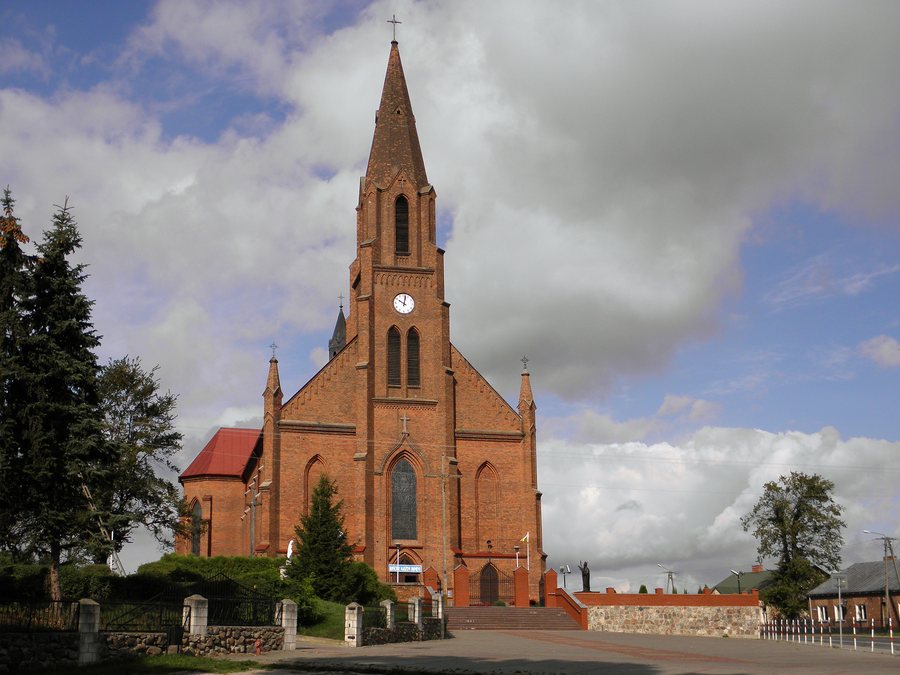
Stromiec can be explored when planning a culture-focused trip through three distinct features: the Neo-Gothic parish church, the historic tombs in the cemetery and a wayside shrine. The dates range from tombs dating to around the mid-19th century to the church, built between 1900 and 1905. This allows you to distinguish the architectural history from the funerary art chronologically.
Key facts about Stromiec
- The brick parish church of St. John the Baptist was built between 1900 and 1905. It was entered in the voivodeship heritage register on 4 March 1985 under number 285/a/85.
- The cemetery contains a chapel built in 1894 in honour of Our Lady of the Snows, donated by Józef and Karolina Potempscy of Radom.
- A wayside shrine in Stromiec contains a 19th-century sculpture of St. John of Nepomuk.
Which traces of the past shape Stromiec?
The cemetery was established in the late 1830s, probably at the initiative of Michał Kobierski, the parish priest of Stromiec at the time. Among the oldest tombs with legible inscriptions are the cross-shaped tomb of Maksymilian Chojnacki and the decorative sandstone stele with a cross for Tomasz Kozłowski. Both date to around the mid-19th century. The approximate dating of these tombs provides a different point of reference from the cemetery’s founding date.
The sequence continues in later decades with the cemetery chapel of 1894 and the church, built between 1900 and 1905. For the church, the construction period and heritage-register entry mark two different dates: it was built at the beginning of the 20th century; its register entry followed in 1985. This distinction helps avoid confusing the building’s history with its later heritage status.
What can you make out in the cemetery?
The surviving tombs vary in form and material. They include crosses on plinths, a cross on a rock, relief stelae, small chapels and columns on plinths. Most of the tombs are made of sandstone; cast iron and masonry are also present. The two tombs with legible inscriptions are concrete examples of the forms and approximate dating of the older pieces.
The cemetery’s burial history also encompasses different groups: those buried there include priests of the local parish, landowners, participants in the January Uprising and soldiers who fell in the Second World War. At the same time, the original spatial layout and paths have been preserved. This means that both individual tombs and their place within the grounds are important to consider.
How do the cultural points of interest differ?
The parish church offers an introduction to Neo-Gothic architecture and its heritage-protection status. The cemetery, by contrast, draws attention to tomb forms, materials and the people buried there. The wayside shrine introduces another distinct subject through its sculpture of St. John of Nepomuk. Stromiec’s architectural history, cemetery culture and religious sculpture can therefore be considered as separate interests when planning a trip.
If you are planning a visit, check access arrangements in advance, especially if the cemetery or chapel is part of your itinerary. Discover more destinations: Redlin.
FAQ
When was the parish church of St. John the Baptist built?
The brick Neo-Gothic church was built between 1900 and 1905. It was entered in the voivodeship heritage register on 4 March 1985.
What notable tombs are there in the cemetery?
The forms include crosses on plinths, a cross on a rock, relief stelae, small chapels and columns on plinths. The oldest tombs mentioned with legible inscriptions date from around the mid-19th century.
What is known about the cemetery chapel?
It was built in 1894 in honour of Our Lady of the Snows. Józef and Karolina Potempscy of Radom donated the chapel.
For the broader travel overview: Białobrzegi.

