
Żuromin: Church History and the Nad Wkrą Cycling Route
Accommodation in Żuromin
Żuromin can be explored through its religious history, Jewish heritage, and a cycling route. At the Holy Trinity Church, early devotion to the Virgin Mary meets sacred objects from the 18th century; the blue “Nad Wkrą” route offers a different perspective on the area.
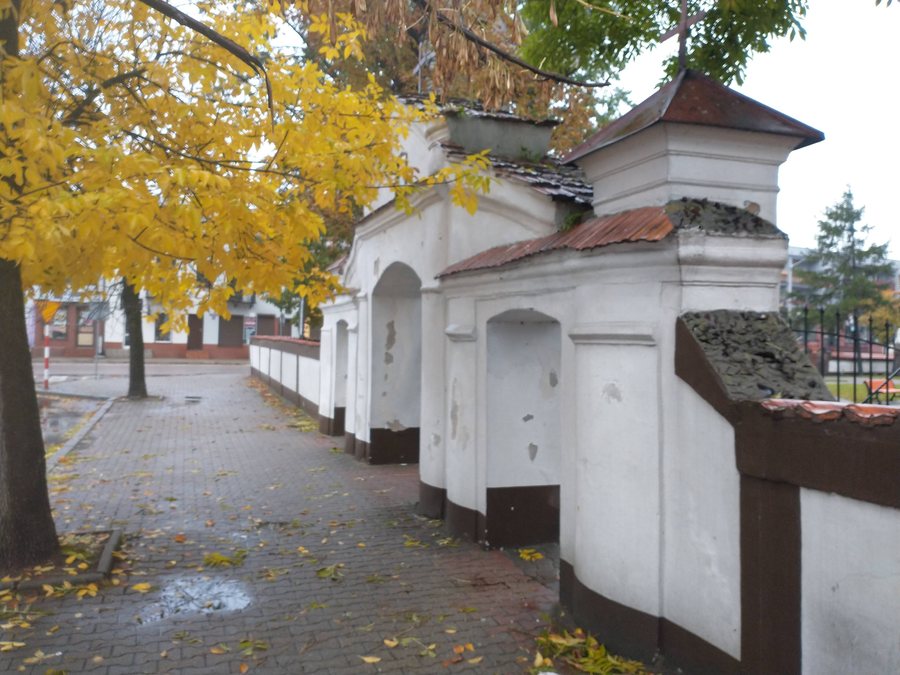
Żuromin at a glance
- The origins of the Holy Trinity Church are associated with apparitions of the Virgin Mary at the beginning of the 18th century. A wooden church was built in 1714 with a donation from the Zamoyski family and consecrated by Bishop Ludwik Załuski.
- The blue “Nad Wkrą” cycling route is 11.27 km long and connects Żuromin with Konopaty.
- Two memorial plaques bearing around 300 names of Jewish families from Żuromin were unveiled at the entrance to the Jewish cemetery in April 2011.
What does the Holy Trinity Church tell us?
The history of the Holy Trinity Church combines a religious origin with a specific date of construction: its beginnings are linked to apparitions of the Virgin Mary at the beginning of the 18th century. Records show that a wooden church was built in 1714 with a donation from the Zamoyski family; Bishop Ludwik Załuski consecrated it. Thus, the Marian connection and a clearly dated phase of construction sit side by side.
The furnishings also offer a distinct insight into sacred history. The church contains Stations of the Cross and Baroque holy water stoups from the 18th century. There are also late Baroque or late-18th-century processional standards bearing images of saints, as well as an 18th-century monstrance and reliquary. The varied objects and dates make the furnishings a subject in their own right, alongside the building’s history.
Another aspect of Żuromin’s religious history is its diocesan Marian sanctuary: the Bishop of Płock established a Marian sanctuary in the town.
What do the memorial plaques commemorate?
In April 2011, two memorial plaques were unveiled at the entrance to the Jewish cemetery in Żuromin. They bear the names of around 300 Jewish families from Żuromin who lived in the town until the Second World War. The plaques add the memory of Jewish life before the war to the story of the town’s religious and architectural history.
The figure is explicitly approximate: the two plaques list around 300 family names. The place and the historical connection belong together—the names commemorate families who lived in Żuromin, not an unrelated group with no connection to the town.
What should you know about the “Nad Wkrą” cycling route?
The blue “Nad Wkrą” cycling route is listed as 11.27 km long, runs through Żuromin, and connects the town with Konopaty. It passes through scenic areas. The schematic route goes from Żuromin via Brudnice, Bądzyn, and Dziwy to Konopaty. This gives you a specific sense of the route’s length and distinguishes its course from the town’s other cultural attractions.
If you want to use the route for orientation, check the markers on site before relying on the schematic route. This helps keep your travel plans aligned with the actual route. When choosing a hotel, you can first consider whether your stay will focus more on cultural history or include the cycling route.
Which other places add to the picture?
The town park in Żuromin is named “Park Miejski Burmistrza Józefa Kaźmierskiego.” For the wider Żuromiński destination, a 2022 municipal publication locates the “Las blisko nas” educational trail in a park on Jana Pawła II Street in Żuromin. If you plan to visit the trail, check the local conditions in advance.
Discover more destinations: Raciąż, Kozilas, Kosewo, Krzeczanowo.
FAQ
What defines the history of the Holy Trinity Church?
Its origins are linked to apparitions of the Virgin Mary at the beginning of the 18th century. The wooden church, built with a donation from the Zamoyski family, was consecrated by Bishop Ludwik Załuski in 1714.
How long is the “Nad Wkrą” cycling route?
The blue cycling route is 11.27 km long. Its schematic course runs through Żuromin, Brudnice, Bądzyn, and Dziwy to Konopaty. Check the markers on site.
What do the plaques at the Jewish cemetery commemorate?
The two plaques unveiled in April 2011 list around 300 Jewish families from Żuromin who lived in the town until the Second World War.
For the wider travel overview: Żuromiński.

