
Żyrardów: Factory History and Museums
Accommodation in Żyrardów
Żyrardów brings together the history of its factory settlement with museums, a historic cultural centre, and a green space in the city centre. This gives you several specific highlights to consider when planning your hotel stay and trip, from textile history to interactive activities for children and teenagers.
Quick Facts About Żyrardów
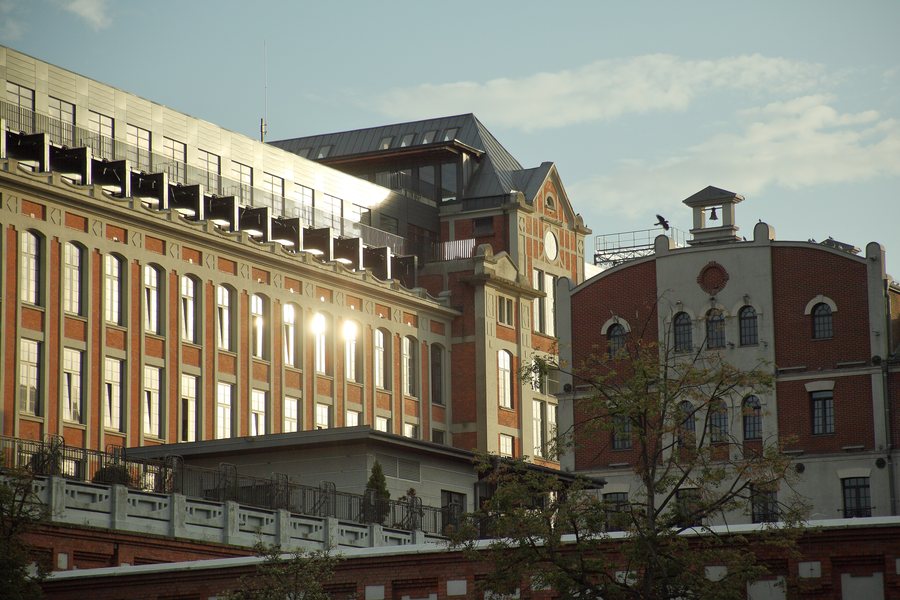
- The 19th-century factory settlement includes workers’ housing, a villa district, public buildings, and factory buildings.
- The factory settlement and former industrial site cover about 70 ha and are listed as a Pomnik Historii (History Monument).
- Museums showcase the city’s history and historic textile production; the “Industrialny Żyrardów” industrial heritage trail takes you on a walk through the factory settlement.
- Karol August Dittrich Park is a green space of nearly 6 ha in the city centre.
What does the factory settlement tell us about Żyrardów?
The factory settlement and the adjacent former factory sites now make up Żyrardów’s historic centre. Its different parts reveal different aspects of the former industrial town: workers’ housing, a villa district for managers, and public and industrial buildings. Together, they create a cityscape in which the history of production is also reflected in the settlement’s layout.
To get an overview of this area, take a walk along the “Industrialny Żyrardów” industrial heritage trail. It leads through the factory settlement and highlights its industrial architecture. The site, covering about 70 ha, is listed as a Pomnik Historii. The area figure is approximate; the designation is a further recognition of the historic district as a whole.
What different themes do the museums explore?
The Muzeum Mazowsza Zachodniego covers Żyrardów’s history, the textile factories, and the traditional material culture of the city’s residents. Its permanent gallery features works by Józef Rapacki. A special exhibit is a panorama of Żyrardów from 1899. The owners of Zakłady Żyrardowskie commissioned it for the World’s Fair in Paris. The museum thus brings together a city view, art, and the way the factory town was presented at the time.
The Muzeum Lniarstwa im. Filipa de Girarda focuses more closely on former textile production. Its main exhibition comprises dozens of historic machines and devices from former linen mills. Together, they represent a complete production line, from processing textile raw materials to making fabric. The museum is housed in buildings of a former printing works in the post-industrial Bielnik area, which once formed part of the Żyrardów factory’s production complex.
The two museums offer different ways to explore the city’s history: the Muzeum Mazowsza Zachodniego combines urban cultural history with art and a historic panorama, while the Muzeum Lniarstwa uses machines and devices to make production processes easy to follow.
How do MOTKa, Resursa, and the park add to the cityscape?
The Multimedialny Ośrodek Tradycji i Edukacji Kulturowej, or MOTKa, was created for residents and tourists, with a particular focus on children and teenagers. An interactive model depicts the historic factory settlement. Visitors use a wristband to activate multimedia stations one after another, where they can answer quiz questions and take on games and puzzles. The experience combines the city model with hands-on activities.
Resursa adds a building with its own history to this picture of the city’s cultural heritage. It was modelled on English clubs and originally reserved for the local elite. Following restoration, it regained its former splendour and once again became a lively cultural venue. The ballroom stands out for its rich gilding and colourful wall paintings; it is designed in the Renaissance style with Neoclassical elements.
Karol August Dittrich Park offers another perspective on the city centre. It is located in the residential district of the factory settlement and has a naturalistic water system with numerous bridges. The park, factory architecture, and cultural venues together round out the picture of Żyrardów’s industrial history.
What should you consider when travelling to Żyrardów and planning the rest of your trip?
Żyrardów railway station serves regional and long-distance routes to Warsaw, Poznań, Łódź, and Skierniewice. Rail services may change, so check the timetable before you set off. When choosing a hotel, you can also think about what you want to focus on during your stay: the history of the factory town, the museums’ different themes, or a visit to the park.
In the wider travel region, Termy Mszczonów offers a different kind of experience. The thermal water is reported to be between 26 and 34 °C and is drawn from a depth of more than 1,600 metres. If you plan to include it in your itinerary, check the latest information from the venue, as operational details may change.
Discover more destinations: Żyrardów, Mszczonów, Nowa Huta, Radziejowice, Kaczków, Studzieniec, Pułtuski, Ostrołęcki.
FAQ
What does the Muzeum Lniarstwa showcase?
The main exhibition comprises dozens of historic machines and devices from former linen mills. It illustrates the process from handling textile raw materials to making fabric.
What does MOTKa offer children and teenagers?
MOTKa is aimed particularly at children and teenagers. At an interactive model of the historic factory settlement, visitors use a wristband to activate stations featuring quiz questions, games, and puzzles.
Which train routes does Żyrardów railway station serve?
The station serves regional and long-distance routes to Warsaw, Poznań, Łódź, and Skierniewice. Check the timetable before you set off, as rail services may change.
For the wider travel overview: Masovia.

