
Wołczyn – Salt Works, Nature and Historic Churches
Accommodation in Wołczyn
Wołczyn brings together a salt works complex, a route through a Natura 2000 site and several churches with different building histories. The town thus offers points of interest for visitors drawn to nature and culture.
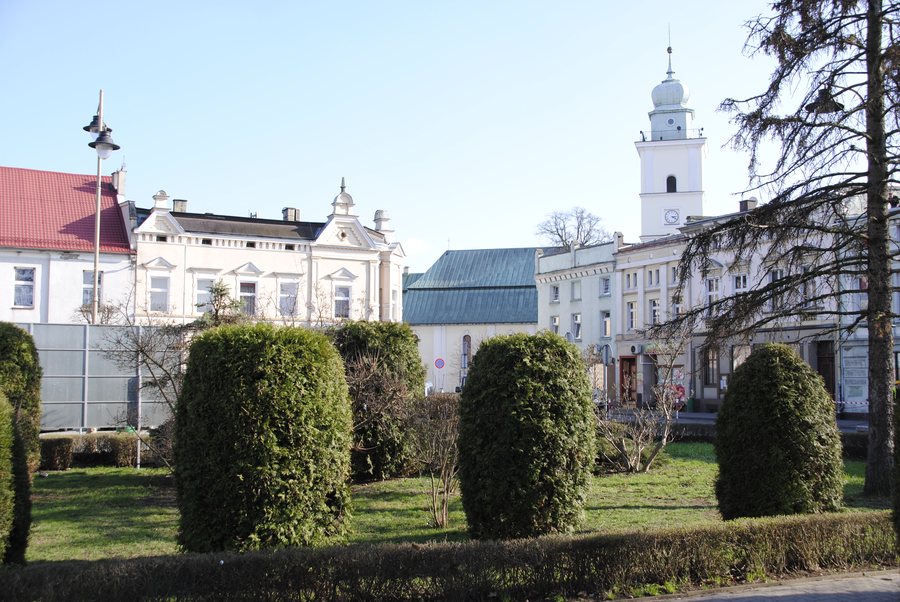
Wołczyn at a glance
The town’s history stretches from a market settlement on the route between Wrocław and Kraków to its charter of foundation in 1261. Today’s thematic points of interest include the Wołczyńskie Salt Works and the “Teklusia” Trail. The religious buildings also differ in their construction dates and architecture, ranging from the former Evangelical St. Barbara’s Church to the Neo-Gothic Church of the Immaculate Conception.
What is the story behind Wołczyn?
Before it was granted town rights, Wołczyn was a market settlement. Its development benefited from its favorable location on the route between Wrocław and Kraków. In January 1261, Henry III the White, Duke of Wrocław, issued a charter of foundation for the settlement and introduced the name Fürstenthal (Książęca Dolina). The market settlement, the route and the charter represent different aspects of the town’s early history: the settlement’s function, its location and its written foundation.
Which churches can culture enthusiasts discover?
The Church of the Immaculate Conception of the Blessed Virgin Mary was built in the Neo-Gothic style between 1859 and 1861. The Evangelical church offers a different architectural point of reference: it is a brick building dating from 1848, with a tower on a square plan. The construction dates, materials and tower plan are specific features that can be used to describe the two churches.
Another landmark in the town’s history is the filial Church of St. Teresa, formerly the Evangelical St. Barbara’s Church. It was built between 1770 and 1799. Together with the other two churches, it offers another point of comparison in terms of dates and history. If you are interested in religious buildings, you can include their different construction periods and church names as themes for your trip.
What does the salt works complex include?
The Wołczyńskie Salt Works complex includes two graduation towers with a total area of 300 m². It also has an educational pavilion, a brine fountain and a halophyte garden. The complex therefore includes both the graduation towers and other named features associated with brine and halophytes. The complex also has paths, benches and lighting, as well as a roller-skating track.
Another specific point of reference is the quest “Przybij piątkę w Wołczynie” (“Give Wołczyn a high five”). It starts in a car park by the municipal library at ul. Sienkiewicza 5, near the Wołczyńskie Salt Works and its halophyte garden. This lets you consider the stated starting point alongside the salt works complex when choosing themes for your stay.
What does the “Teklusia” Trail offer as a nature-focused attraction?
The red “Teklusia” Trail is 15.23 km long and runs through Wołczyn. This precise distance is useful when planning your route; on its own, it says nothing about walking time or difficulty. The trail also passes through a Natura 2000 protected area, which is home to beavers and many protected bird species. Visitors who want to take nature into account when choosing a destination will find a clearly named route and a protected area with specified animal species.
Wołczyn can thus be explored through a range of interests: the salt works and quest complement its churches and local history, while the “Teklusia” Trail adds a nature and route-focused dimension. To compare other destinations, you can also visit Stare Czaple, Gołkowice, Byczyna, Bogacica and Kluczbork. Find another destination on the page about Zapłotnik.
FAQ
How long is the red “Teklusia” Trail?
The red “Teklusia” Trail is 15.23 km long and runs through Wołczyn.
What features are included in the Wołczyńskie Salt Works?
The complex includes two graduation towers with a total area of 300 m², an educational pavilion, a brine fountain, a halophyte garden, paths, benches, lighting and a roller-skating track.
When was the Church of the Immaculate Conception built?
It was built in the Neo-Gothic style between 1859 and 1861.
For an overview of the wider area, visit Kluczbork.

.jpg)