
Borki Wielkie: Churches and Wooden Architecture
Accommodation in Borki Wielkie
Borki Wielkie brings together a wooden church from the late 17th century and Franciscan buildings from the early 20th century. The Nativity scene also has a recurring time for its first presentation. This gives you several cultural points of interest to consider when planning your trip; for St. Martin and St. Bartholomew’s Church, you should check the conditions for visiting the interior.
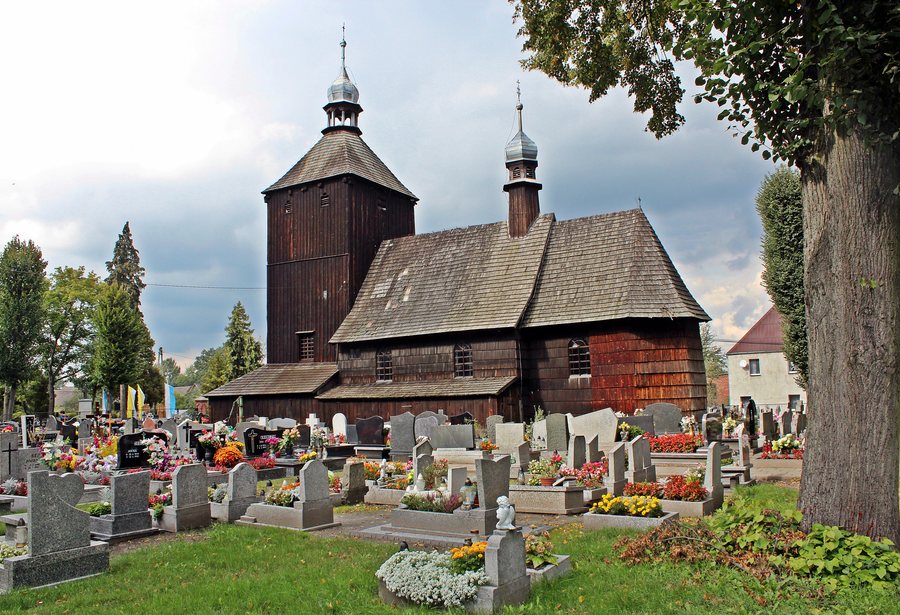 File:Kościół cmentarny z 1697 roku w Borkach Wielkich.JPG
Photo: Karolina Geilke via Wikimedia Commons, CC BY-SA 3.0 pl
Key facts about Borki Wielkie
The Franciscans built a monastery in 1906–1907 and the brick, Neo-Gothic Church of St. Francis of Assisi in 1911. The wooden church from the late 17th century is part of the Trail of Wooden Sacred Architecture, which includes 17 wooden churches in Olesno County and nearly 70 in the Opole Voivodeship. The Nativity scene is first presented by the Franciscans during Midnight Mass every year.
How can the building history be understood?
For a cultural visit, the buildings can first be distinguished by when they were constructed. The wooden church dates from the late 17th century; the Franciscan buildings followed at the beginning of the 20th century. The monastery was built in 1906–1907, and the brick, Neo-Gothic Church of St. Francis of Assisi in 1911. The wooden church and St. Francis’s Church therefore represent different periods and building materials.
Both the construction method and the style of St. Francis’s Church are specified: it is brick and Neo-Gothic. The wooden church’s inclusion in the Trail of Wooden Sacred Architecture highlights its regional context. These differences offer two specific perspectives for a visit focused on the history of religious architecture.
What should you know about access to the church?
Information about access to St. Martin and St. Bartholomew’s Church comes from a 2014 description: the church is generally accessible from the outside; for the interior, it mentions visits during services and by prior arrangement with the Franciscans. Check the arrangements with the Franciscans again before your visit.
What role does the Nativity scene play?
The Nativity scene is first presented by the Franciscans in Borki Wielkie during Midnight Mass every year. This recurring occasion adds a religious custom to the perspective on church construction and architecture, making it a cultural point of interest in its own right.
How is the wooden church situated in its regional context?
The Trail of Wooden Sacred Architecture includes 17 wooden churches in Olesno County and nearly 70 in the Opole Voivodeship. These figures refer to two different geographical levels: the county and the voivodeship. The inclusion of the wooden church in Borki Wielkie places it within this broader regional context, rather than treating it only as a standalone building. For travelers interested in religious architecture, the trail thus connects the local church with the regional collections mentioned above.
Discover more destinations: Gorzów Śląski, Olesno, Praszka and Kosice.
FAQ
When was the Franciscan monastery built?
The Franciscans built the monastery in 1906–1907.
What are the features of the Church of St. Francis of Assisi?
It was built in 1911, is made of brick, and is Neo-Gothic.
When is the Nativity scene first presented?
It is always presented during Midnight Mass.
When is the interior of St. Martin and St. Bartholomew’s Church accessible?
A 2014 description mentions services and prior arrangements with the Franciscans. Check the arrangements for your visit with the Franciscans in advance.
See the main travel overview: Olesno.

