
Kolneński: Church and Cemetery History in Kolno
Accommodation in Kolneński
Kolno offers information on the history of churches and cemeteries, sports, and transport. In the wider Kolneński County, the Pisa is a lowland river with meanders and oxbow lakes.
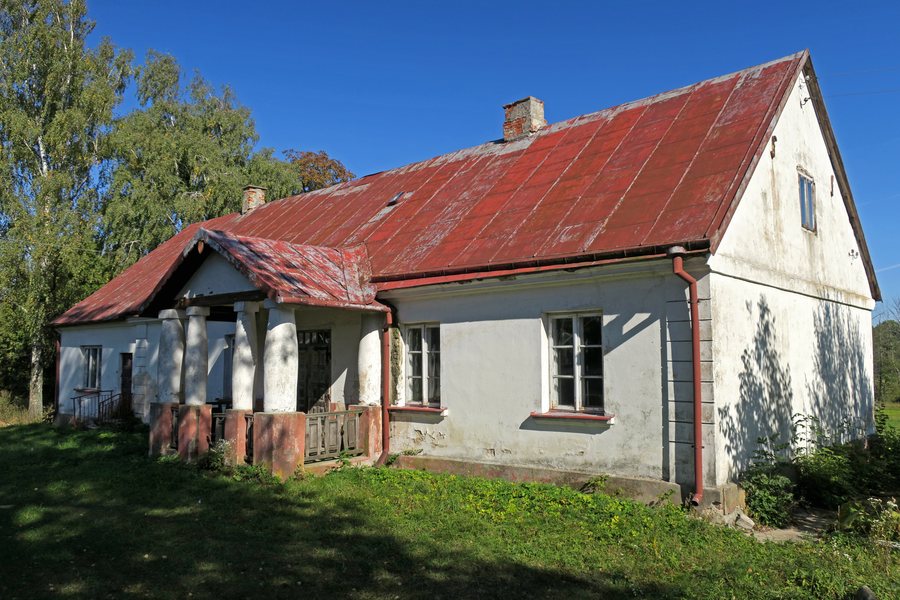 Historic rectory in Grabowo, Powiat kolneński
Photo: Sylwester Górski via Wikimedia Commons, CC BY-SA 4.0
Kolneński: key facts
- The neoclassical parish Church of St. Anne in Kolno was built in 1834–1835 to a standardized design by Piotr Aigner; it is listed as number 67 in the monuments register.
- The Sports and Recreation Centre comprises a sports hall and an indoor swimming pool; the pool opened in 2000.
- National Road 63 runs through the town of Kolno and the Gmina Kolno and is considered a route for motoring tourism from central Poland to the Masurian Lake District and the Polish-Russian border.
- The Jewish cemetery in Kolno was established around 1817.
- In the wider Kolneński County, the Pisa is a lowland river with meanders and oxbow lakes, as well as a waterway between the Masurian Lake District and the Narew.
What cultural history does Kolno reveal?
The neoclassical parish Church of St. Anne was built in 1834–1835 to one of the standardized designs by Warsaw architect Piotr Aigner and is listed as number 67 in the monuments register. Neoclassicism draws on ancient models; the term places the church within a recognizable architectural movement. For travelers interested in architectural history, the church brings together a specific design context and a precise date.
The Jewish cemetery, established around 1817, offers a different historical perspective. Matzevot, traditional Jewish gravestones, have been preserved in the cemetery. The church and cemetery thus represent different themes: neoclassical architectural history in one case, Jewish remembrance of the dead in the other. Those exploring Kolno’s cultural highlights will find two specific, distinct perspectives here.
What role does the sports center play?
The Sports and Recreation Centre in Kolno comprises a sports hall and an indoor swimming pool. The pool opened in 2000. This adds sports facilities as another point of interest for trip planning, alongside the historical sites. The opening year gives the pool a time reference; if you plan to visit, check the current opening hours in advance.
How does Route 63 help put the area in context?
National Road 63 runs through the town of Kolno and the Gmina Kolno. It is considered a route for motoring tourism from central Poland to the Masurian Lake District and the Polish-Russian border. For motorists, this provides a broad point of reference: the route described connects central Poland, the lake district, and the border region. This makes it possible to place Kolno within the context of a longer journey without conflating local history with the wider route perspective.
What are the characteristics of the Pisa in the wider Kolneński County?
In the wider Kolneński County, the Pisa is a lowland river with numerous meanders and oxbow lakes. In the wider Kolneński County, the well-known waterway Pisa lies between the Masurian Lake District and the Narew. In the wider Kolneński County, the Pisa is used for organized canoe trips and motorboating.
To compare other destinations in Kolneński, you can also visit the pages for Marki, Gmina Kolno, Chełchy, Kołaki-Wietrzychowo, Grabowo, and Siwki. Discover more destinations: Hajnowski, Zambrów.
FAQ
What makes the parish Church of St. Anne interesting to people interested in culture?
It is neoclassical, was built in 1834–1835 to a standardized design by Piotr Aigner, and is listed as number 67 in the monuments register.
What does the Sports and Recreation Centre include?
The center comprises a sports hall and an indoor swimming pool. The pool opened in 2000; check the current opening hours before planning a visit.
What water-based activities are associated with the Pisa?
In Kolneński County, the Pisa is used as a waterway for organized canoe trips and motorboating.
For the wider travel overview: Podlachia.

