
Wysokie Mazowieckie between Church Architecture and Dni Miasta
Accommodation in Wysokie Mazowieckie
Wysokie Mazowieckie combines distinctive Baroque church architecture with tangible traces of Jewish history. The recurring Dni Miasta provide an additional, time-limited reason to visit. This allows you to coordinate your cultural interests and travel dates purposefully.
Key Facts About Wysokie Mazowieckie
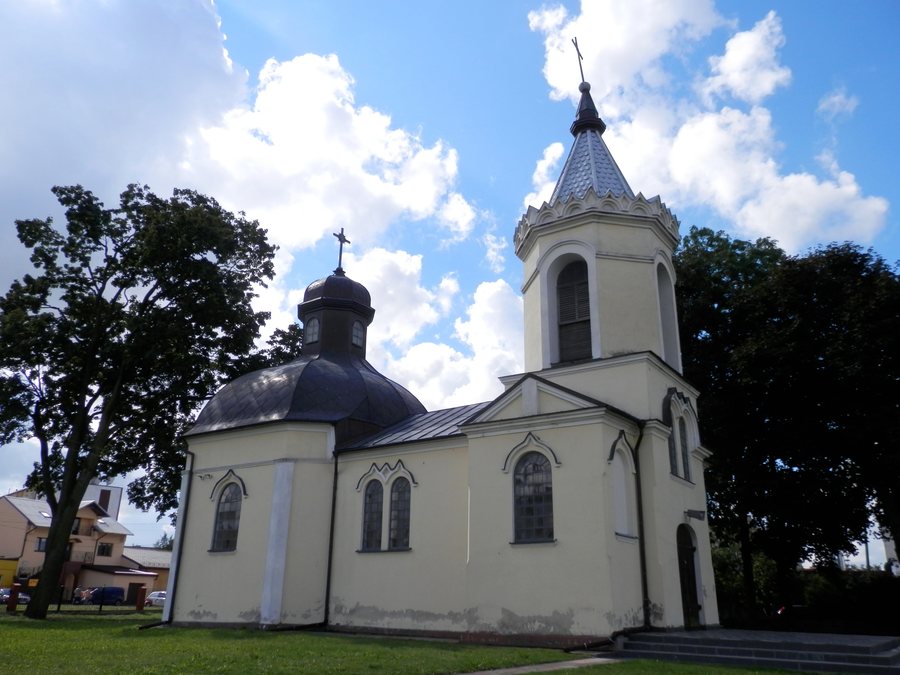
- The former Uniate church is now a Roman Catholic branch church and is one of the few Baroque centrally planned churches in the Podlaskie Voivodeship.
- Around 100 gravestones and tombs, mostly made from fieldstones, remain at the 0.6-hectare Jewish cemetery.
- The recurring Dni Miasta take place toward the end of May.
What Makes the Church Architecture Noteworthy?
The former Uniate church is now a Roman Catholic branch church. In the Podlaskie Voivodeship, it is one of the few Baroque churches with a central plan. Despite alterations, many original features of a Late Baroque centrally planned church have been preserved. This makes the church a tangible point of reference if you are interested in historic architectural styles.
A centrally planned church arranges its space around a central point. This helps distinguish the term from a church form laid out along a longitudinal axis. The construction date is also specific: the present-day brick church was built in 1798 with a foundation from Aniela Węgierska.
What Historical Traces Does the Jewish Cemetery Reveal?
The Jewish cemetery covers 0.6 hectares. Around 100 gravestones and tombs remain; most are made from fieldstones. The approximate number and the materials give an impression of the different forms of surviving grave markers.
A gravestone inventory consulted in 2020 identifies a stone from 1849 as the oldest surviving macewa. It commemorates Icchak, son of Kalonimos. This gives the cemetery’s history a specific date and a person remembered by name.
If you plan to visit the cemetery, check its current condition in advance.
When Should You Plan Your Trip Around Dni Miasta?
The recurring Dni Miasta take place toward the end of May. If you want to coordinate your trip with the event, check the date for your chosen year.
The church architecture and cemetery offer cultural topics to explore; with Dni Miasta, the date also determines whether the event falls during your trip. This lets you choose between a focus on architectural and commemorative history and planning around a specific date.
Discover more destinations: Krzyżewo, Mazury, Ciechanowiec, Nowe Garbowo.
FAQ
What is special about the former Uniate church?
It is now a Roman Catholic branch church and one of the few Baroque centrally planned churches in the Podlaskie Voivodeship. Many Late Baroque features have survived despite alterations.
When was the present-day brick church built?
It was built in 1798 with a foundation from Aniela Węgierska.
What is known about the Jewish cemetery?
Around 100 gravestones and tombs, mostly made from fieldstones, remain in the 0.6-hectare cemetery. An inventory consulted in 2020 identifies a macewa from 1849 as the oldest surviving one; it commemorates Icchak, son of Kalonimos. Before planning a visit, check the cemetery’s current condition.
When does Dni Miasta take place?
The recurring event takes place toward the end of May. Check the date for your chosen year if you want to plan your trip around it.
Go to the main travel overview: Wysokie Mazowieckie.

